425 Sovereign Ct. St. Louis, MO 63011
SEARCH OUR WEBSITE

Why Are Tire Racks Essential for Global Warehouses?

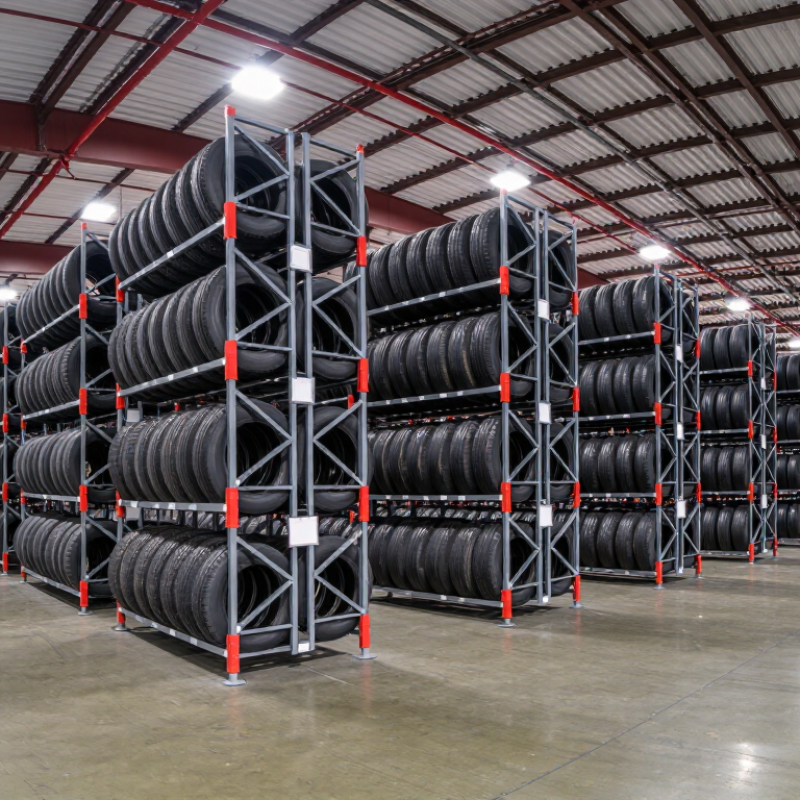
In global warehousing, tires are not ordinary inventory. They are heavy, rounded, and easily damaged by pressure, moisture, or careless stacking. Tire Racks provide a controlled storage structure that keeps products visible, supported, and easier to handle. This matters in distribution centers serving different climates, vehicle markets, and delivery schedules. A warehouse in Rotterdam may manage wet conditions, while a facility in Dubai faces intense heat and dust. The storage answer cannot be copied blindly. Rack design should reflect tire dimensions, load ratings, aisle widths, handling equipment, and local operating practices. When these factors are measured correctly, teams can reduce floor congestion and locate stock with fewer unnecessary movements. That improves workflow.

From practical warehouse planning, the strongest benefit is consistency. A properly configured rack gives each tire a defined position, reducing leaning piles and hidden damage. It also supports visual inspections, barcode scanning, cycle counting, and safer replenishment routines. Manufacturers and logistics professionals commonly assess beam strength, upright protection, anchoring, clearance, and maintenance access before installation. These details may seem small. They are not. Still, Tire Racks are not a universal cure. Poor loading habits, weak floors, or ignored inspections can undermine even a well-engineered system. Warehouse leaders should review real operating data and consult qualified rack specialists before making a purchase decision. The best system is practical, inspected, and adapted to the warehouse—not merely impressive on paper.
Why Are Tire Racks Essential for Global Warehouses?

Why Tire Racks Matter for Heavy, Round Loads in Global Warehouses

Heavy, round loads behave differently from cartons. They roll, lean, and concentrate force on small contact points. In a busy receiving lane, one poorly placed tire can shift several others. Tire racks create defined pockets, separate tiers, and controlled load paths. They also improve visibility, reducing hidden damage during picking. The U.S. Bureau of Labor Statistics reported 4.8 recordable cases per 100 full-time workers in warehousing and storage during 2022. Safer storage deserves attention.

Rack selection requires more than matching warehouse space. Engineers should verify tire diameter, width, unit weight, stacking height, and handling equipment. Uprights and beams need clear load ratings. Cradles or stops can reduce rolling, but they must not damage sidewalls. The Occupational Safety and Health Administration advises that stored materials remain stable against sliding, falling, or collapse. That principle is especially important for round loads. Small design errors become expensive quickly.

Global warehouses also face different floor conditions, seismic risks, fire rules, and inspection practices. A rack suitable for one facility may fail another site’s requirements. The 2024 MHI Annual Industry Report identifies workforce and operational resilience as continuing supply-chain priorities. Tire racks support both by shortening handling movements and improving location control. Yet a rack is not magic. Overloading, uneven floors, and missing inspections still create hazards. A practical program should record rack capacity, inspect damaged components, and train operators on tire placement. Some facilities still store tires too tightly. That saves space briefly, but it can slow counting and conceal deformation.

How ISO 6780 Pallet Sizes of 1,200×1,000 mm Shape Rack Layouts

Tire racks matter because tires are round, heavy, and difficult to stack safely without controlled support.

Their design must reflect the 1,200 × 1,000 mm pallet footprint recognized by ISO 6780. This dimension influences beam spacing, upright positions, aisle width, and forklift approach angles. A rack bay should leave clearance around the pallet edges. Tight spacing slows handling and increases contact risks.

The 2024 MHI Annual Industry Report found that 55% of surveyed supply-chain organizations expected to increase technology investment. That shift makes standardized rack geometry more valuable. A 1,200 × 1,000 mm pallet can align storage modules across multiple countries. Yet, this is not automatic. Tire diameters, pallet overhang, load height, and seasonal inventory can vary sharply. Rack engineers should verify actual loads rather than trust nominal pallet data.

Small errors become expensive.

Vertical tire storage needs restraints against rolling and uneven pressure. Steel support arms, suitable decking, and clearly rated bays help maintain control. Operators also need visible load signs and regular inspections. The ISO footprint sets a foundation, not a complete layout. Real warehouses remain imperfect. A practical trial bay can reveal blocked sightlines, awkward turns, and wasted vertical space before full installation.

How Tire Dimensions and Rack Load Ratings Determine Safe Bay Design

Why Are Tire Racks Essential for Global Warehouses?

Tire dimensions directly shape a rack bay’s usable space. A passenger tire may fit neatly, while an oversized truck tire needs extra width, depth, and clearance. Measure the tire’s loaded diameter, not only its catalog size. Real tires can be wider after handling and storage. Small errors become expensive quickly.

Each beam, upright, and deck must support the intended load rating. Engineers should calculate the combined weight of every tire in one bay, including uneven placement and possible impact from forklifts. A 1,000-kilogram rating is not automatically safe when loads sit off-center. The rack design must also consider seismic activity, floor capacity, and local warehouse requirements. Documented calculations and certified testing improve reliability.

Clearance matters too. Leave enough space for hands, equipment, labels, and safe retrieval. Tight bays may look efficient, but they encourage damaged sidewalls and unstable stacking.

Not ideal.

In field reviews, teams often discover that actual tire sizes differ from planning data. That weakness deserves attention. Recheck measurements after installation, inspect beams for bending, and record every adjustment. A practical bay design is not simply the strongest one; it is the one workers can load consistently without forcing the structure or the tires.

Why EN 15635 Requires Professional Rack Inspections at Least Every 12 Months

Why Are Tire Racks Essential for Global Warehouses?

EN 15635 sets a clear benchmark for professional rack safety. It requires an expert inspection at intervals not exceeding 12 months. This review is not a paperwork exercise. A qualified inspector checks upright frames, beams, locking pins, floor anchors, and load notices. They also examine damage caused by forklifts, uneven pallets, and overloaded levels.

The European Agency for Safety and Health at Work reports that workplace transport incidents represent about 25% of fatal workplace accidents in Europe. Tire warehouses face similar risks, especially where heavy wheels are stored above shoulder height. One bent upright may look minor during a busy shift. It can reduce stability across an entire bay. A written inspection report should classify risks and specify actions, such as unloading a damaged section or replacing a missing beam lock. EN 15635 is a technical standard, not automatically a law everywhere, so local duties still require verification.

Tips: Photograph damage immediately. Mark the rack location clearly. Keep inspection records beside repair evidence. Ask whether repeated impacts reveal poor traffic design, not only careless driving. A checklist can miss what workers have learned to ignore. That deserves reflection. Weekly or risk-based visual checks should support, not replace, the annual expert inspection. EU-OSHA and national safety authorities both emphasize competent supervision, clear routes, and controlled storage loads. A twelve-month interval is the minimum rhythm, not permission to wait when damage appears.

Why Are Tire Racks Essential for Global Warehouses? - Why EN 15635 Requires Professional Rack Inspections at Least Every 12 Months
Operational Dimension Relevant Data or Requirement Why It Matters for Tire Warehouses Inspection or Control Action Reference / Status
Storage density Vertical tire racks use the height of a warehouse instead of relying only on floor-level stacking. Improves use of limited warehouse floor space and creates more orderly storage locations for different tire sizes and applications. Confirm that the rack layout, aisle width, beam levels, and clearances match the approved design. Recommended practice
Product protection Tires should be stored away from direct sunlight, ozone-producing equipment, heat sources, oils, solvents, and sharp edges. Controlled storage reduces the risk of premature rubber ageing, deformation, contamination, and handling damage. Check environmental conditions and verify that rack components do not cut, pinch, or distort the tires. Storage control
Load capacity Permitted loads are determined by the rack design, beam configuration, bay arrangement, connection details, and manufacturer or engineer calculations. Tire loads vary by size, construction, packaging method, and number of units per location; a generic capacity value is not universally valid. Keep visible load notices and never exceed the stated safe working load for beams, bays, or floors. Design-specific
EN 15635 annual inspection EN 15635 requires a systematic safety inspection by a technically competent person at intervals of not more than 12 months. Annual expert inspection identifies structural deterioration and unsafe conditions that may not be noticed during routine warehouse activity. Schedule and document a professional rack inspection at least once every 12 months. Maximum interval: 12 months
Routine visual inspections Rack systems should also receive regular visual inspections, normally carried out weekly or at another risk-based frequency defined by the responsible person. Forklift impacts, loose components, displaced loads, and new damage can occur between annual examinations. Record findings, assign corrective actions, and escalate serious damage immediately. In addition to annual inspection
Rack damage response Damaged components may require immediate unloading, isolation, repair, or replacement depending on the severity of the damage. Continued use of bent uprights, damaged beams, missing locking devices, or loose anchors can increase the likelihood of rack failure. Prevent further loading in the affected area until a competent person confirms the corrective action. Immediate risk control
Impact protection Upright guards, end-of-aisle protection, barrier systems, and suitable traffic controls help reduce damage caused by material-handling equipment. Tire warehouses commonly use forklifts and pallet trucks, making collision protection important around rack ends and travel routes. Inspect guards, anchors, barriers, and floor markings for displacement or damage. Preventive measure
Load stability Loads must be placed evenly, securely, and within the rack’s designed loading pattern; unstable or protruding loads should not be accepted. Proper positioning reduces falling-object hazards and helps keep aisles clear for picking and vehicle movement. Check tire orientation, pallet condition, load overhang, beam seating, and compartment loading limits. Operational control
Traceability Inspection records should identify the inspected area, date, findings, responsible person, corrective action, and closure status. Documented records support maintenance planning, internal audits, safety management, and proof that defects were addressed. Maintain inspection reports and retain evidence of repairs, replacements, and follow-up checks. Recordkeeping
Global warehouse consistency A standardized inspection checklist can be applied across warehouses, while local legal and site-specific requirements are also considered. Consistent procedures make rack safety easier to manage across different countries, shifts, facilities, and warehouse operators. Use common inspection criteria but verify local regulations, equipment risks, climate conditions, and rack configurations. Standardized management
Professional competence The annual examination should be performed by a technically competent person with suitable knowledge of storage equipment and rack safety. Professional assessment helps distinguish cosmetic issues from defects that may affect structural performance. Use qualified inspection personnel and ensure the inspection scope covers the complete rack installation. Competency required
Inspection outcome Inspection findings should be classified and communicated so that urgent hazards are controlled without delay. Clear prioritization helps warehouse managers decide whether a location can remain in service, needs unloading, or requires repair. Mark affected locations, communicate restrictions to operators, and verify that corrective actions are completed. Action-based reporting

How NFPA 13 Storage Rules Influence Tire-Rack Height and Fire Planning

Why Are Tire Racks Essential for Global Warehouses?

How NFPA 13 Storage Rules Influence Tire-Rack Height and Fire Planning

Tire racks improve density, handling speed, and product visibility, but height cannot be chosen by floor space alone. NFPA 13, 2022 Edition, evaluates tire storage by commodity, rack arrangement, storage height, ceiling height, and sprinkler type. A small change from solid shelving to open racks can alter the required protection plan. Clearance below sprinklers also matters. In many layouts, stored tires must remain at least 18 inches below sprinkler deflectors, while flue spaces must stay open for heat movement and water access.

The risk is measurable. The National Fire Protection Association reported about 1,140 warehouse structure fires annually in the United States from 2011 to 2015. These incidents caused approximately 155 million dollars in direct property damage each year. Tire rubber can produce intense heat and smoke, especially when tightly packed. Therefore, rack height, aisle width, longitudinal flues, and sprinkler discharge should be reviewed together. A taller rack may save space, yet it can exceed the protection limits shown in NFPA 13 tables. That decision deserves a calculation, not a guess.

Tips: Measure the highest stored tire, not the rack beam. Keep flue spaces clear. Confirm sprinkler design with a qualified fire-protection engineer. Recheck the plan after adding mezzanines or changing tire sizes. Practical reviews often find small clearance errors. Those errors are easy to miss, and expensive to correct.

Scroll to Top