425 Sovereign Ct. St. Louis, MO 63011
SEARCH OUR WEBSITE

Why Choose Stamped Metal Parts for Your Business?

Stamped Metal Parts can turn a flat coil into precise brackets, terminals, clips, and housings at production scale. For buyers, the appeal is practical: repeatable dimensions, fast cycle times, and less material waste when the part and tooling are designed well. A press can produce thousands of identical pieces, but consistency depends on more than machine speed. Die design, material choice, maintenance, and inspection all matter.

The market is substantial. Grand View Research’s metal stamping industry report projected a 4.2% compound annual growth rate from 2023 to 2030. That forecast signals continued demand, not a guarantee that stamping suits every component. Tooling can require a significant upfront investment. Small design changes may also affect cost, lead time, or part performance. There is a catch.

Quality-management expert W. Edwards Deming wrote, “Quality comes not from inspection, but from improvement of the production process.” The principle fits stamping closely: reliable output starts with a controlled process, not just a final check under bright inspection lights. Businesses should compare expected volumes, tolerances, material requirements, and tooling costs before choosing a supplier. A stamped part that looks simple may hide demanding production details. That is worth a closer look.
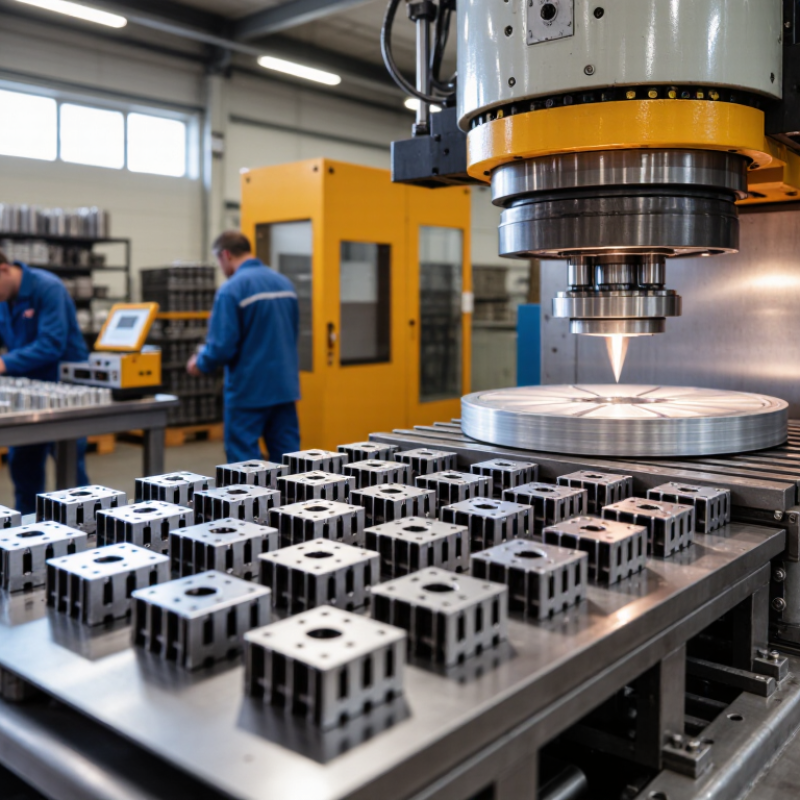
Why Choose Stamped Metal Parts for Your Business?

What Stamped Metal Parts Are and How They Are Made

Why Choose Stamped Metal Parts for Your Business?

What Stamped Metal Parts Are and How They Are Made

Stamped metal parts are components formed from flat sheet metal or coiled stock. A press applies force through a shaped tool, or die, to cut or form the material. Common operations include blanking, punching, bending, and drawing. The result is repeatability. Parts may serve as brackets, covers, clips, or electrical contacts, depending on their design and material.

Production begins with a drawing that specifies dimensions, material, and tolerances. The metal feeds into the press, where the die shapes or cuts it during each stroke. Some parts need several operations or a progressive die, which performs multiple steps as the material moves forward. Edges may be deburred, and parts can receive finishes to suit their use. In practice, production is rarely as tidy as a drawing suggests. Material thickness and tool wear can affect fit, so inspection matters.

Tips: Share expected volumes, material requirements, and critical dimensions with the manufacturer early. Ask how parts will be checked and whether prototypes can reveal fit issues before full production. Small details matter. A hole placed slightly off-center may complicate assembly, even when the part looks simple.

Why Choose Stamped Metal Parts for Your Business? - What Stamped Metal Parts Are and How They Are Made

Topic What It Means Business Relevance
Stamped metal parts Components made by pressing sheet or strip metal into a die to cut or form it into a specified shape. Used in products such as electrical equipment, appliances, vehicles, and industrial machinery.
Common operations Blanking and piercing cut material; bending changes its angle; drawing forms it into a cup-like or contoured shape. One part may require one operation or a sequence of operations, depending on its design.
Typical materials Common choices include low-carbon steel, stainless steel, aluminum, copper, and brass. Material selection depends on factors such as strength, formability, corrosion resistance, conductivity, and cost.
How production works A press drives a punch and die against the material. The tooling controls the cut or formed shape, while the press supplies the required force. Tool design, press setup, and material properties all affect part quality and production performance.
Production methods Single-station dies perform operations at one press station; progressive dies perform successive operations as strip material advances; transfer dies move individual blanks between stations. The appropriate method depends on part geometry, production volume, tooling investment, and handling requirements.
Typical process sequence The process commonly includes design and tooling, material feeding, pressing, part removal, inspection, and—when required—finishing or assembly. Planning the full sequence helps identify quality checks and any secondary operations before production begins.
Potential advantages Presses can produce repeatable parts at a high rate, and automated feeding can support efficient production runs. Stamping may be cost-effective for suitable designs, particularly when production volume can make use of dedicated tooling.
Cost considerations Custom dies require upfront design and manufacturing work. Part cost also depends on material, complexity, production volume, scrap, and secondary processes. Compare tooling and unit costs across the expected production quantity rather than assessing unit price alone.
Quality checks Inspection can check dimensions, hole locations, formed features, burrs, and surface condition against the part specification. Clear drawings, tolerances, and inspection criteria help align production output with the intended application.
Design considerations Material thickness, bend geometry, hole placement, tolerances, and the direction of material grain can affect forming and manufacturability. Reviewing a design for manufacturability early can help reduce avoidable tooling changes and production issues.

Which Materials and Stamping Processes Fit Your Application

Why Choose Stamped Metal Parts for Your Business?

Which Materials and Stamping Processes Fit Your Application

Material choice starts with the job the part must do. Low-carbon steel suits many strong, cost-conscious components, while stainless steel can help in wet or corrosive settings. Aluminum reduces weight, but its softness may affect handling and forming. Copper and brass work well when electrical conductivity or specific surface properties matter. There is no universal best option.

The stamping process should match the part’s shape, volume, and tolerances. Progressive dies can produce complex parts efficiently in high volumes. A compound die may suit flatter parts with several features cut in one stroke. Larger or deeper components may need transfer stamping, where the workpiece moves between stations. Small details matter. Material thickness, grain direction, bend radius, and springback can all affect the finished dimensions.

Share sample drawings and expected production volumes with your manufacturing partner before finalizing a design. Ask how burrs, coatings, and dimensional checks will be handled. A tight tolerance may be possible, but it can add tooling and inspection costs. I would not lock in a material based only on its price per sheet; testing a formed sample can reveal cracking or distortion that a drawing will not. That extra check can feel slow, but skipping it may prove more costly.

How Stamping Delivers Production Speed and Consistent Quality

Stamped metal parts can support fast, repeatable production when the design, material, and tooling are well matched. A progressive die performs several operations as a metal strip advances through successive stations. Once the press is set up, it can produce parts with consistent shapes at short cycle times. That matters. Still, speed depends on more than press rate.

Material thickness, temper, grain direction, and part geometry all affect how cleanly a feature forms. A narrow tab, for example, may bend differently from a broad flange, even in the same sheet. Engineers can review these details before tooling is made, then inspect first-off parts against the drawing. Checking hole position, formed height, and burrs can reveal process drift early. Small checks help.

During longer runs, scheduled die cleaning and wear inspections help maintain dimensions within agreed tolerances. Sampling frequency should suit the part’s function; critical dimensions may need more frequent checks. Stamping is not automatically the right choice for every design, especially when production volumes are low or revisions are frequent. Tooling requires an upfront investment, and an unstable setup can create scrap. On the shop floor, operators may record press settings and inspection results so shifts can spot changes before they affect a full batch.

Where Stamped Parts Can Reduce Costs and Support Design Needs

Stamped metal parts can reduce per-piece costs when demand is steady and tooling costs are spread across enough units. A progressive die can punch holes, form tabs, and cut a profile during one press cycle. That can replace several handling steps. It is not automatic. A cost review should include die design, setup time, scrap, inspection, and maintenance—not just press speed. NIST’s FY2023 Manufacturing Extension Partnership annual report recorded $1.5 billion in cost savings reported by participating manufacturers. That figure spans many manufacturing processes, not stamping alone, so treat it as context rather than a promised result.

Design flexibility starts before the die is built. A designer can combine repeated features, align bends, and adjust blank layouts to reduce scrap while preserving fit. For example, a bracket’s mounting slots and locating tabs may be stamped together, reducing secondary machining and manual alignment. Yet tighter tolerances can raise tooling and inspection costs. A prototype run helps reveal springback, burr direction, and assembly interference before full production. This may feel slower. Still, early testing can prevent costly die changes later. The trade-off deserves a close look: a design that stamps quickly but fits poorly may cost more across the full production run.

What to Evaluate When Selecting a Stamping Supplier

When choosing a stamping supplier, evaluate how its equipment matches your part—not just its advertised press tonnage. Ask about press range, bed size, feed systems, material thickness, and experience with your alloy. Request a review of your drawings, including tolerances, burr direction, and critical hole locations. Small details matter.

Check how the supplier controls quality from incoming coil to finished parts. The ISO Survey 2022 recorded 1,265,216 valid ISO 9001 certificates worldwide. Certification indicates a quality-management system, but it does not guarantee that a supplier can meet your specifications. Ask to see inspection plans, material traceability records, calibration practices, and sample-run results. Ask for evidence. A clear response should connect measurements to your drawing’s acceptance limits.

Also assess tooling ownership, maintenance schedules, lead times, and backup capacity. Request a cost breakdown covering dies, setup, production, and secondary operations such as deburring or plating. For stamped metal parts, a low unit price can hide costly tooling changes or scrap. A capability sheet can look convincing while leaving key constraints unstated. I would compare suppliers using the same part assumptions and ask what could disrupt delivery. That discussion may feel uncomfortable, but it often reveals more than a polished presentation.

Why Choose Stamped Metal Parts for Your Business?

What to Evaluate When Selecting a Stamping Supplier

This illustrative 100-point scorecard prioritizes quality and process capability, followed by total cost, delivery reliability, engineering support, and material traceability. Adjust the weights to match your part requirements, production volume, and risk priorities.

Scroll to Top