Why Choose a Chicken Cage Manure Belt for Poultry Farms?
Modern poultry farms need manure systems that support hygiene, labor efficiency, and stable daily operations. A Chicken Cage Manure Belt moves droppings away from the cages before moisture and ammonia become serious management problems. It can reduce manual scraping, shorten cleaning routines, and help keep walkways safer.
Dr. Casey W. Ritz, a poultry environmental-management specialist, once stated, “Good manure management begins with controlling moisture at the source.” This principle explains the belt’s value. Fresh manure drops onto a moving belt beneath each cage row. The belt carries it toward a collection point, where workers can remove it with less disturbance to the flock. In a well-managed house, the difference is visible: drier floors, fewer strong odors, and cleaner equipment surfaces.
The system is not a magic solution. Poor belt alignment, weak ventilation, or delayed removal can still create problems. That part is easy to underestimate. Farms also need to inspect rollers, tension, motors, and belt joints regularly. A small tear may become a costly interruption.
When correctly selected and maintained, a Chicken Cage Manure Belt offers a practical path toward cleaner poultry housing. Its strongest advantage is consistency. Every day, manure follows a controlled route instead of accumulating beneath the cages. This supports better labor planning and more predictable environmental conditions. Yet each farm should evaluate bird numbers, house length, manure moisture, and maintenance capacity before investing.
What Is a Chicken Cage Manure Belt?
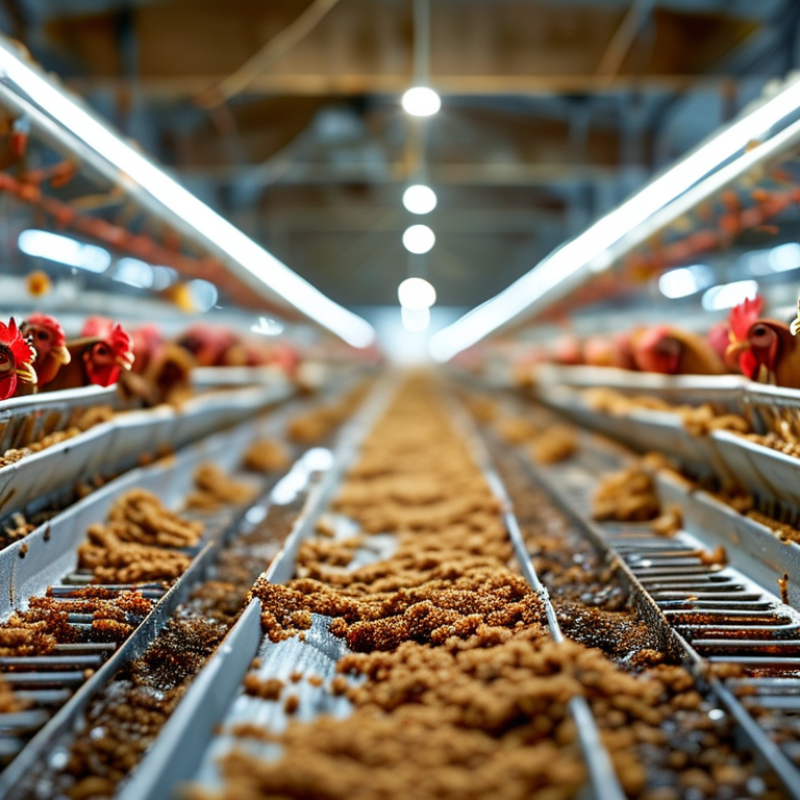
A chicken cage manure belt is a continuous conveyor installed beneath poultry cages. It collects droppings as hens produce them, then carries the manure toward a discharge point. In a practical house, the belt moves slowly under each cage row and unloads into a cart, trailer, or storage system. Some systems use forced air to dry the manure before removal. The European Commission’s 2017 BAT Reference Document identifies belt collection and drying as recognized options for reducing emissions in intensive poultry housing.
This equipment changes daily farm work. Instead of scraping wet manure from the floor, workers inspect belt alignment, rollers, tension, and buildup. Drier manure usually weighs less to transport and creates fewer strong odors inside the house. The U.S. Environmental Protection Agency’s National Air Emissions Monitoring Study also showed that poultry manure handling requires careful emission management, especially around storage and removal points. Small maintenance failures matter.
A belt is not a perfect solution. It can tear, slip, or collect manure unevenly when ventilation is poor. I have seen simple problems become expensive: one blocked discharge area can leave a thick, warm layer beneath several cages. FAOSTAT reported global egg production at more than 86 million tonnes in 2022, showing why reliable manure handling matters at scale. Still, each farm should match belt speed, drying airflow, cage layout, and labor capacity to its actual conditions. Fancy equipment cannot replace routine inspection.

How Does a Manure Belt System Work?
Why Choose a Chicken Cage Manure Belt for Poultry Farms?
A chicken cage manure belt sits beneath each cage row in a poultry house. Birds deposit manure directly onto the moving belt. When the operator starts the system, a motor pulls the belt toward the discharge end. The manure travels with it and leaves the cage area without frequent manual removal. It is not magic.
At the discharge point, manure drops onto a cross conveyor, cart, or collection platform. Many farms run the belts on a schedule, often after checking bird activity and manure volume. Good ventilation can reduce moisture while the manure waits for removal. Operators should inspect belt tension, alignment, rollers, and scrapers regularly. A misaligned belt wastes power and leaves wet patches. Small buildup can become a serious blockage.
A manure belt can keep the floor cleaner, reduce scraping labor, and help limit ammonia around the cages. It also gives workers clearer control over manure removal timing. However, the system is not maintenance-free. Ventilation, cage design, belt material, and operator habits all affect performance. I have seen clean-looking installations fail because belts were overloaded or inspections were delayed. The better approach is practical: remove manure consistently, check the equipment by hand, and adjust the schedule when conditions change.
Why Choose a Chicken Cage Manure Belt for Poultry Farms? - How Does a Manure Belt System Work?
| Data Dimension | Typical Data or Operating Principle | Practical Benefit for a Poultry Farm |
|---|---|---|
| System Structure | A continuous conveyor belt is installed beneath each cage tier to collect manure as it falls from the cages. | Manure is collected directly at the source instead of accumulating on the house floor. |
| Main Components | Manure belts, drive rollers, support rollers, belt scrapers, tensioning devices, a control panel, and a cross-conveyor or discharge conveyor. | The modular design allows components to be inspected, adjusted, or replaced individually. |
| Working Process | A geared motor rotates the drive roller, moving the belt along the cage row. Manure is carried to the end of the row and transferred to a cross-conveyor or collection point. | The system creates a predictable manure flow and reduces manual handling. |
| Removal Frequency | Common operating schedules range from every 1–3 days, depending on flock size, manure moisture, ventilation, and farm management practices. | Frequent removal can reduce manure accumulation time, odor generation, and fly-breeding opportunities. |
| Belt Material | Industrial-grade polypropylene or polyethylene belts are commonly selected for moisture resistance, flexibility, and cleanability. | Suitable materials help the belt withstand repeated loading, cleaning, and exposure to manure. |
| Belt Width | Typically selected to match the cage-row layout and manure drop zone; many systems use belts approximately 1.0–2.0 m wide. | Correct sizing improves manure capture and helps prevent spillage along the cage row. |
| Moisture Management | Fresh poultry manure commonly contains substantial moisture; ventilation and timely belt removal help promote drying before storage. | Drier manure is generally easier to transport, store, compost, or use as fertilizer. |
| Cleaning Method | A belt scraper removes residual manure from the belt surface as the belt passes around the discharge roller. Periodic washing may also be required. | Cleaner belts reduce carryback, odor, and material buildup around rollers and supports. |
| Labor Requirement | Most routine manure movement is motor-driven; workers mainly perform inspections, cleaning, lubrication, and adjustment. | Automation can reduce repetitive shoveling and improve working conditions inside the poultry house. |
| Energy Use | Power demand depends on belt length, manure load, incline, and conveyor design; small and medium systems commonly use geared motors in the sub-5 kW range. | The system can provide mechanized manure handling without requiring large continuous power loads. |
| Odor and Fly Control | Removing manure at regular intervals limits the time it remains beneath the cages; odor control still depends on ventilation, moisture, and storage management. | A manure belt supports a cleaner house environment but does not replace proper ventilation or waste-storage practices. |
| Manure Transfer | A cross-conveyor can collect manure from multiple cage rows and move it to a side discharge, trailer, composting area, or covered storage location. | Centralized transfer simplifies loading and reduces the number of collection points. |
| Maintenance Checks | Inspect belt alignment, tension, roller condition, scraper contact, motor noise, fasteners, and emergency-stop devices before regular operation. | Routine checks help prevent belt deviation, tearing, blockages, and unplanned downtime. |
| Best-Fit Farm Type | Particularly suitable for cage-based layer houses where manure falls predictably beneath the cages and regular mechanical removal is required. | The system is most effective when cage layout, ventilation, manure storage, and operating schedules are planned together. |
Note: The listed ranges are typical planning references. Final belt dimensions, motor capacity, removal frequency, and conveyor configuration should be calculated according to cage layout, flock capacity, manure volume, building length, and local safety requirements.
Key Benefits for Poultry Farm Management
Why Choose a Chicken Cage Manure Belt for Poultry Farms?
Key Benefits for Poultry Farm Management
Poultry farms are managing larger manure volumes than ever. FAO’s 2023 Statistical Yearbook reported about 138 million tonnes of poultry meat production globally in 2022. This scale increases pressure on labor, hygiene, and storage systems. A cage manure belt removes droppings frequently, instead of allowing deep accumulation beneath housing rows. Less scraping. Cleaner aisles.
The main management benefit is predictable labor. Operators can schedule belt removal and reduce manual collection around cages. Drier manure may also lower odor and ammonia risks during storage. The IPCC 2019 Refinement identifies manure handling and storage as important sources of agricultural greenhouse gas emissions. A belt cannot remove emissions completely, but faster removal can improve control before storage or treatment.
Daily observation still matters. A poorly tensioned belt can spread manure faster. Moisture, feed dust, and uneven loading may cause sticking or belt damage. Farm managers should inspect rollers, scrapers, drive units, and transfer points each shift. Data from the U.S. Department of Labor emphasizes that agricultural machinery requires guarding, training, and lockout procedures during maintenance. The overlooked detail is bedding and ventilation. A belt works best when house airflow, leak control, and manure storage are managed together. It is useful equipment, not a complete management plan.
Factors to Consider When Choosing a Manure Belt
Choosing a chicken cage manure belt can improve cleanliness, labor efficiency, and airflow in poultry houses. However, the belt must match the farm’s daily conditions. Start with belt width and length. A narrow belt may spill manure near the cage edges. A longer belt may require stronger drive support.
Material quality matters in humid housing. Look for a belt that resists stretching, cracking, and moisture absorption. Check the motor speed, load capacity, and turning structure before installation. Manure with excess water becomes heavy and difficult to remove. Ventilation also affects drying performance, so the belt should work with the house’s airflow system. Easy access for scraping and inspection can reduce downtime. I have found that simple maintenance often matters more than impressive specifications.
Tips: Measure the cage rows carefully. Ask for the belt’s load rating and cleaning requirements. Inspect rollers weekly for buildup or misalignment. Keep spare connectors available. Do not ignore small tears; they usually grow under tension. Consider local temperature and humidity before selecting belt material. A belt designed for a dry house may perform poorly in a damp one. No system is perfect. Farmers should record cleaning time, repairs, and manure moisture after installation. Those notes reveal whether the belt truly fits the farm.
How to Maintain and Operate the System Efficiently
A chicken cage manure belt can keep poultry houses cleaner and reduce daily labor. Its value depends on disciplined operation, not installation alone. The belt collects manure beneath the cages and moves it toward a discharge point. This limits moisture buildup, ammonia odors, and contact between birds and waste. However, poor adjustment can create uneven loading, belt damage, or manure spills.
Lower daily labor
Efficient maintenance starts with a daily visual inspection. Check belt alignment, scraper contact, drive components, and unusual noise. Remove stones, wire, or hardened manure before starting the system. Run the belt at a steady speed, avoiding sudden starts under heavy loads. Keep the belt dry when possible, because excessive moisture increases weight and may cause slipping. Inspect bearings and tension regularly, following the equipment manufacturer’s instructions. Record faults and repairs. Small notes often reveal repeated problems. Still, a checklist is not perfect; staff may miss issues during busy collection periods.
Tips Clean manure from transfer points after each use. Keep guards securely fitted. Train operators to stop the system before clearing blockages. Do not pull stuck material by hand. Replace worn scrapers before they leave residue behind. Check ventilation alongside belt performance, since a clean belt cannot correct poor airflow. Review maintenance records weekly, and adjust the routine when seasonal humidity changes.