
425 Sovereign Ct. St. Louis, MO 63011
SEARCH OUR WEBSITE

Why Choose a Ceramic Vacuum Filter?

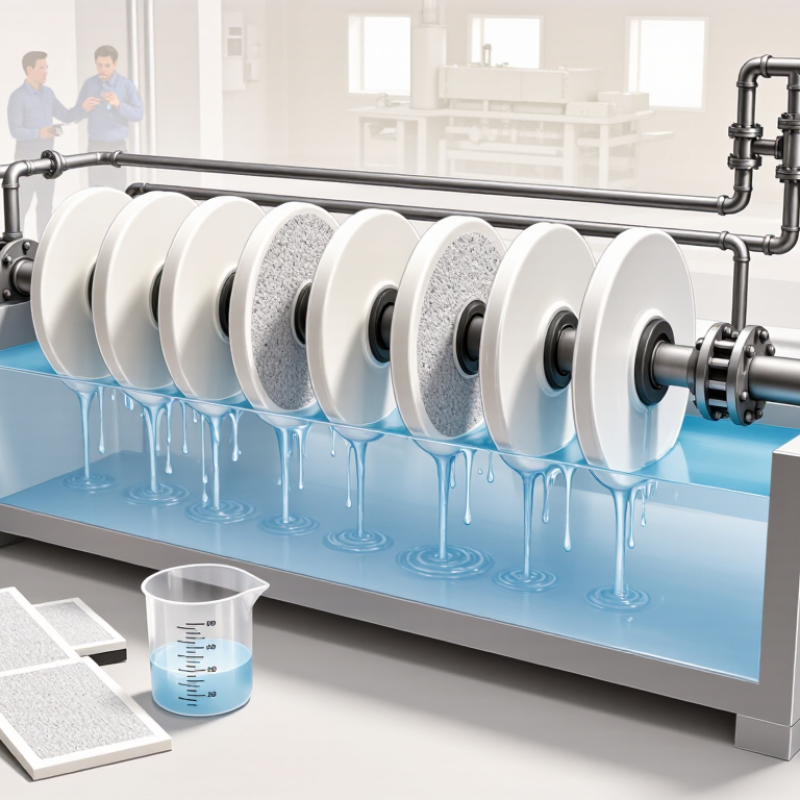
A Ceramic Vacuum Filter can be a practical choice when a process needs steady solid-liquid separation and reusable filter media. Its porous ceramic elements allow liquid to pass under vacuum while retaining solids at the surface. In operation, slurry spreads across rotating filter discs, and a cake forms as filtrate moves through the ceramic. The process is visible and measurable: operators can monitor filtrate clarity, cake thickness, and vacuum levels during a shift. Small changes in feed consistency may affect all three.

Durability is a key reason plants consider ceramic filtration. Ceramic elements can tolerate repeated washing and may provide long service life when selected and maintained correctly. They can also support lower moisture in some filter cakes, which may reduce downstream drying demands. Results depend on the material, particle size, slurry chemistry, and operating conditions. No filter is a perfect fit. Fine particles can behave unexpectedly, and blocked pores or uneven cake release may require attention. I would not choose a unit from a product sheet alone. Review actual feed data, cleaning requirements, spare-part availability, and trial results with a qualified supplier. That is the careful part. A well-matched Ceramic Vacuum Filter can improve process consistency, but its value should be confirmed against the plant’s real operating goals.
Why Choose a Ceramic Vacuum Filter?

What a Ceramic Vacuum Filter Is: Microporous Discs with 1–5 μm Pores

Why Choose a Ceramic Vacuum Filter?

What a Ceramic Vacuum Filter Is: Microporous Discs with 1–5 μm Pores

A ceramic vacuum filter separates liquid from solids using rigid, porous discs. Their interconnected pores typically measure 1–5 μm across. Under vacuum, liquid moves through the disc while suspended solids collect on its surface as a filter cake. The ceramic body is usually divided into small sectors, so filtrate can pass through internal channels toward a collection pipe. The disc turns through the slurry, then exposes the cake for removal. Small details matter. Pore size is not a precise particle-size cutoff: slurry chemistry, particle shape, and the developing cake all affect what passes through.

These discs are valued for their hard, stable structure and repeated use in demanding filtration cycles. A fine pore network can help produce clear filtrate, while vacuum draws liquid through without relying on disposable cloth as the main filtering surface. Still, actual results vary. A sticky cake may release unevenly, and blocked pores can reduce flow over time. Cleaning procedures and operating conditions therefore need careful testing with the real slurry, not just a sample specification. That distinction is easy to miss. In practice, the pore number describes the ceramic, not the whole separation performance.


Why Choose a Ceramic Vacuum Filter?

Microporous ceramic discs have pore sizes in the 1–5 μm range.

The chart shows the stated pore-size range; it does not represent filtration efficiency or operating performance.

How Vacuum Levels of 0.06–0.09 MPa Drive the Filtration Cycle

A ceramic vacuum filter works by drawing liquid through porous ceramic discs while solids remain on the surface. The stated vacuum range, 0.06–0.09 MPa, equals 60–90 kPa (NIST SP 811). That pressure difference pulls filtrate through the disc and helps form a mineral cake. Wills and Finch’s Mineral Processing Technology (8th edition, 2016) describes this pressure-driven separation as a core mineral-processing method.

Small changes matter. At the lower end, a dense slurry may drain slowly; toward 0.09 MPa, flow can improve, provided seals and piping prevent air leaks.

During operation, the discs rotate through slurry, emerge with a thin cake, then pass a discharge zone. The ceramic pores retain solids while filtrate travels through internal channels. Operators can watch the filtrate: a cloudy stream may signal fine particles passing through, while uneven cake thickness can point to poor slurry mixing or worn seals.

More vacuum does not always mean a drier cake. Cake structure, particle size, and feed concentration also shape moisture and throughput. That trade-off is easy to underestimate. Actual performance should be checked against plant readings, since altitude, leaks, and slurry properties can shift the effective pressure difference.

Typical Performance: 8–15% Cake Moisture in Mineral-Concentrate Filtration

In mineral-concentrate filtration, cake moisture often matters as much as throughput. A ceramic vacuum filter can typically produce cakes containing about 8–15% moisture, depending on the material and operating conditions. That range is a practical reference, not a guarantee. Ore type, particle size, feed consistency, and cake thickness all influence the result.

Ceramic filter plates use porous surfaces to draw liquid from the concentrate while retaining solids. In operation, a well-formed cake may look firm and matte as it leaves the filtration zone, rather than glossy with free water. Lower moisture can reduce the load on dryers and make material easier to handle. Small changes matter. Even a few percentage points can affect downstream energy use.

Still, the number needs context. Two concentrates at 10% moisture may behave differently because their minerals and particle shapes differ. Operators should check moisture alongside filtration rate, cake release, and filtrate clarity. Not every feed cooperates. A finer grind or changing slurry density can shift performance, sometimes unexpectedly. Site trials and routine sampling are more reliable than treating a typical range as a fixed specification.

Where Ceramic Vacuum Filters Are Used: Mining, Metallurgy, and Chemicals

Ceramic vacuum filters are used where solid-liquid separation must remain steady and process water has value. In mining, they handle mineral concentrates after flotation or thickening. A porous ceramic disc draws liquid through its surface while solids form a cake. The discharged cake is often relatively dry, which can reduce the load on later handling and transport. Every percentage point matters.

In metallurgy, filters may process metal-bearing concentrates, residues, or other fine solids. Particle size and slurry behavior affect performance, so a filter that works well on one feed may struggle with another. Operators need to monitor cake thickness, filtrate clarity, and vacuum stability. A clean-looking filtrate is useful, but it does not tell the whole story.

Chemical plants use ceramic vacuum filters for selected process slurries, including some corrosive or abrasive streams. Ceramic surfaces can resist wear, yet chemical compatibility still depends on the actual solution, temperature, and cleaning method. The details matter. Before choosing equipment, teams should test representative slurry and confirm maintenance needs. Ceramic filtration can save water and energy in suitable conditions, but it is not an automatic fit for every plant. Some operating assumptions deserve a second look.

How to Select a Filter: Feed Size, Throughput, Cleaning, and Maintenance

Why Choose a Ceramic Vacuum Filter?

How to Select a Filter: Feed Size, Throughput, Cleaning, and Maintenance

Selection starts with the feed, not the equipment brochure. Check the particle-size distribution and note how many fines the slurry contains. Fine particles may block pores or slow cake formation. Small details matter. Also record solids concentration, temperature, and changes between shifts. A trial with representative process slurry is more useful than a clean-water test, which may overstate performance.

Judge throughput by dry solids per hour, not filtrate flow alone. Track cake thickness, moisture, and cycle time across several runs. A quick initial flow can still leave a wet cake that is hard to handle. There is no single number that tells the whole story. Include normal feed fluctuations in testing.

Cleaning and maintenance affect performance over time. Ask how the elements are cleaned, how often cleaning is needed, and which methods suit the process. Backwashing may help; chemical cleaning should only use compatible procedures. Inspect seals, plates, and scraper parts regularly. Keep simple logs of vacuum pressure, filtrate clarity, and cycle times. Trends can reveal problems early, though records are easy to neglect during a busy shift.

Scroll to Top