2026 Top Wholesale Food Packaging Suppliers for Buyers
Choosing a packaging supplier can shape product safety, shelf appeal, operating costs, and delivery schedules. This 2026 guide to Wholesale Food Packaging suppliers helps buyers compare options beyond a polished catalog. The right partner should understand your product, order volume, storage conditions, and packing process.
Look closely at material specifications, available sizes, sealing performance, and print quality. A sample can reveal details a product photo cannot: a lid that loosens, a pouch that feels too thin, or a carton that arrives scuffed. Ask suppliers for current product documentation and clear information about food-contact suitability. Check minimum order quantities, production timelines, customization fees, and shipping arrangements before comparing quoted prices. Ask for proof.
Sustainability claims also deserve careful review. Request specific material details and supporting documents rather than relying on broad labels. No supplier is best for every buyer. A small café may value flexible ordering, while a growing food brand may need consistent production capacity and repeatable print colors. Some comparisons will remain imperfect: quoted lead times can change, and samples may not represent every production run. That is worth acknowledging. Use this overview to identify promising suppliers, prepare practical questions, and verify important details directly before placing an order.
Understanding Wholesale Food Packaging Suppliers and Their Products
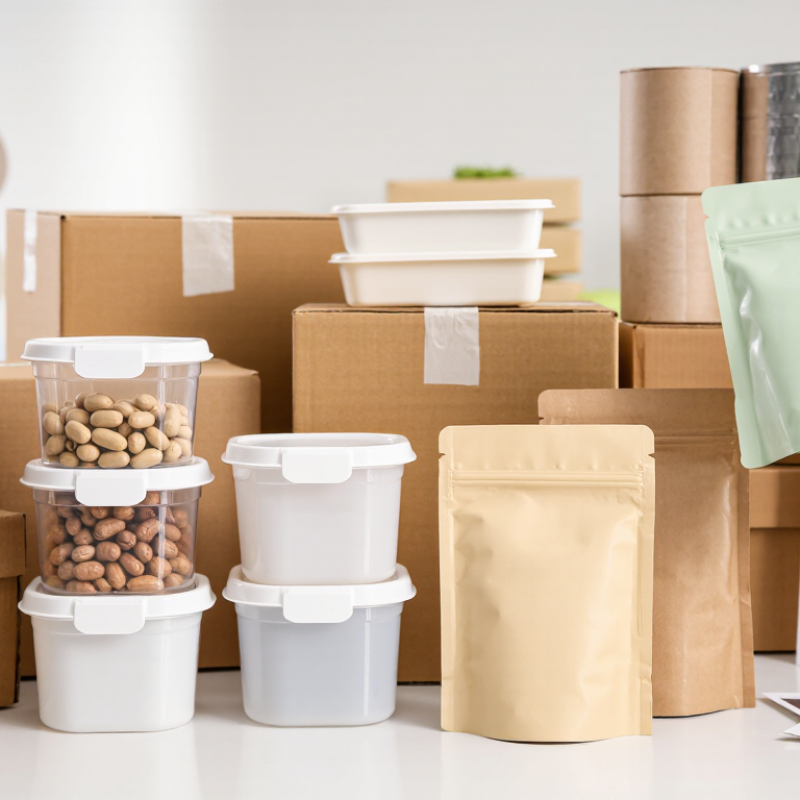
Wholesale food packaging suppliers provide containers, wraps, bags, trays, and protective materials in bulk. Their products may include paperboard cartons, molded fiber bowls, plastic cups, foil trays, and flexible pouches. Each option serves different foods. A vented container can help keep fried items crisp, while a tight-sealing cup helps prevent soup from leaking during delivery. Small details matter.
Tips: Confirm that the packaging is intended for the food and temperature you plan to use. Check whether lids, inserts, or labels are sold separately. Request clear lead times and storage guidance, too. Samples are useful, though one test may not reveal every issue.
Suppliers may offer standard sizes as well as custom printing or dimensions. Custom orders can improve shelf presentation, but they may involve higher minimum quantities and longer production times. Ask how changes affect cost and delivery dates. Requirements vary by product and location, so verify applicable food-contact information with the supplier. Don’t rely on appearance alone. A quick sample review is helpful, but buyers should document what they checked and revisit it when specifications change.

Identifying Buyer Requirements for Food Packaging
Food packaging requirements begin with the food itself: moisture, oil, acidity, aroma, and expected shelf life all affect material choice. Start with the product. A dry biscuit may need a strong moisture barrier, while a chilled sauce needs leak resistance and reliable seals. Buyers should also specify filling and storage temperatures, pack dimensions, serving size, and whether the package will be handled roughly in transit. These details help suppliers recommend a structure that fits actual use, not just a target price.
Ask for samples and relevant food-contact documentation, then test them with the intended product and packing equipment. Test it. A package that looks sturdy on a desk may split at a seal or fog inside a cold case. Small trial runs can reveal this. Confirm minimum order quantities, lead times, print tolerances, and how changes are managed before approving artwork. For seasonal demand, ask how quickly repeat orders can be produced. There is no perfect specification on paper; buyers sometimes discover missing needs only after a line test. Record those findings and revise the brief before comparing supplier quotations. This can feel slower, but it often prevents costly rework and excess stock.
Evaluating Supplier Quality, Compliance, Pricing, and Delivery
Choosing a wholesale food packaging supplier takes more than comparing unit prices. Ask for material specifications, production-site details, and quality-control records for the exact item you plan to buy. Request samples from a production run, not only a polished sales sample. Check seals, thickness, print alignment, and how containers hold up with your product. Small defects matter.
Paperwork matters. Confirm that food-contact documentation is current and relevant to the material, product, and markets you serve. Requirements can differ by destination, so have qualified staff review documents rather than assuming one certificate covers every order. A supplier should explain traceability, complaint handling, and corrective actions in plain terms. Vague answers deserve follow-up. I would also check whether quoted prices include setup costs, freight, taxes, and minimum order quantities. Compare like-for-like specifications; the cheapest quote may use thinner stock or exclude important services.
Delivery reliability needs evidence. Ask for typical lead times, recent on-time shipment rates, and how delays are communicated. For a first order, consider a smaller trial shipment before committing to a seasonal volume. Track actual delivery dates against the promised schedule. Even a careful scorecard can miss problems, and I have seen a neat sample fail to reflect routine production. Keep reviewing performance after the contract is signed.
Comparing Leading Wholesale Food Packaging Suppliers in 2026
Comparing leading wholesale food packaging suppliers in 2026 takes more than comparing unit prices. Check material specifications, minimum order quantities, sample availability, production lead times, and print tolerances. Ask for food-contact declarations and test data for the intended food, temperature, and storage period. Small details matter. FAO’s 2023 SDG Progress Report estimates that 13.2% of food was lost between harvest and retail in 2021. Packaging cannot prevent every loss, but suitable barriers and reliable seals can help protect products during handling and transport.
Material claims need equal scrutiny. The OECD’s Global Plastics Outlook (2022) reports that 9% of plastic waste was recycled worldwide in 2019. That figure is not specific to food packaging. Still, it cautions buyers against treating recyclability claims as proof of actual recovery. Compare suppliers on local collection options, recycled-content evidence, and clear disposal instructions. For paper packs, ask about grease and moisture performance; for flexible packs, request seal-integrity results. Not always easy. A lower quote may hide high freight costs, production waste, or rigid order minimums. A pilot run on the actual filling line can reveal problems, though it may delay a launch. The best comparison rests on evidence that matches the product, not the slickest catalogue.
2026 Wholesale Food Packaging Buyer Guide: Material Recycling Benchmarks
U.S. recycling rates by material, 2018
Paper and paperboard had the highest recycling rate among these materials in the data shown. Use this historical U.S. benchmark as one consideration when comparing packaging options; actual recyclability depends on local collection and processing systems. Source: U.S. Environmental Protection Agency, 2018 recycling data.
Selecting and Verifying a Supplier for Long-Term Sourcing
A long-term food packaging supplier should be verified on the production floor, not just through a polished catalog. FAO’s 2023 food-loss report estimated that 13.2% of food was lost between harvest and retail in 2021. Packaging cannot prevent every loss, but weak seals, inconsistent thickness, or late deliveries can add avoidable risk. Request samples from routine production, then test them with your actual filling line, storage conditions, and transport route. Check food-contact declarations, independent test reports, batch codes, and documented change controls. Details matter.
Ask for evidence, not promises. Review recent audit findings, production capacity, complaint records, and backup plans for material shortages. Confirm lead times and order minimums in writing; a low unit price may conceal costly delays or excess inventory. OECD’s 2022 Global Plastics Outlook reported that packaging generated about 40% of global plastic waste. That figure makes material choices and end-of-life claims worth checking carefully. Request data behind recyclability claims, and verify that local collection systems can handle the material. One uncomfortable truth: a supplier may pass an audit and still struggle during peak demand. Start with a limited production run, track defects and delivery performance, and revisit the scorecard together. A spreadsheet helps, but real-world line trials can reveal problems the paperwork misses.
| Evaluation area | Data point to collect | Verification evidence | Buyer acceptance guideline | Suggested weight |
|---|---|---|---|---|
| Food-contact compliance | Applicable requirements for the packaging material, food type, contact conditions, and destination market. | Current material declarations, test reports, and supporting technical documents that identify the tested material and intended use. | Confirm compliance against the rules applicable to the product and market. Examples include relevant U.S. food-contact requirements and applicable European Union food-contact rules; requirements vary by material and use. | 20% |
| Product specification control | Material composition, dimensions, thickness or basis weight, tolerances, color, printing, and closure or sealing requirements. | Approved specification sheet, sample approval record, inspection plan, and change-control procedure. | Specifications should be measurable, agreed in writing, and linked to the exact product configuration being purchased. | 15% |
| Migration and performance testing | Test coverage for the intended food, contact time, temperature, and packaging function. | Relevant laboratory reports and test methods; where needed, migration, seal integrity, leakage, compression, or temperature-resistance results. | Reports should match the supplied material and intended conditions. Request additional testing if the food type or use conditions differ from those covered. | 12% |
| Traceability and lot records | Ability to identify production lots, raw-material inputs, manufacturing dates, and shipment records. | Sample lot code, traceability procedure, batch records, and documented recall or withdrawal process. | Require a documented method to trace delivered goods to production records and to communicate promptly during a quality or safety issue. | 10% |
| Quality management | Inspection controls, nonconformance handling, corrective actions, and consistency between production runs. | Quality procedures, inspection records, audit findings or certifications where applicable, and examples of corrective-action reports. | Confirm that controls cover incoming materials, in-process production, finished goods, and customer complaints. | 10% |
| Production capacity and continuity | Available production capacity, seasonal constraints, backup equipment or sites, and critical input dependencies. | Capacity statement, production schedule example, business-continuity plan, and disclosure of relevant subcontracting. | Compare confirmed capacity with forecast demand and peak requirements. Validate contingency plans for significant supply interruptions. | 10% |
| Commercial terms | Quoted unit price, minimum order quantity, tooling or setup charges, payment terms, and price-adjustment conditions. | Written quotation and contract terms specifying product configuration, order quantity, currency, delivery basis, and quote validity. | Evaluate total landed cost and compare like-for-like specifications. MOQ, pricing, and payment terms are supplier- and product-specific; obtain current written quotes. | 8% |
| Lead time and delivery performance | Production lead time, transit assumptions, order cut-off dates, and shipment performance history. | Written lead-time commitment, recent delivery records, shipping plan, and agreed escalation process for delays. | Separate production time from transit time and customs clearance. Set service expectations and track on-time, in-full delivery against purchase orders. | 5% |
| Environmental claims and end-of-life information | Recycled content, material composition, recyclability, compostability, or other environmental claims being made. | Claim substantiation, material breakdown, relevant test documentation, and market-specific disposal or certification information where applicable. | Check that claims are specific and supported. Do not assume a package is recyclable or compostable without considering its full construction and local collection or processing systems. | 5% |
| Supplier communication and change notification | Named quality and commercial contacts, response process, and notification of changes to materials, processes, or manufacturing location. | Escalation contacts, written change-control terms, and sample notification records. | Require advance written notification and buyer approval for changes that could affect compliance, fit, function, or product specifications. | 5% |
| Suggested evaluation weighting total | 100% | |||