10 Best Tank Container Manufacturers for Global Buyers
A Tank Container is more than a stainless-steel vessel on a frame. It is a working asset whose design, inspection history, service support, and availability can shape a shipment’s performance. For global buyers, comparing manufacturers means looking beyond catalogue images and headline capacity. Ask how each supplier documents materials, manages quality checks, supports maintenance, and handles replacement parts. Small details matter. A clear data plate, accessible valves, and sound frame welds can make a difference during daily operations.
For this guide, tank-container engineer Alex Morgan offers an illustrative buying principle: “Choose the tank that fits the operation, not just the quotation.” The line is a practical reminder, not a substitute for technical review. Buyers should match specifications to cargo characteristics, route conditions, cleaning needs, and handling equipment. They should also verify claims directly with manufacturers and request current technical documentation. A polished brochure is not enough.
The ten manufacturers featured here represent different capabilities, service networks, and product approaches. Some may suit buyers prioritizing fleet scale; others may offer a closer fit for specialized operating requirements. No single ranking can settle every purchasing decision. That is worth remembering. A manufacturer with broad reach may not be the best partner for every route or maintenance plan. This overview provides a starting point for informed comparison, while leaving room for site visits, reference checks, and questions that a shortlist alone cannot answer.
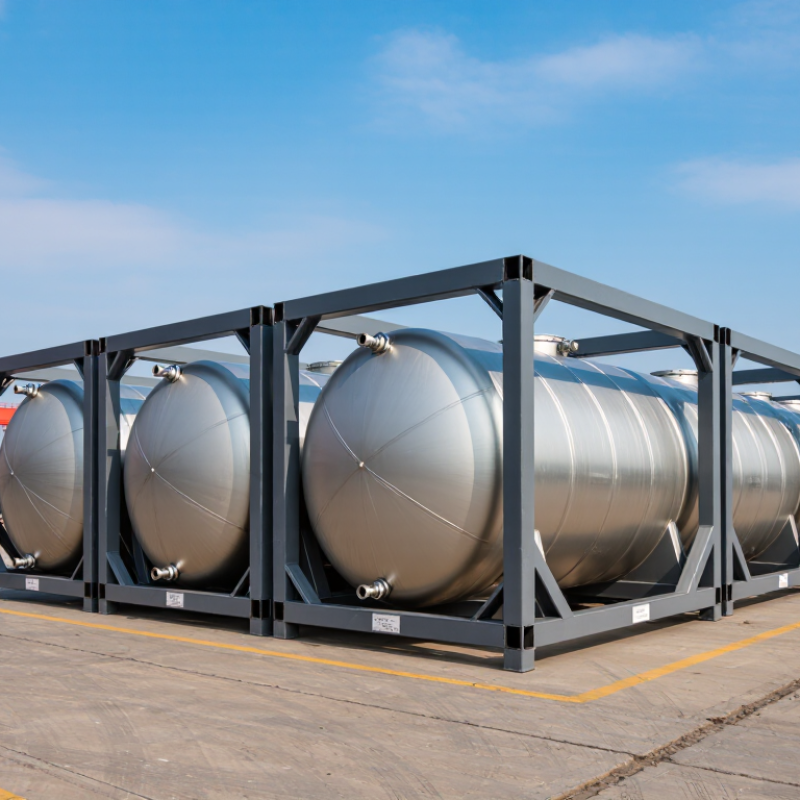
What Tank Container Manufacturers Do and Why They Matter
Tank container manufacturers do more than weld a steel frame around a vessel. They engineer pressure-rated tanks, insulation, heating options, valves, and fittings for specific cargo and transport conditions. Small details matter: a poorly placed steam-heating connection can complicate cleaning, while a weak frame corner may face repeated stress during lifting. The International Tank Container Organisation’s 2024 survey estimated a global fleet of about 801,800 tank containers. That scale makes consistent design, traceable materials, and documented testing essential—not optional extras.
Manufacturers also shape how reliably tanks move between ships, rail, and road. UNCTAD’s Review of Maritime Transport 2024 notes that over 80% of world trade by volume travels by sea, underlining the value of equipment that can transfer between transport modes. Buyers should compare design specifications, inspection records, repair support, and access to replacement parts, not just purchase price. Ask how the maker verifies welds and pressure tests, and whether heating or insulation suits the actual route. Details can be overlooked. And specifications alone do not guarantee good service: operating conditions and maintenance still matter, sometimes more than buyers expect.
Key Criteria for Evaluating Manufacturers for Global Buyers
For global buyers, a low quotation means little if a tank arrives late or needs repairs. Compare manufacturers on documented compliance, build quality, delivery reliability, and service support. The ISO 1496-3 standard covers the design and testing of tank containers; ask for relevant test records, not just a compliance claim. Review material traceability, welding inspections, pressure-test results, and evidence of leak checks. Small details matter: a poorly protected valve or unclear inspection record can complicate handover. A polished brochure is not proof.
Capacity and support deserve equal attention. The ITCO 2024 Global Tank Container Fleet Survey estimated 801,800 tanks in the global fleet at the start of 2024, underscoring the scale of this equipment market. Ask how production capacity is allocated, what spare parts are stocked, and where technicians can provide support. Request realistic lead times and written warranty terms. Check whether maintenance guidance is clear enough for the teams who will use it. A factory visit can reveal practices that a spreadsheet misses, though one visit cannot confirm every shift performs equally well. Buyers should compare sample documentation and inspect finished units before placing large orders. Some criteria remain hard to score; record the uncertainty rather than hiding it.
Profiles of 10 Leading Tank Container Manufacturers
Because company names are intentionally omitted, these ten profiles describe manufacturing strengths, not a verified ranking. One producer may focus on high-volume standard units, with consistent dimensions and repeatable inspection records. Another may build stainless-steel tanks and document material grades for buyer review. A third may offer insulated models for temperature-sensitive cargo. Details matter.
A fourth manufacturer may specialize in heating systems, with accessible controls and clear maintenance guidance. A fifth may emphasize food-grade interiors, smooth welds, and cleaning documentation. A sixth may engineer tanks for varied cargo requirements, helping buyers confirm material compatibility before ordering. A seventh may support intermodal fleets with standardized fittings and practical loading features. These differences are more useful than broad claims about quality.
An eighth producer may offer repairs and refurbishment, extending equipment life when inspections support that choice. A ninth may provide digital production records, serial-level traceability, and inspection reports. A tenth may serve buyers needing smaller production runs or tailored delivery schedules. Compare weld inspection methods, test documentation, spare-parts access, and after-sales response times. Ask for sample records and clarify what each inspection covers. A polished brochure is not enough; even experienced buyers can overlook service delays or unclear warranty terms.
How the Manufacturers Compare Across Products and Markets
Tank container manufacturers differ less by steel shell than by the details around it: insulation options, heating systems, pressure ratings, food-grade interiors, and repair support. The International Tank Container Organisation’s 2024 survey estimated the global fleet at about 801,800 units. That scale makes availability and service coverage practical comparison points, not just catalogue features. A manufacturer serving chemical corridors may offer robust specifications, while another may suit food-grade cargo and temperature-sensitive routes better. No single design fits every lane.
Regional reach matters. UNCTAD’s Review of Maritime Transport 2024 notes that more than 80% of world trade by volume moves by sea. Buyers should therefore compare delivery lead times, depot access, spare-part availability, and after-sales response in their actual markets. A strong factory can still be a poor fit if repairs mean a long detour. And brochures can make differences look smaller than they are.
Tips: Ask for recent inspection records, material certificates, and route-specific service references. Compare usable payload and maintenance intervals, not only purchase price. Check the details. A missed service commitment can outweigh a lower quote; even experienced buyers sometimes underestimate that risk.
10 Best Tank Container Manufacturers for Global Buyers — How the Manufacturers Compare Across Products and Markets
A neutral reference benchmark: the external dimensions of a standard 20-foot ISO container, rather than a company ranking.
How to read this: The reference external dimensions are 6.058 m long, 2.438 m wide, and 2.591 m high. These standard envelope dimensions help buyers compare equipment compatibility across markets; tank capacity and features vary by design and manufacturer.
Choosing a Manufacturer for Your Operational Requirements
Selecting a tank container manufacturer starts with the routes and cargo conditions your operation actually faces. Define required capacity, loading temperature, cleaning cycle, and expected handling frequency before comparing quotations. A unit suited to occasional regional moves may be inefficient on a high-turnover network. Small details matter.
Ask how the manufacturer controls welding, material traceability, pressure testing, and final inspection. Request sample inspection records and clarify which tests apply to your chosen configuration. Check whether insulation, heating coils, linings, valves, and fittings match your process, not just a standard specification sheet. If possible, review a finished unit or consult an independent inspector. Paperwork helps, but it cannot reveal every maintenance issue.
Operational support deserves equal attention. Confirm spare-part availability, repair guidance, warranty scope, and realistic delivery windows across your service regions. Ask how design changes are documented and how replacement components remain compatible. Compare total ownership costs, including cleaning downtime and planned inspections, rather than purchase price alone. No checklist catches everything; revisit assumptions after a trial shipment and record what operators notice during loading and discharge. That feedback may expose a detail the buying team overlooked.