Who Are the Top Static Pile Driver Manufacturers in China?
China’s construction market is large, but its size alone cannot identify the best Static Pile Driver manufacturers. The National Bureau of Statistics of China reported construction output of RMB 31.59 trillion in 2023, up 5.8% year over year. This is useful context, not a measure of pile-driver sales. Buyers still need evidence from actual projects.
A sound comparison looks beyond rated pressing force. It checks pile compatibility, noise and vibration control, hydraulic stability, service access, and parts availability. Geotechnical engineer Bengt H. Fellenius has expressed a key foundation principle: “The capacity of a pile is not a property of the pile, but of the pile-soil system.” That is why machine performance must be assessed alongside ground conditions and installation records. Small details matter. Hose routing, clamp wear, and control response can shape a long shift.
This guide examines Chinese manufacturers through product specifications, project references, production capability, and after-sales support. It distinguishes verifiable evidence from promotional claims where possible. The comparison has limits: public data may be incomplete, and site conditions vary. A ranking should not replace a technical review. The most suitable supplier is the one that can document a reliable fit for the project—not simply the largest catalogue or boldest claim.
What Is a Static Pile Driver?
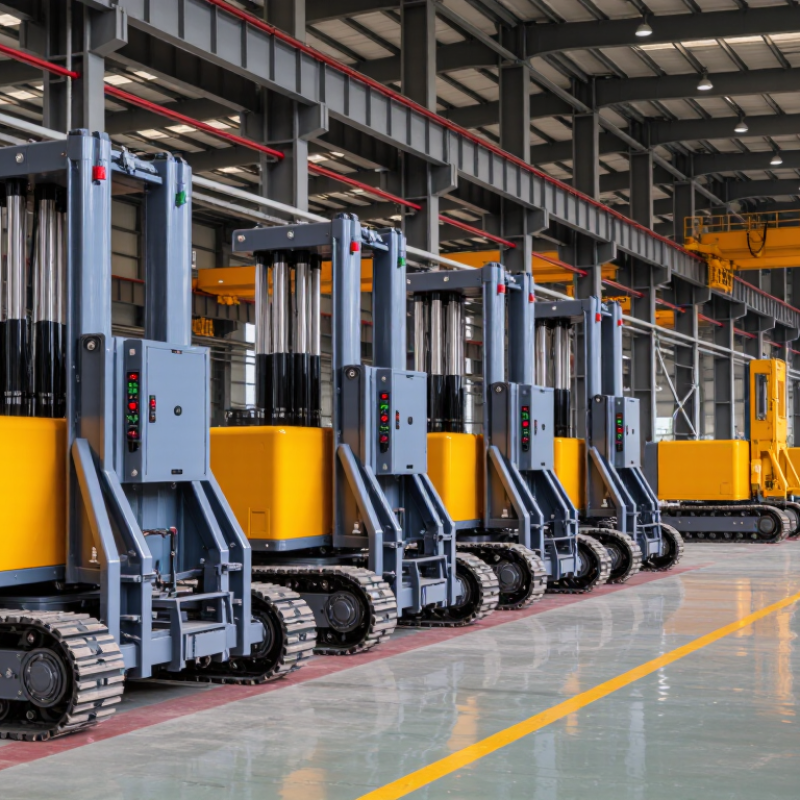
A static pile driver installs foundation piles by pressing them into the ground with hydraulic force rather than striking them with a hammer. Its frame grips the pile, while a reaction system—often connected to previously installed piles—provides the counterforce. The operator advances the pile in controlled increments and records pressure, penetration depth, and ground response. No impact blows. This usually reduces vibration, but it does not make a project silent or disturbance-free; pumps, handling, and nearby soil movement still matter.
The Federal Highway Administration’s 2016 Design and Construction of Driven Pile Foundations (GEC 12) explains that pile capacity is assessed through both shaft resistance and toe resistance. That distinction helps engineers interpret site investigation and installation records, rather than relying on machine force alone.
On site, useful checks include hydraulic pressure, pile alignment, penetration per press cycle, and whether the reaction piles remain stable. The method can suit dense urban locations or vibration-sensitive structures, provided the soil and access conditions fit. A caveat: static pressing may struggle in very hard layers or where the reaction system cannot be arranged. I would not treat low vibration as proof of low risk; monitoring still matters.
How Does Static Pile Driving Work?
How Does Static Pile Driving Work?
Static pile driving pushes a pile into the ground using steady hydraulic pressure rather than repeated hammer blows. A machine grips the pile and presses it downward, while a reaction frame supplies the opposing force. That reaction may come from counterweights or previously installed piles. The pile advances gradually, and operators monitor pressing force, penetration depth, and vertical alignment. Slow movement. The method usually creates less noise and vibration than impact driving, but ground conditions still matter. Dense layers, buried debris, or unexpected resistance can affect progress. Site-specific engineering should guide equipment selection and installation limits.
Tips: Check the pile’s alignment often, especially during initial penetration. Record depth and pressing force at consistent intervals. If resistance changes suddenly, pause and assess rather than forcing the pile onward. Clear records help the project team compare installation conditions across piles.
Static pressing can suit locations near occupied buildings or vibration-sensitive equipment, but it is not ideal for every site. Soil investigation, access, reaction capacity, and pile design all influence feasibility. A smooth installation log can still miss local ground variation, so field observations deserve careful review. I would not treat one successful pile as proof that every pile will behave the same way.
What Makes a Chinese Manufacturer a Market Leader?
A market-leading static pile driver manufacturer is defined less by bold claims than by equipment that performs consistently on real sites.
Strong engineering begins with a stable frame, reliable hydraulic components, and controls that allow precise adjustments. For static piling, pressure must be applied steadily; uneven force can affect installation quality and disturb nearby ground.
Ask to see load-test records, inspection procedures, and clear specifications for operating conditions.
Small details matter. Hose routing, weld quality, and access to service points can shape daily reliability. Records matter.
A capable supplier also understands how soil conditions, pile dimensions, and site access affect machine selection. Experienced technical staff should explain these trade-offs plainly, rather than promise one machine suits every project.
Responsive service is another marker of leadership: clear troubleshooting guidance and practical maintenance schedules can reduce downtime.
Spare parts availability should be discussed before purchase, not after a breakdown. No factory is flawless. Even well-built equipment needs careful maintenance, and published specifications do not reveal every field limitation.
A thoughtful buyer compares documentation, checks references where possible, and asks how support works after delivery. Not glamorous, but useful.
Which Companies Are Among China’s Leading Static Pile Driver Manufacturers?
China’s leading static pile driver manufacturers are best assessed by engineering capability, not by broad machinery sales alone. The strongest candidates tend to be specialist foundation-equipment makers, established piling-equipment divisions, and regional manufacturers with in-house design and field-service teams. Look for verifiable project records, stable hydraulic control, clear load ratings, and support for replacement parts. A machine working beside a tight urban boundary must press piles steadily, with little vibration and accurate vertical alignment.
China Construction Machinery Association data recorded 195,018 excavator sales in 2023, including 90,123 domestic sales and 104,895 exports. This signals a large equipment-manufacturing base, but it is not a static pile driver ranking. Buyers should treat it as context, not proof of a manufacturer’s pile-driving experience. Ask suppliers for commissioning records, pile-size ranges, pressure-system specifications, and references from comparable ground conditions. Details matter.
There is no universally reliable public league table for this product category, so claims of being “top” need careful checking. Some manufacturers publish impressive capacity figures but provide less detail on site support or performance in dense clay. That gap deserves attention. Cross-check technical documents against independent project references and inspect the equipment’s service access, hose routing, and control response before selection.
How to Compare Static Pile Driver Manufacturers in China?
When comparing static pile driver manufacturers in China, assess the machine against your actual pile design and site conditions—not just its advertised pressing force. Check rated force, compatible pile dimensions, maximum pressing depth, counterweight arrangement, and ground-pressure requirements. Ask for test records from projects with similar soil profiles, including force readings and pile installation rates. A factory demonstration on level ground is useful, but it cannot fully represent a confined, variable site.
The 2013 Global Construction 2030 report by Global Construction Perspectives and Oxford Economics projected global construction output would reach $15.5 trillion by 2030, compared with $8.7 trillion in 2012. This broad forecast is not a pile-driver sales statistic, but it underlines why equipment durability and service capacity matter. Compare documented maintenance intervals, spare-part availability, commissioning support, and operator training. Check the warranty terms in writing. A polished brochure is not field evidence.
Tips: Request a detailed quotation and a recent customer reference. Confirm whether quoted force is continuous or peak, and ask how it was measured. If possible, inspect a working unit and review its maintenance log. Be candid about the limits: even a strong reference may not match your soil, and I would not choose a supplier from specifications alone.
How to Compare Static Pile Driver Manufacturers in China
Suggested evaluation weights for comparing manufacturers. These are a practical scoring framework, not measured market-share data or ratings of specific companies.
Compare documented pressing force, project suitability, control and safety features, service support, and lifecycle cost. Verify specifications against technical documents and project requirements.