What Are the Top Stainless Steel Forgings in China?
Choosing the top stainless steel forgings in China requires more than comparing factory size or export volume. Buyers must examine alloy control, forging capability, heat treatment, inspection systems, and delivery consistency. A bright 316L flange may look excellent, yet hidden inclusions or incorrect solution treatment can compromise service life.
John C. Lippold, a respected authority in stainless steel metallurgy, offers an important reminder: “Stainless steels are a family of iron-based alloys, not one universal grade.” That principle matters when evaluating Chinese suppliers. The best stainless steel forgings are selected for their application, not their appearance alone.
Common choices include 304 and 316L forgings for chemical equipment, 17-4 PH for high-strength components, and duplex grades for chloride-rich environments. Experienced manufacturers control grain flow through carefully designed dies and monitored deformation. They also record furnace temperature, holding time, cooling rate, and hardness results.
Look closely at the evidence.
Reliable suppliers can provide PMI reports, ultrasonic testing records, dimensional inspection data, and EN 10204 3.1 certificates. ISO 9001 certification helps, but it does not replace technical verification. ASTM A182 compliance may be essential for pressure-related flanges and fittings.
China has many capable forging producers, but quality varies between plants and even between production batches. That fact is uncomfortable, yet useful. A supplier with impressive machinery may still lack stable process control. Buyers should request sample reports, inspect production areas, and review previous experience with similar grades and sizes.
No ranking remains permanent. The strongest choice combines metallurgy, traceability, practical experience, and honest communication.
What Are Stainless Steel Forgings and Why Are They Important?
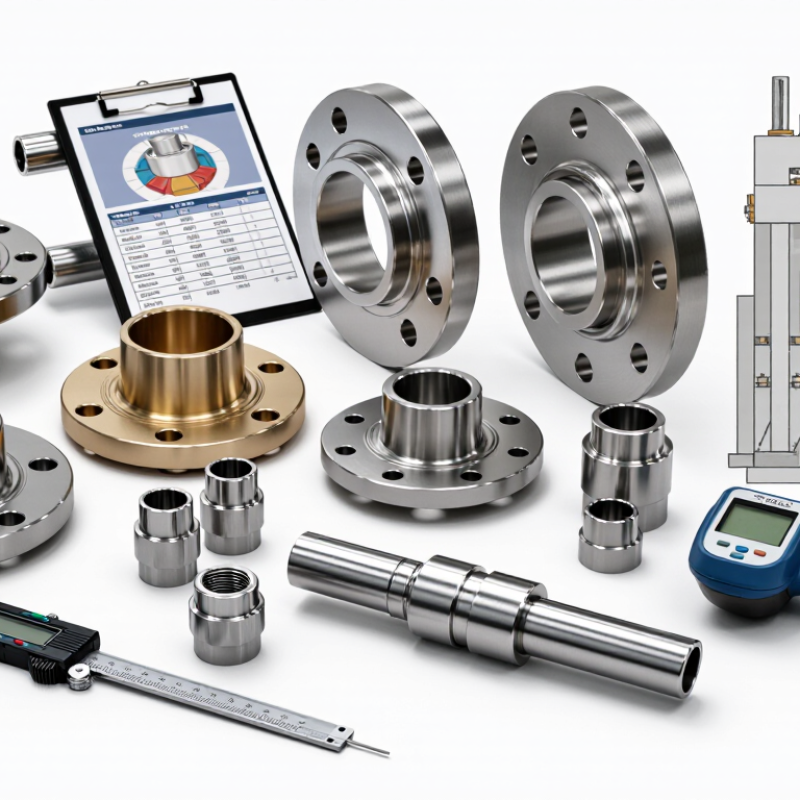
Stainless steel forgings are metal components shaped under controlled pressure and heat. Unlike castings, forging can refine internal structure and align grain flow with service loads. Common Chinese outputs include flanges, valve bodies, rings, shafts, and pump parts. They matter because chromium-rich steel forms a passive oxide film, slowing corrosion in wet, chemical, and marine environments. Nickel and molybdenum can improve toughness and pitting resistance, depending on grade. That distinction matters. A forged pressure part is not automatically safe; chemistry, reduction ratio, heat treatment, and inspection decide performance. Buyers should request heat numbers, ultrasonic records, tensile results, and dimensional reports.
The International Stainless Steel Forum reported about 58.4 million tonnes of global stainless crude-steel production in 2023. China contributed roughly 36.7 million tonnes, according to its 2023 statistics. This scale supports a broad forging ecosystem, from large ring presses to precision machining and non-destructive testing. The best Chinese forgings are not simply the heaviest or cheapest. They combine stable metallurgy, controlled tolerances, documented traceability, and reliable delivery. Certificates alone cannot replace process evidence. Not every part. A polished surface may hide subsurface discontinuities. Engineers should compare grain flow, hardness mapping, corrosion testing, and failure data. The uncomfortable point is that “top” depends on application. A 316-type forging may suit chloride exposure, while a lower-alloy grade may perform better economically in a dry plant. No process is flawless.
What Standards Define Top-Quality Chinese Stainless Steel Forgings?
Top stainless steel forgings in China are defined by controlled quality, not appearance alone. A bright surface can still hide internal defects. Serious buyers check the material grade, forging ratio, heat-treatment record, and traceability of each batch. Common specifications include ASTM A182 for pressure components and ASTM A276 for stainless steel bars and shapes. European projects may require EN 10228-4 inspection for stainless steel forgings.
Quality also depends on testing evidence. Chemical analysis should confirm elements such as chromium, nickel, and molybdenum. Tensile strength, yield strength, and elongation must meet the agreed specification. Ultrasonic testing can reveal internal cracks or porosity. Liquid penetrant testing helps detect surface-breaking flaws. An EN 10204 3.1 certificate adds useful inspection data, while ISO 9001 supports process control rather than replacing product testing. The details matter.
Tips: Request heat numbers, test reports, dimensional records, and clear acceptance criteria before production. Match the standard to the application. A valve forging and a structural component do not face identical risks. I would also audit sampling methods, because one perfect test piece proves little about an entire batch. Some specifications may conflict in practice, so confirm the governing standard in writing.
Which Chinese Regions and Manufacturers Lead the Forging Industry?
China’s stainless steel forging industry is strongest in Jiangsu, Zhejiang, Shandong, and Liaoning. Jiangsu and Zhejiang contain dense metalworking clusters, with skilled machining teams and reliable heat-treatment services. Shandong is known for heavy industrial forgings, including flanges, shafts, and pressure-bearing components. Liaoning supports large open-die projects for energy and marine equipment. Guangdong also serves export-oriented buyers requiring smaller, highly finished parts.
Leading manufacturers usually combine forging, heat treatment, machining, and inspection under one production system. Their equipment may include hydraulic presses, ring-rolling mills, and controlled-atmosphere furnaces. Experienced suppliers understand grades such as 304, 316, and precipitation-hardening stainless steels. They should provide material certificates, positive material identification, ultrasonic testing, and tensile results. A clean traceability system connects each part to its heat number and process records.
In practical sourcing work, factory audits reveal more than online photographs. Check die maintenance, furnace calibration, surface defects, and actual inspection capacity. Ask for recent samples with similar dimensions and tolerance requirements. Regional reputation helps, but it cannot replace evidence. The picture is not perfectly uniform. Some large factories outsource critical heat treatment, creating avoidable delays and inconsistent hardness. Smaller workshops may offer better communication, yet lack advanced testing equipment. Buyers should compare process control, documentation quality, delivery history, and technical response before selecting a Chinese forging partner.
Jiangsu and Zhejiang are widely recognized as China’s strongest stainless-steel forging bases because of their dense metal-processing, valve, pipe-fitting, machinery, and precision-manufacturing networks. Guangdong and Shandong also have strong downstream demand from equipment manufacturing, petrochemicals, marine engineering, and energy projects. Liaoning and Sichuan are important for heavy industry, aerospace-related equipment, power generation, and large-scale industrial forgings.