What Are the Top Push Up Bra Types in 2026?
A Push Up Bra is designed to lift and shape the bust, but different constructions create different results. In 2026, shoppers can compare classic graduated-padding styles, plunge designs, push-up balconettes, strapless options, and wireless versions. Each suits a different neckline, outfit, or comfort preference. A low-cut plunge can work beneath a wrap dress, while a strapless style may pair better with a fitted evening top. Small details count.
This guide introduces the main types and explains what to look for beyond the label. Padding placement, cup shape, strap position, and band support can all affect how a bra fits and feels. For a practical fit check, look for a level band, cups that contain breast tissue without cutting in, and straps that stay put without digging. These are useful starting points, not a substitute for trying the garment on; sizing and shape vary between brands. And there is a trade-off: extra lift may feel less comfortable during a long day, especially in a firm, heavily padded style. The best choice depends on your body, clothing, and preferred level of support. This overview focuses on construction and everyday wear, so readers can compare options with clearer expectations—not assume one design works for everyone.
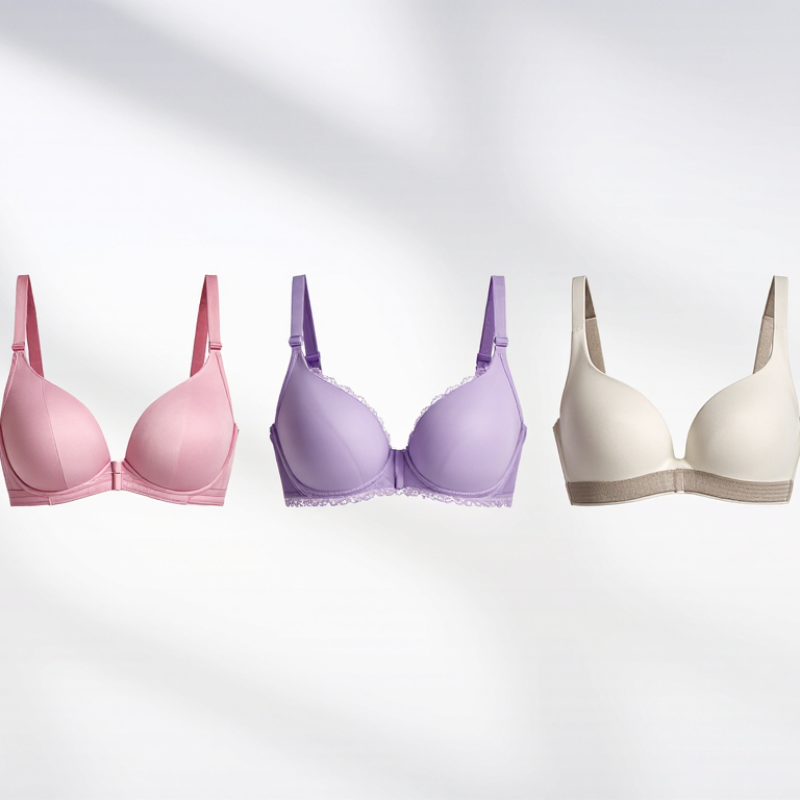
How Push-Up Bras Create Lift and Shape
A push-up bra creates lift through angled padding placed along the lower or outer cup. This padding gently guides breast tissue upward and toward the center, creating a fuller-looking neckline. The cup shape matters, too: a close-fitting cup supports the breast, while a firm band anchors the bra around the torso. The straps should help stabilize the fit, not carry all the weight. Small details count.
The result depends on the wearer and the bra’s construction. Light padding can add subtle definition; thicker, graduated padding usually creates a more pronounced contour. A well-fitted underwire may provide extra structure, though wireless styles can shape through molded cups and supportive bands.
Neither approach suits everyone. If the center panel floats away from the chest or the cup edge cuts in, the size or shape may be wrong. Try adjusting the straps and band before assuming more padding is needed.
Comfort is a useful test, but it is not a perfect one; a bra can feel soft and still shift during movement.
The Main Push-Up Bra Types Available in 2026
Push-up bras in 2026 come in several shapes, each creating lift differently. Graduated-padding styles use thicker cups near the bottom to gently raise the bust. Even lift. Plunge push-up bras have a low center gore, making them useful beneath wrap tops or deep necklines. T-shirt versions add smooth, lightly molded cups under thin fabric, while lace styles trade a completely seamless look for decorative detail.
Some designs use removable pads, so you can adjust the volume or take the inserts out. Others have fixed foam, gel, or air pockets built into the cups. Adhesive and strapless push-up styles can work with open-shoulder outfits, but their support may feel less secure during a long day. More padding does not always mean better lift; cup shape and band fit matter just as much.
Tips: Try a style with the top you plan to wear. Check that the center sits close to your chest and the band stays level when you move. If cups wrinkle or spill over, try a different size or shape. Comfort is personal, and a bra that looks perfect on a hanger may feel wrong after an hour.
How Padding, Coverage, and Support Vary by Type
What Are the Top Push Up Bra Types in 2026?
How Padding, Coverage, and Support Vary by Type
Push-up bras differ in more than lift. Graduated padding is thicker near the lower cup, gently raising the bust while keeping the upper edge less bulky. Plunge styles use a low center front, making them useful beneath deep necklines; their coverage may feel limited for fuller busts. Demi cups expose more of the upper chest, while full-coverage designs hold more tissue in place. Wireless options can feel softer, though their support depends heavily on band fit and fabric structure.
Tips: Try a bra with a close-fitting top. Check that the cups lie smooth, the center panel rests comfortably, and the band stays level when you raise your arms. A snug band matters.
For everyday wear, choose padding and coverage based on the garment and the support you want, not just the promised lift. Molded cups create a rounded outline; removable pads let you adjust the shape. If straps dig in or cups gape, try another size or cut. Small fit differences matter. No single type works for every body, and even a well-made bra may feel wrong after a long day. Don’t ignore that discomfort.
How to Choose a Style for Your Shape and Outfit
A push-up bra should lift without forcing breast tissue over the cup edge. For fuller upper breasts, a plunge style can create a lower neckline while keeping the center panel discreet. If your breasts are wider-set, a balconette shape may bring them inward and suit square or scoop-neck tops. Softer padding often feels less bulky under thin knits. Small detail: check the cup edge while seated, too.
For a close-fitting T-shirt, choose smooth cups and minimal seams; lace can show through. A deep-V dress usually works better with a low gore and angled cups than with thick, full-coverage padding. If your shoulders slope, straps that adjust easily help prevent slipping. The band should stay level when you raise your arms. It should feel snug, not restrictive.
Grand View Research estimated the global lingerie market at about $94 billion in 2023, reflecting broad demand for varied styles, not proof that one bra suits every body. Use that context carefully. Fit testing matters more than trend labels. Try the bra with the outfit you plan to wear, then check the side and neckline in natural light. I still find sizing charts imperfect; bodies change, and the same size can sit differently across cuts.
What to Consider for Fit, Comfort, and Care
In 2026, choosing a push-up bra starts with fit, not padding height. Plunge, demi-cup, and wireless styles can all lift differently. Breast Research Australia’s 2012 bra-fitting study of 104 women reported that 85% wore an incorrectly fitted bra. That figure is a reminder, not a universal rule. Bodies vary, and a tape measure cannot capture every shape. Check that the band stays level, the cups lie smoothly, and the center panel rests comfortably against your chest. No pinching. No slipping.
Comfort matters after the fitting room, too. Wear the bra for several hours and notice pressure under the arms or at the straps. A firmer band usually provides more support than overtightened straps. For sensitive skin, inspect seams and choose a soft lining; for close-set breasts, a narrow center may feel better. These details are easy to overlook.
Care affects shape and lifespan. The American Cleaning Institute advises following garment care labels, since fabrics and trims need different handling. Hand-wash when practical, using cool water and mild detergent, then press water out gently. Skip twisting the cups. Air-dry flat or hang by the center gore, away from direct heat. A laundry bag can reduce snagging in a machine, but it will not prevent every bit of wear. Rotate bras when possible, and replace one when its band no longer feels secure.