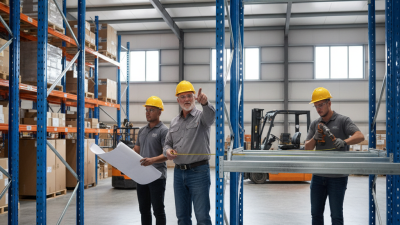
What Are the Top Industrial Racking Systems?
Industrial Racking Systems do more than hold pallets. They shape how people, forklifts, and inventory move through a facility. The right choice depends on load size, turnover, available floor space, and handling equipment. A selective pallet rack offers direct access to each pallet. Drive-in racks store more pallets in less space, but reduce selectivity. Push-back and pallet-flow systems can support faster movement when product rotation and operating patterns suit them. Mezzanines add usable levels, though they require careful planning.
Warehouse-design author George R. Strakosch’s work points to a practical principle: “Choose storage around the goods, the handling equipment, and the operating flow.” This is a paraphrase of his approach, not a verbatim quotation. It captures a useful starting point: a rack should fit the work, not just the building.
Consider a busy aisle at shift change. A forklift needs room to turn; a picker needs a clear view of labels; and the stored load must sit securely on its supports. Small mismatches can create daily delays. No layout is perfect. That deserves a second look.
This guide compares leading Industrial Racking Systems, including selective, drive-in, push-back, pallet-flow, cantilever, and mobile options. It explains where each system works well, what trade-offs to check, and which details deserve attention before purchase. Capacity ratings, aisle width, pallet dimensions, and installation quality matter. So does the real traffic pattern, which can differ from the plan on paper. A thoughtful comparison helps teams choose a system that supports safe, reliable storage over time.
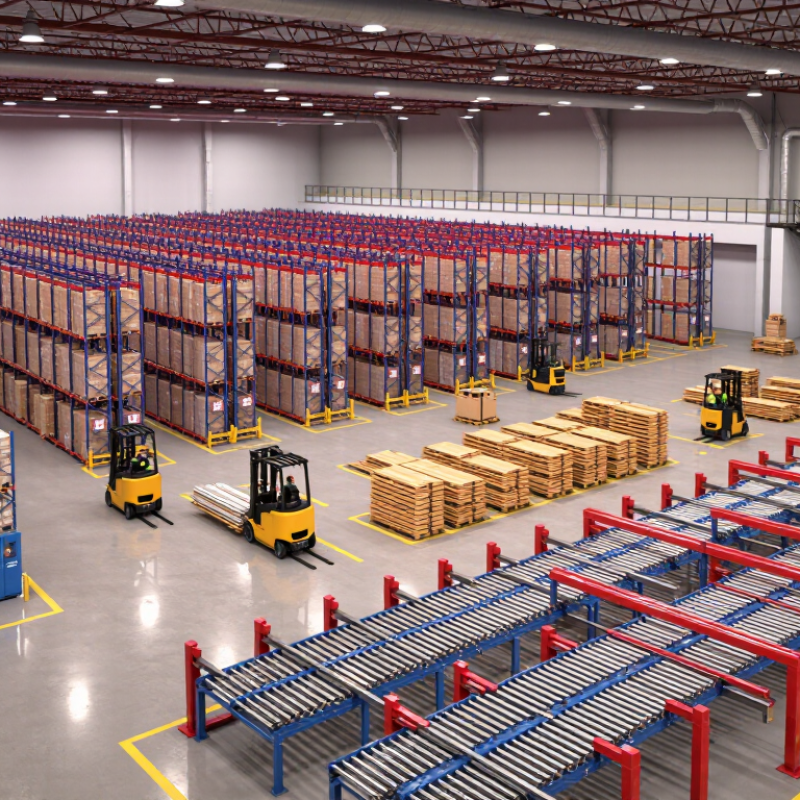
Selective Pallet Racking: 100% Selectivity for Direct Access to Every Load
Selective pallet racking gives operators direct access to every stored pallet, without moving another load first. That is what “100% selectivity” means in practice. A forklift can enter an aisle, lift a marked pallet from its beam level, and leave the remaining loads undisturbed. This suits warehouses with many SKUs, uneven demand, or frequent picking changes. The U.S. Census Bureau reported that 2023 retail e-commerce sales reached $1.119 trillion, up 7.6% from 2022. That growth can add pressure for quick, reliable order retrieval, though it does not mean every facility needs the same rack layout.
The trade-off is aisle space. Selective racks usually store fewer pallets per square foot than high-density systems, because forklifts need clear access lanes. Measure the actual forklift turning radius, pallet overhang, load weight, and beam height before setting aisle widths. Check slab condition and rack capacity too; a seemingly small pallet-weight change matters. Keep load labels visible. Very practical.
A site survey can reveal awkward details, such as a column interrupting an otherwise efficient row. Even careful plans miss things. The 2023 edition of ANSI MH16.1 provides design criteria for industrial steel storage racks, but final specifications should reflect the building, equipment, and loads on site. The right layout is not always the one with the most pallet positions.
What Are the Top Industrial Racking Systems?
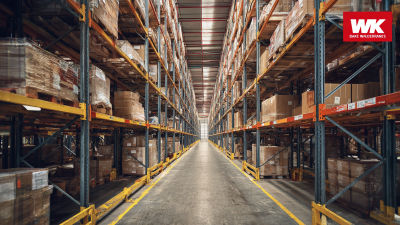
Selective pallet racking provides direct access to every pallet position.
Illustrative comparison for a 10-position-deep lane: selective racking allows direct access to all 10 positions; double-deep racking exposes the 5 front positions; and drive-in racking exposes the front position of the lane. Actual access depends on the system layout.
Drive-In Racking: Typically 2–10 Pallets Deep for High-Density LIFO Storage
Drive-in racking stores pallets several positions deep, commonly two to ten, with forklifts entering the rack lanes. It suits products stored in large batches, where many pallets share a stock-keeping unit and strict first-in, first-out rotation is not required.
The operating rule is simple: the last pallet loaded is usually the first one retrieved. Access is selective.
That density has a cost. A forklift may need to travel past pallets to reach a load, so operators must follow a consistent loading sequence and protect rack uprights from impacts. The Rack Manufacturers Institute’s ANSI MH16.1 specification emphasizes designing steel rack systems for their actual configuration and loads; pallet weight, dimensions, and beam or rail details therefore need verification before installation.
A mismatch is easy to overlook.
Safety deserves equal attention.
The U.S. Bureau of Labor Statistics’ 2022 Survey of Occupational Injuries and Illnesses reported
4.8 recordable cases per 100 full-time workers
in warehousing and storage, compared with 2.7 across private industry. This figure is not specific to racking, but it underlines the hazards of busy material-handling environments. Keep lane floors clear, train drivers on entry and turning, and inspect for bent uprights or damaged rails. Measure the usable lane depth against real pallet loads, not just the floor plan.
One awkward pallet can disrupt the flow.
Push-Back Racking: Commonly 2–6 Pallets Deep per LIFO Lane
Push-back racking commonly holds 2–6 pallets deep in each LIFO lane. When a forklift places a pallet at the front, it pushes earlier pallets backward on wheeled carts. Removing the front pallet lets the remaining carts move forward. Last in, first out. This arrangement can increase storage density while keeping aisles accessible from one side. It works well when each lane holds the same product and older stock does not need to be picked first.
Depth changes the trade-off. A two-pallet lane is usually easier to replenish and track, while a six-pallet lane uses floor space more efficiently but hides more inventory behind the front pallet. That can complicate stock rotation. Lane depth is not a universal setting; pallet dimensions, load weight, forklift capacity, and turnover all matter. Measure actual loads, not just standard pallet footprints. Check that pallets move smoothly and loads remain stable during operation. A practical site review should confirm clearances and operating procedures with qualified racking and equipment professionals. Small differences in pallet condition can matter. One awkward load may interrupt an otherwise efficient lane.
Pallet-Flow Racking: FIFO Operation for Stock Rotation and Gravity-Fed Movement
Pallet-flow racking places pallets on slightly inclined roller tracks. Staff load stock from the rear; gravity moves each pallet toward the picking face. The first pallet loaded is normally the first one available for removal, supporting FIFO rotation. It suits products with steady turnover, such as boxed food ingredients or packaged components, where dated stock must move in sequence. Movement is simple. But it depends on consistent pallets and careful loading.
Material Handling Institute’s 2024 Annual Industry Report found that 55% of surveyed supply-chain leaders planned to increase technology investment. That figure covers technology broadly, not pallet-flow adoption, so it should not be read as proof that every warehouse needs flow lanes. Before installation, teams should check pallet dimensions, load weights, lane depth, and braking requirements. A damaged pallet or uneven load can stop mid-lane, while excessive speed can create impact at the pick face. Operators may also need clear replenishment rules to prevent loading a new batch into the wrong lane. Flow racking can improve access and rotation, but it costs space and works best with predictable, compatible loads. One awkward SKU can complicate the plan.
What Are the Top Industrial Racking Systems? - Pallet-Flow Racking: FIFO Operation for Stock Rotation and Gravity-Fed Movement
| System Dimension |
Typical Characteristics |
Operational Considerations |
| Stock rotation |
First In, First Out (FIFO): pallets are loaded at the higher entry end and move toward the lower picking end. |
Useful when earlier-received stock should generally be picked before later-received stock, including dated inventory. |
| Movement method |
Gravity moves pallets along inclined roller or wheel lanes after loading. |
Lane slope and flow-control components are selected for the pallet, load, and operating conditions. |
| Pallet access |
Separate aisle faces are typically used for loading and picking; each lane stores one product or stock-keeping unit. |
Best suited to operations with multiple pallets per product and a planned replenishment sequence. |
| Storage density |
Deep-lane storage reduces the number of forklift access aisles compared with selective pallet racking. |
Actual density depends on lane depth, building layout, pallet dimensions, and required aisle space. |
| Pallet compatibility |
Pallets need to be in suitable condition, consistently sized, and compatible with the lane’s roller or wheel arrangement. |
Pallet condition, underside design, load distribution, and overhang should be checked before system design. |
| Load handling |
Rollers, brakes, separators, and lane structure are selected to suit the specified pallet and load characteristics. |
Load limits are design-specific; obtain engineered ratings for the complete installation rather than relying on generic figures. |
| Best-fit inventory |
High-volume products with several pallets per item and regular replenishment are common candidates. |
A large number of low-volume items may require many lanes and can reduce the system’s space-efficiency advantage. |
| Main benefits |
Supports FIFO flow, reduces routine forklift travel within storage lanes, and can improve storage density. |
Performance depends on correct lane assignment, consistent loading practices, and suitable pallet quality. |
| Maintenance and safety |
Routine inspections should check rollers, brakes, separators, rack frames, and visible impact damage. |
Follow the system designer’s inspection and maintenance guidance, and keep damaged lanes out of service until assessed. |
| Typical applications |
Distribution, food and beverage, cold storage, and manufacturing operations with suitable palletized goods. |
Temperature, product handling requirements, throughput, and forklift access should be included in project planning. |
Specifications and performance vary by installation. Confirm pallet compatibility, load ratings, layout, and safety requirements with a qualified racking designer.
Rack Safety: ANSI MH16.1 Design Guidance and EN 15635’s 12-Month Inspection Benchmark
Industrial racking safety begins with sound engineering, not a visual check after installation.
ANSI MH16.1 provides design guidance for steel storage racks, including how loads, connections, bracing, and anchorage should be considered. A loaded bay is not just upright frames and beams; pallet weight, load placement, and site conditions all affect its performance.
Small details matter.
A beam connector that looks seated may still need closer examination.
EN 15635 sets a useful inspection benchmark: storage equipment should receive an expert inspection at intervals no longer than 12 months. That annual review does not replace routine checks by trained staff. After a forklift strike, a bent upright near floor level or a dislodged anchor needs prompt reporting and assessment. Keep clear records of damage, repairs, and changes to rack loading.
Paperwork can look reassuring. It can still miss a damaged footplate hidden behind a pallet.
No checklist can remove every uncertainty, so inspection findings should lead to practical action, not simply a filed report.