
425 Sovereign Ct. St. Louis, MO 63011
SEARCH OUR WEBSITE

China Top High Current PCB Terminal Manufacturers

China’s electronics sector serves demanding markets, from electric vehicles to industrial drives. These systems need compact connections that carry substantial current without excessive heat. A High Current Pcb Terminal must therefore be judged by more than its advertised amperage. Copper thickness, contact geometry, plating, solder-joint strength, and operating temperature all matter. Small details matter.

The International Energy Agency reported that global electric-car sales were expected to exceed 17 million in 2024, representing more than one in five cars sold. That growth points to rising demand for dependable power connections, though it does not establish a single standard for terminal performance. IEA Executive Director Fatih Birol described the wider shift with the phrase, “The age of electricity is here.” His perspective helps explain the market pressure; it is not a substitute for component-level testing.

For buyers comparing China-based manufacturers, the useful questions are specific: What test current and temperature rise support the rating? Are materials and plating documented? Can the supplier provide traceable inspection records and application samples? A terminal that performs well on a bench may behave differently inside a crowded enclosure, where airflow is limited and nearby components add heat. That is worth checking.

This overview introduces manufacturers through product capability, quality evidence, customization, and communication. Published specifications are a starting point, not proof of fit. Engineers should confirm dimensions, board stack-up, assembly process, and duty cycle before approving a design. Some claims deserve a second look. The best supplier is not automatically the one with the largest rating, but the one whose evidence matches the real operating conditions.
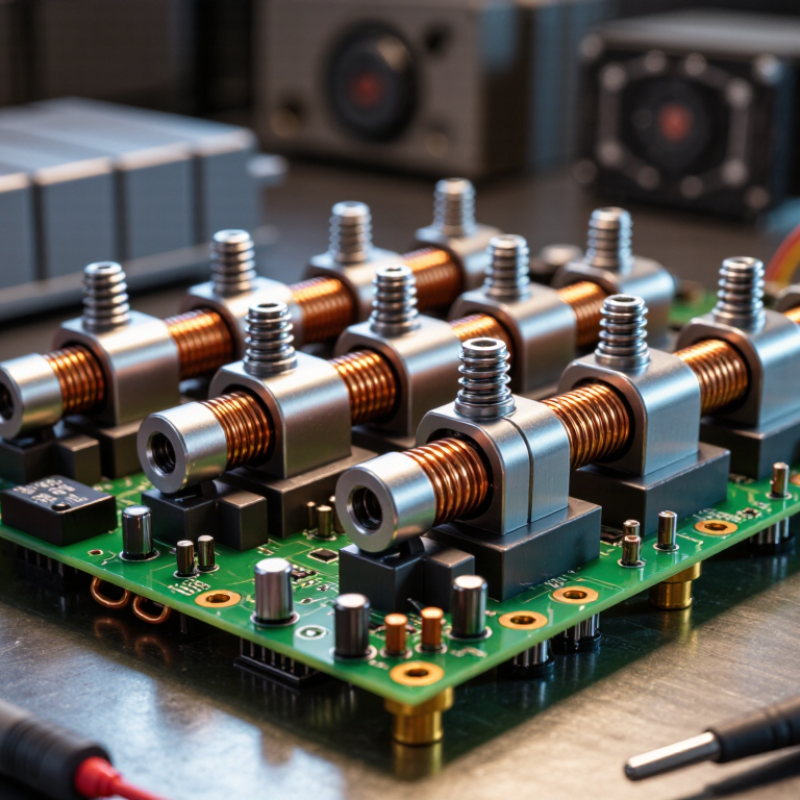
China Top High Current PCB Terminal Manufacturers

Understanding High-Current PCB Terminals and Their Applications

High-current PCB terminals connect board copper to cables or busbars in power supplies, motor drives, battery systems, and industrial controls. Their job sounds simple. It is not. A terminal must carry current while limiting contact resistance, heat, and mechanical strain on the board. Screw-clamp designs are common because installers can secure conductors with ordinary tools, but incorrect tightening can loosen connections or damage strands.

Current capacity depends on more than the terminal’s rating. Copper thickness, trace width, board material, ambient temperature, airflow, and load duration all affect temperature rise. A compact enclosure with little ventilation may behave very differently from an open test bench.

Heat matters. Engineers should check the complete current path, including solder joints and nearby copper, under realistic operating conditions. Thermal imaging can reveal hot spots that calculations miss, though it does not replace careful design review.

Conductor size and terminal pitch also shape the choice. Larger cables need suitable entry space and secure clamping, while closely spaced terminals require attention to insulation and clearance. Vibration can gradually weaken a connection, especially when the board lacks mechanical support. Prototype testing should include the intended wire, tightening method, and sustained load. One detail is easy to overlook: service technicians may need room to reach each screw after the board is installed. A strong terminal is only part of a reliable connection.


Key Specifications for Comparing PCB Terminal Manufacturers

When comparing high-current PCB terminal manufacturers, start with rated current, but read the test conditions closely. A 30-amp rating means little without details about wire size, ambient temperature, and PCB copper thickness. Ask for temperature-rise data at the intended load. A terminal that runs cool on a thick test board may behave differently on a compact product board.

Check conductor range, pitch, pin dimensions, and mounting style against the actual layout. For example, a 5.08 mm pitch may suit a roomy control board but crowd nearby components. Contact resistance and plating type also affect heat and long-term stability. Small details matter. Request tolerances and evidence of repeatable production, not only a polished sample. A useful supplier should explain how ratings change with wire gauge or operating temperature.

Review insulation rating, operating-temperature range, and mechanical retention data. Confirm whether tests use soldered connections, specified torque, or particular wire preparations. Then test samples with your own board and load profile. Measure temperature near the terminal after it reaches steady state, and inspect solder joints after repeated wiring. Datasheets are useful, but they do not capture every assembly variation. That is worth admitting. One early measurement can also be misleading, so record the setup and repeat the test.

Leading High-Current PCB Terminal Manufacturers in China

China’s leading high-current PCB terminal manufacturers serve equipment makers that need dependable power connections in compact assemblies. Their product ranges may include screw-clamp terminals, press-fit contacts, and solderable wire connectors. Copper-alloy contacts and protective plating can support conductivity and resist wear, but material names alone do not prove performance. A terminal may look simple. Its contact area, pin layout, and clamping force all matter.

For a practical comparison, check rated current alongside temperature-rise data, board thickness, pitch, and wire range. A part rated for a certain current under one test setup may behave differently inside a warm, crowded enclosure. Ask manufacturers for test conditions, dimensional drawings, and sample quantities before approving a design. Small details matter. Review mounting stability and clearance around neighboring components, too.

Production capability deserves equal attention. Ask how incoming materials are checked, how dimensions are monitored, and whether batches can be traced to inspection records. A sample can fit perfectly and still run hot during sustained use; I would not skip thermal testing on the actual board. That step takes time, and it can reveal assumptions the drawing did not. Clear technical communication also helps: send wire size, operating conditions, and installation photos when requesting recommendations.

Manufacturer Capabilities, Certifications, and Customization Options

China-based high-current PCB terminal manufacturers differ in tooling, process control, and engineering support. Buyers should ask how terminals are stamped or machined, and how plating thickness is checked. Small details matter. A loose fit or uneven contact surface can raise resistance and heat during operation.

Useful certifications depend on the product and target market. Request current certificates, their scope, and the issuing body; a factory certificate does not automatically cover every terminal or production line. Ask for material records, dimensional inspection data, and test reports for temperature rise, current cycling, and contact resistance. Test conditions should match the intended board, load, and cooling environment. Otherwise, the numbers may look reassuring but offer little practical guidance.

Customization can include copper alloy, tin or silver plating, terminal pitch, hole pattern, wire-entry style, and packaging for automated assembly. Share drawings alongside current ratings, ambient temperature, and expected service conditions. A sample run can reveal fit problems before volume production. Fit is not automatic. I have seen specifications leave out board thickness, then require late adjustments; it is an easy omission, but a costly one. Clear review of tolerances and change control helps keep custom parts consistent across batches.

How to Choose a Chinese PCB Terminal Manufacturer for Your Project

A high-current PCB terminal should be selected around the real operating conditions, not just a headline ampere rating. Share the continuous current, peak duration, ambient temperature, board thickness, and available space with prospective Chinese manufacturers. Small details matter. A terminal tested on a thick copper board may run hotter on your thinner production board.

Ask how the supplier verifies temperature rise, contact resistance, and solder-joint strength. Request drawings with tolerances, material specifications, and test conditions. Then compare those conditions with your design. A sample is useful, but test it on your own PCB and measure temperature after the load stabilizes. This takes time. It can reveal fit or heating issues that a datasheet does not show.

Evaluate production controls as carefully as engineering claims. Ask whether incoming metal and plating are checked, how lot numbers are traced, and what happens when a sample fails inspection. Clear answers are a good sign; vague assurances are not proof. Review communication, sample lead time, and the supplier’s ability to maintain consistent dimensions across batches. I would not choose on price alone, though budget pressure is real. One small compromise can become a costly redesign.

China Top High Current PCB Terminal Manufacturers - How to Choose a Chinese PCB Terminal Manufacturer for Your Project
Evaluation Dimension What to Check Practical Selection Guidance Evidence to Request
Rated current and temperature rise Rated current, test method, ambient temperature, conductor size, PCB copper design, and temperature-rise limit. Compare ratings only when the test conditions are comparable. A terminal’s usable current depends on the assembled system, including the wire, PCB traces, airflow, and operating temperature. Test report showing current, wire size, mounting conditions, ambient temperature, and measured temperature rise.
Wire range and connection method Supported wire cross-section, solid or stranded conductor compatibility, stripping length, and screw or spring-clamp connection type. Confirm the terminal accepts the actual conductor and ferrule, if used. Check that the specified tightening torque and wire-preparation instructions suit the installation process. Datasheet, dimensional drawing, wire-range specifications, and installation instructions.
Electrical and mechanical ratings Rated voltage, impulse withstand or dielectric data where applicable, contact resistance, retention, and mechanical endurance. Match the ratings to the application’s voltage, pollution environment, and required service life. Do not infer a rating from appearance or nominal current alone. Product specifications and applicable electrical, mechanical, or endurance test results.
PCB interface and assembly Pin layout, pitch, hole diameter, terminal footprint, soldering method, board thickness, and clearance requirements. Verify the terminal against the PCB stack-up and manufacturing process. For high-current paths, review trace width, copper thickness, solder-joint design, and thermal behavior together. Dimensioned drawing, recommended PCB footprint, assembly guidance, and sample-fit evaluation.
Materials and contact finish Conductor alloy, plating type and thickness, housing material, flammability classification, and operating-temperature range. Assess materials for electrical loading, heat, corrosion exposure, and soldering conditions. Confirm the exact material specification for the proposed part rather than relying on a general product-family description. Material declarations, plating specification, housing datasheet, and relevant flammability or temperature documentation.
Safety and compliance Applicable product standards, approval status, ratings, and whether the approval covers the exact configuration being purchased. Check the requirements for the end product and target markets. Standards such as IEC 60947-7-1 or UL 1059 may be relevant to terminal blocks, depending on product type and application. Current certificates or reports with model identifiers, rating details, and issuing-body information.
Quality controls and traceability Incoming material checks, process controls, inspection criteria, lot identification, change control, and corrective-action process. Assess whether controls cover the features most likely to affect connection integrity, including dimensions, plating, screw or clamp function, and electrical performance. Quality-system documentation, sample inspection records, traceability example, and change-notification procedure.
Sampling and validation Sample availability, prototype lead time, test support, and process for handling design revisions. Validate representative production-intent samples in the intended PCB and operating conditions before approving a design for volume production. Sample plan, validation schedule, test reports, and documented revision history.
Supply and commercial readiness Production capacity, minimum order quantity, quoted lead time, packaging, export documentation, and continuity planning. Compare written quotations and delivery commitments for the same part configuration, order quantity, and shipping terms. Confirm how shortages or specification changes are managed. Quotation, production and shipping schedule, packaging details, and supply-continuity information.

Note: Ratings and compliance depend on the exact terminal model and test conditions. Confirm all specifications against current documentation and validate the selected terminal in the intended assembly.

Scroll to Top