China Top 10 Diesel Pile Hammer Brands in Southeast Asia?
Choosing among the China Top 10 Diesel Pile Hammer Brands in Southeast Asia requires more than comparing catalogue specifications. Contractors need equipment that suits the soil, pile dimensions, project access, and local service support. A hammer that performs well on a dense inland site may not be the best fit for soft coastal ground or a restricted urban work area.
Geotechnical engineer Bengt Fellenius’s published work offers a useful perspective: pile performance should be assessed in relation to soil conditions, installation, and measured results—not brand claims alone. This is a paraphrase, not a verbatim quotation; no source text was provided to verify an exact sentence from him. That distinction matters. Real sites differ.
This guide examines leading Chinese brands active in Southeast Asian markets, focusing on practical comparison points: rated energy, ram weight, operating reliability, spare-parts access, and technical support. It also considers the realities crews face, from wet-season transport delays to maintaining equipment between shifts. Numbers need context. A ranking can help narrow the field, but it cannot replace project-specific engineering review or an inspection of the actual hammer and service network. Readers should treat brand positions as a starting point, then verify specifications and support with suppliers. The aim is a grounded overview of Diesel Pile Hammers in Southeast Asia, with useful detail—and room to question broad claims.
Diesel Pile Hammers: Types, Working Principles, and Applications
China Top 10 Diesel Pile Hammer Brands in Southeast Asia?
Diesel Pile Hammers: Types, Working Principles, and Applications
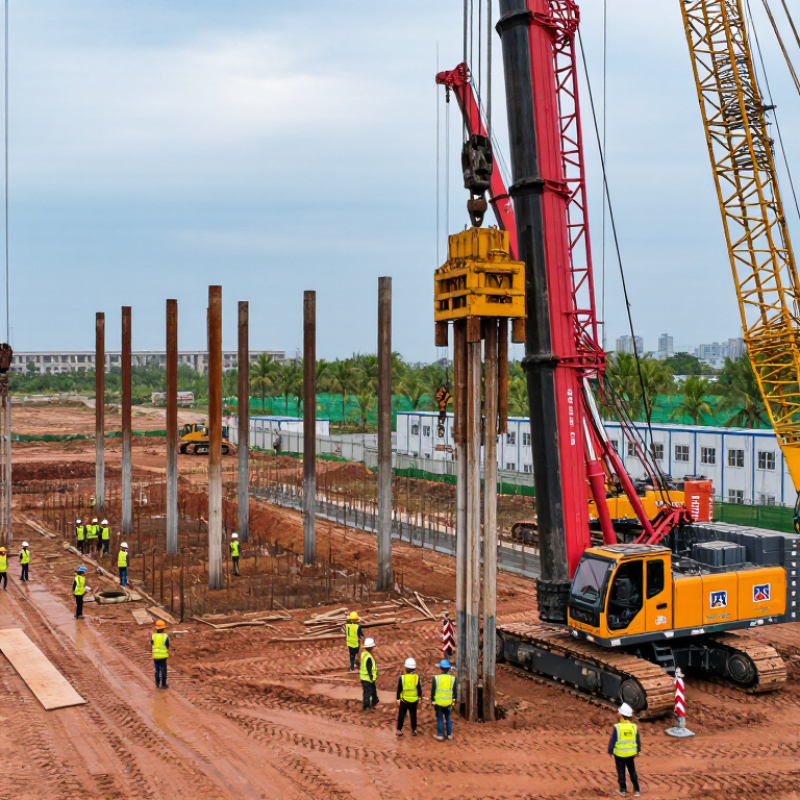
Diesel pile hammers are impact machines that drive piles into soil using a falling ram and controlled combustion. Common designs include open-end tubular hammers and closed-end models. Their operating details differ, but both transfer repeated blows through the pile helmet. The sound is unmistakable.
In a typical cycle, the ram rises, compresses air, and injects fuel near the top of its stroke. Combustion pushes the ram upward, then gravity brings it down to strike the impact block. The blow travels through the pile into the ground. Operators monitor penetration per blow and adjust the driving sequence to reduce damage. These hammers are used on foundations for bridges, ports, buildings, and other structures, often with steel or precast concrete piles. Soil, pile dimensions, and access conditions affect the choice. Real sites rarely match a neat calculation perfectly.
Tips: Check alignment before driving, inspect hoses and connections, and record blow counts at consistent intervals. Watch for pile movement, unusual smoke, or changes in impact sound. Use suitable hearing and eye protection, and follow the equipment manual and site controls. One practical caution: high impact does not always mean faster progress; dense layers may demand a different approach.

How Chinese Diesel Pile Hammer Brands Are Evaluated
Evaluating Chinese diesel pile hammer brands in Southeast Asia starts with the ground, not the catalogue. Soft delta deposits, dense sand, and reclaimed soil place different demands on impact energy and operating control. Ask for test records from comparable projects, including pile type, penetration rate, and observed rebound. A rating alone tells little. Not enough.
Check fuel use, starting reliability, and hammer performance after repeated operating cycles. In humid, coastal environments, inspect corrosion protection, seals, filters, and exposed connections. Request maintenance intervals and a clear list of wear parts. A practical review also checks whether local technicians can diagnose faults and whether replacement parts can be delivered within a workable timeframe. These details matter on a busy site.
Compare technical documents against equipment actually available for inspection. Ask how noise, vibration, and safe lifting are managed; site conditions can change the answer. Speak with operators who have used the equipment, not only sales contacts. One limitation is unavoidable: a successful trial at one location cannot guarantee results across Southeast Asia’s varied soils. I would record unresolved questions before purchase, even when the demonstration looks convincing.
How Chinese Diesel Pile Hammer Brands Are Evaluated
Suggested evaluation criteria for Southeast Asian projects — this chart shows proposed weighting, not measured brand scores or a market ranking.
The proposed weights total 100%. Buyers can adjust them to reflect local ground conditions, project requirements, and after-sales support needs.
The Top 10 Chinese Diesel Pile Hammer Brands in Southeast Asia
A guide to the top ten Chinese diesel pile hammer brands in Southeast Asia should begin with a clear caveat: rankings can change by project, machine size, and local service access. “Top ten” is not a universal engineering category. A hammer suited to a river bridge foundation may be inefficient on a compact urban site. Buyers should compare verified specifications, operating history, and parts support rather than rely on a popularity claim alone.
Southeast Asian job sites vary widely. Soft delta soils, humid storage yards, and remote access roads all affect equipment performance. Check rated impact energy, ram weight, fuel consumption, and the pile sizes the machine can handle. Ask for maintenance records and test documentation, then confirm that wear parts can be delivered where the project operates. A brochure is not enough. Talk with contractors who have used similar equipment in comparable ground conditions. One detail is easy to miss: transport dimensions can delay mobilization, even when the hammer itself meets the technical requirements. Any shortlist should be treated as provisional until the supplier’s service plan and project references are checked.
China Top 10 Diesel Pile Hammer Brands in Southeast Asia?
The Top 10 Chinese Diesel Pile Hammer Brands in Southeast Asia — buyer comparison framework. This is not a verified brand ranking; no company or brand data is shown.
| No. | Comparison dimension | What to verify | Why it matters in Southeast Asia |
|---|---|---|---|
| 1 | Pile and project compatibility | Confirm the hammer is suitable for the specified pile type, dimensions, driving system, and project design. | Pile materials and foundation designs vary between ports, bridges, buildings, and coastal works. |
| 2 | Rated impact energy | Check the manufacturer’s stated energy rating and the conditions under which it is measured. | Impact energy helps determine whether the equipment matches the pile-driving requirements; it should not be assessed in isolation. |
| 3 | Ram and hammer configuration | Review ram weight, stroke or operating range, hammer dimensions, and required helmet or cushion arrangement. | The configuration affects handling, compatibility, and the pile-driving setup required on site. |
| 4 | Fuel and operating requirements | Request documented fuel specifications, operating procedures, and maintenance intervals; compare consumption only under equivalent conditions. | Fuel availability, operating costs, and site logistics differ across countries and projects. |
| 5 | Ground-condition suitability | Use the project’s geotechnical data and a qualified engineer’s assessment to establish suitability and driving criteria. | Soil and subsurface conditions can change significantly from one site to another, even within the same region. |
| 6 | Noise and vibration controls | Ask for available noise and vibration information and confirm monitoring or mitigation requirements with the project team. | Urban, waterfront, and environmentally sensitive sites may have limits or require monitoring. |
| 7 | Transport and lifting logistics | Confirm shipping dimensions, component weights, lifting points, packing details, and assembly requirements. | Transport routes, port handling, and access to the worksite can affect delivery planning and mobilization. |
| 8 | Climate and corrosion protection | Check coating, storage, lubrication, and inspection guidance for humid or coastal operating environments. | High humidity, heavy rainfall, and salt exposure can increase the importance of corrosion prevention and routine care. |
| 9 | Parts and service support | Verify parts availability, service response arrangements, technical documentation, and operator or maintenance training. | Local support can reduce delays when equipment needs inspection, repair, or scheduled maintenance. |
| 10 | Documentation and compliance | Request operating and maintenance manuals, inspection records, applicable conformity documents, and project-required safety information. | Import, workplace-safety, and project documentation requirements must be checked for the destination country and contract. |
Note: Select pile-driving equipment based on project specifications, geotechnical information, applicable local requirements, and qualified engineering advice.
Comparing Hammer Capacity, Reliability, and Service Support
A useful comparison of diesel pile hammers starts with delivered energy, not the largest rating on a brochure. ADB’s 2017 report, Meeting Asia’s Infrastructure Needs, estimated that developing Asia required US$26 trillion in infrastructure investment from 2016 to 2030, or about US$1.7 trillion annually. That scale makes dependable piling equipment important, but regional demand does not identify the right hammer for a particular site. Soil layers, pile type, and required penetration all matter.
Reliability shows up on the job: steady starts, consistent blows, and manageable fuel and maintenance needs. The FHWA’s Design and Construction of Driven Pile Foundations guidance emphasizes evaluating actual hammer performance and pile stresses, rather than relying on rated energy alone. Crews can record blow count, penetration, and interruptions by shift. Small details count. A comparison table can still mislead if it ignores difficult ground or operator experience.
Service support is practical, not decorative. Check technician response times, parts availability near the project, commissioning help, and access to maintenance records. ASTM D4945 provides a standard method for high-strain dynamic testing, which can help verify pile-driving performance in the field. Ask suppliers how they support testing and troubleshooting. A fast parts promise sounds reassuring; the real test is whether the needed part reaches the site before the schedule slips.
Choosing a Suitable Brand for Southeast Asian Projects
Choosing a diesel pile hammer for a Southeast Asian project starts with ground conditions, not a catalogue ranking. Coastal sites may contain soft alluvial layers, while inland works can encounter dense sand, weathered rock, or mixed fill. Ask for site-specific driving records and confirm the hammer’s energy suits the pile type and required penetration. Numbers matter.
Check local support before ordering. A technically capable hammer can be costly to maintain if parts, trained technicians, or lifting equipment are far away. Request service intervals, spare-parts lists, and operating limits in writing. Verify fuel use and noise expectations against site constraints. This step gets overlooked. Consider pile diameter, length, material, crane capacity, leader setup, and daily driving hours. For remote projects, transport dimensions and access roads may decide what is practical.
Ask for references from comparable soils and climates, but treat broad claims cautiously; one successful job does not guarantee the same result elsewhere. Compare measured performance, warranty coverage, commissioning, and operator training—not just purchase price. Have an engineer review the setup and conduct a trial where feasible. Record blow counts, penetration, and visible pile damage. Some assumptions will be wrong. Revise the plan when field data disagree. That is normal.