China Top 10 Soup Kettles Manufacturers for Global Buyers
Buying commercial Soup Kettles from China requires more than comparing prices. Global buyers must examine heating consistency, batch capacity, material quality, insulation, controls, and after-sales support. A kettle may look impressive in photographs. Its real value appears during a busy service, when thick soup must stay hot without scorching. Small details matter, including welded joints, drain-valve design, lid balance, and cleaning access.
Foodservice equipment consultant David Owen once said, “A reliable soup kettle should protect flavor, labor, and service time.” This practical view gives buyers a useful starting point. The best manufacturers understand kitchen pressure. They design equipment for repeated cooking cycles, quick temperature adjustments, and safer handling around steam and hot liquids. Stainless steel construction is common, but grade, thickness, and finishing quality still deserve careful inspection. Certifications and testing documents should also match the buyer’s destination market.
This China Top 10 Soup Kettles Manufacturers for Global Buyers guide reviews suppliers through a purchasing lens. It considers manufacturing experience, product range, customization ability, quality control, export readiness, and communication. No ranking is perfect. Supplier information can change, and impressive specifications do not always guarantee dependable field performance. Buyers should request samples, factory evidence, warranty terms, and clear technical drawings before placing large orders. Look closely. Ask difficult questions. A suitable partner should offer more than a polished catalogue; it should provide stable equipment, responsive service, and confidence after delivery.
What Soup Kettles Are and How They Are Used
China Top 10 Soup Kettles Manufacturers for Global Buyers
What Soup Kettles Are and How They Are Used
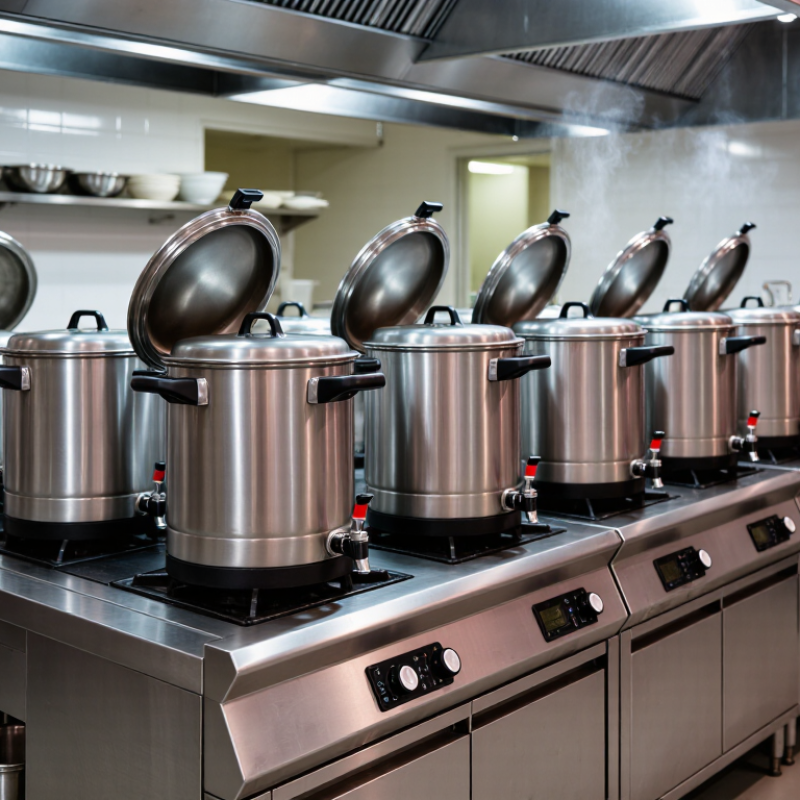
Soup kettles are heated containers designed to hold and serve soups, sauces, stews, and other liquid foods. Unlike stockpots, they usually maintain serving temperature rather than cook ingredients quickly. Many models use a water-bath system, also called bain-marie heating, which reduces direct heat on the food.
The usual setup includes a stainless steel inner pot, an insulated outer body, a thermostat, and a removable lid. Staff fill the kettle with prepared food, set the temperature, and stir periodically.
A countertop kettle suits cafés and small buffets. Larger floor-standing units work better in hotels, hospitals, and catering kitchens. Capacity, voltage, plug type, and heating power deserve careful checking before purchase.
Good operation requires more than attractive specifications. Food should be heated and held according to local safety procedures, with temperatures monitored using a calibrated thermometer. The inner container should be emptied, washed, and dried after service. A removable pot makes this task easier. It sounds basic.
In real kitchens, heat distribution is not always perfectly even.
Thick chowders may settle near the bottom, while thin soups can lose heat after repeated lid opening. Operators often stir gently and avoid overfilling. Buyers should also inspect hinges, handles, seals, controls, and replacement-part availability. A low price may become expensive when cleaning is difficult or service support is unclear.
How to Evaluate Chinese Soup Kettle Manufacturers
China Top 10 Soup Kettles Manufacturers for Global Buyers
When evaluating Chinese soup kettle manufacturers, inspect evidence, not showroom polish. Grand View Research estimates the global commercial cooking equipment market will grow at about 5.7% annually through 2030. This growth increases supplier choices, but also raises quality risks. Ask for stainless-steel grade certificates, heating uniformity data, insulation thickness, and batch-level inspection records. A serious factory should explain whether its kettle uses 304 or 316 stainless steel, and why. Check welds around the jacket, lid hinge, drain valve, and control panel. These areas often reveal weak workmanship.
The ISO Survey 2022 recorded more than 1.2 million ISO 9001 certificates worldwide. Certification helps, but it does not replace product testing. Request the certificate’s scope and issuing body. Then compare it with factory inspection reports, calibration records, and traceability procedures. For export orders, confirm voltage, frequency, plug design, pressure protection, food-contact compliance, and documentation for your destination market. Do not accept “customizable” as proof of engineering ability. Ask for drawings, a test sample, and a written tolerance range.
Tips: Request a live video test with water, not an edited factory video. Measure heating time, temperature recovery, noise, and drain speed. Speak with the quality manager, not only the salesperson. A low quotation may reflect thinner metal or weaker controls. I would also inspect one finished unit independently; supplier documents can look complete, yet small defects still appear.
China’s Top 10 Soup Kettle Manufacturers
China’s Top 10 Soup Kettle Manufacturers are often evaluated by practical performance, not attractive catalogs alone. Experienced buyers inspect heating stability, stainless steel quality, insulation, control accuracy, and cleaning access. These details affect soup texture, energy use, and daily labor.
The strongest manufacturers usually offer electric, gas, and steam-heated models for restaurants, hotels, central kitchens, and catering operations. Some produce compact countertop kettles, while others build large jacketed vessels with tilting or mixing functions.
A reliable factory should provide material certificates, factory test records, wiring diagrams, and clear maintenance guidance. It should also explain output capacity honestly, because a kettle’s advertised volume may not equal its usable working volume.
Look closely at welds.
Export experience matters. Manufacturers familiar with international projects normally understand voltage differences, packaging risks, spare parts, and installation support. Still, “top ten” rankings can be imperfect. Public information may favor factories with stronger marketing rather than better long-term service. Buyers should request sample photos, inspect production details, and verify references from similar kitchens.
Food-contact surfaces should be smooth and easy to sanitize. Hinges, valves, handles, and control panels deserve equal attention.
A dependable supplier communicates limitations instead of promising every feature. That honesty can prevent costly changes after shipment. Pricing remains important, but weak insulation or difficult cleaning may create higher operating costs over time.
How Global Buyers Can Choose and Import the Right Supplier
China Top 10 Soup Kettles Manufacturers for Global Buyers
How Global Buyers Can Choose and Import the Right Supplier
Global buyers should assess soup kettle suppliers beyond catalog photos. The 2023 World Bank Logistics Performance Index evaluated 139 economies and highlighted customs, tracking, and delivery reliability. These factors directly affect imported kitchen equipment. Ask for factory inspection records, material certificates, heating tests, and export references. A practical quotation should include kettle capacity, power input, voltage, control type, packaging, spare parts, and shipping terms.
Check the vessel carefully. Food-contact surfaces should use documented stainless steel grades, while insulation should reduce heat loss during long service hours. Request videos showing water heating, temperature stability, drainage, and cleaning access. The commercial cooking equipment market was valued at about 13.7 billion dollars in 2023, according to Grand View Research. Competition is strong. Quality differences may hide behind similar prices.
Import planning needs patience. Over 80% of global merchandise trade by volume moves by sea, according to UNCTAD’s Review of Maritime Transport 2023. Confirm port handling, insurance, customs documents, and local electrical requirements before payment. A pre-shipment inspection is worth considering. It may catch loose fittings or weak packaging. I would not choose the cheapest supplier automatically. That habit sounds efficient, but it can become expensive. One detail is often missed: the kettle must fit the buyer’s kitchen workflow, not merely meet its advertised capacity.