
425 Sovereign Ct. St. Louis, MO 63011
SEARCH OUR WEBSITE

China Top Automotive Battery Tester Manufacturers?

China’s Automotive Battery Tester market spans compact workshop tools, production-line instruments, and diagnostic systems for vehicle service networks. Choosing a supplier takes more than comparing prices. Buyers should examine test accuracy, supported battery types, operating temperature range, calibration procedures, software updates, and after-sales support. A clear display matters, too. A technician may need to read results beside a vehicle in a noisy workshop, with little time to interpret vague warnings.

Midtronics founder Steve McShane is a notable figure in battery diagnostics. I cannot verify a direct quotation from him on this specific topic, so the following is an editorial paraphrase, not a verbatim quote: “A battery test is only useful when its result reflects the battery’s actual condition.” That distinction matters when comparing Chinese manufacturers. Some testers use conductance methods; others add load testing, charging-system checks, or battery management functions. Features should match the intended job.

This guide introduces China’s top Automotive Battery Tester manufacturers and the details buyers can check before requesting samples. Look closely at test standards, repeatability, documentation, and support for different battery chemistries. Ask for evidence. A polished product photo cannot prove dependable readings. Supplier claims also deserve scrutiny; this overview is a starting point, not a substitute for hands-on testing. A tester can look capable on paper and still disappoint in daily workshop use.
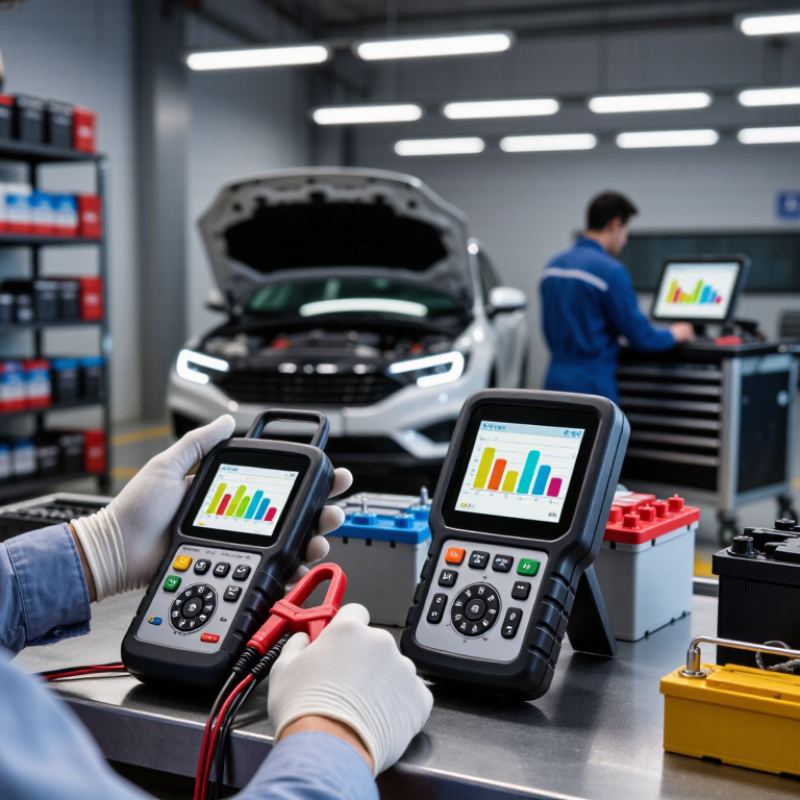
China Top Automotive Battery Tester Manufacturers?

What Automotive Battery Testers Measure and How They Work

China Top Automotive Battery Tester Manufacturers?

Automotive battery testers check more than a single voltage reading. They commonly measure open-circuit voltage, then assess the battery’s ability to deliver current. Many handheld units use conductance or internal-resistance readings to estimate cold-cranking amps and battery condition. These estimates are useful, but they are not the same as a full discharge test.

A reading is not a verdict.

Some testers apply a controlled load and watch how far voltage falls. Others send a small signal through the battery and analyze its response. Before testing, a technician should select the correct battery type and rated cranking amps. Loose clamps, dirty terminals, or a recent charge can skew results. Small details matter. Temperature matters too. A cold battery may behave differently from one tested in a warm workshop. The display may show voltage, state of charge, and a replace-or-recharge suggestion, but that suggestion needs context. If a battery fails while the charging system is healthy, replacement may be appropriate. If the alternator is undercharging, a new battery may not fix the underlying problem. I would treat borderline readings cautiously and repeat the test after checking connections and charge level.


Key Criteria for Evaluating Chinese Battery Tester Manufacturers

When evaluating Chinese automotive battery tester manufacturers, begin with the test conditions the equipment can actually reproduce. Check voltage and current ranges, measurement accuracy, repeatability, and support for the battery types used in your production line. A wide range is useful only if readings remain stable near its limits. Ask for calibration records and test reports, not just a specification sheet. Numbers matter.

Request a demonstration using a representative battery or test fixture. Watch how the tester handles connection resistance, temperature changes, and repeated cycles. These details can reveal issues that a short sales presentation may miss. Review data export options, user access controls, and whether results can be traced to a specific test and instrument. Also assess factory inspection procedures, technical training, spare-part availability, and response times. Ask who provides support after installation, and get the answer in writing. A low purchase price may lose its appeal if troubleshooting takes weeks. That is not always easy to predict. Comparing several suppliers with the same sample and acceptance criteria makes the decision more objective, though no test plan captures every production problem.

Notable Automotive Battery Tester Manufacturers in China

China’s automotive battery tester manufacturers serve repair shops, battery plants, and vehicle service networks. Many offer handheld conductance testers, while others build load-testing benches for production lines. Typical instruments check battery voltage, starting capacity, and charging-system performance. Clear operating ranges matter: a workshop handling passenger cars may need different settings from a facility testing commercial vehicles.

Look beyond the product photo. Ask whether the tester supports the battery chemistries and voltage ranges used in your market, and request sample test reports. A useful screen should show readings clearly under bright service-bay lighting. Probe quality matters, too; thin leads can wear quickly when technicians move between vehicles all day. That detail is easy to overlook.

Some manufacturers provide OEM configurations, software adjustments, or private-label packaging, but customization can add time and make spare parts less interchangeable.

Compare calibration procedures, warranty terms, and access to replacement clamps before placing a large order. Ask how the factory verifies repeatability across units, not just how quickly it assembles them.

Not every supplier shares this information readily. That is a limitation worth noting, and a reason to test a sample under real workshop conditions before committing.

Product Types, Technologies, and Vehicle Applications

China Top Automotive Battery Tester Manufacturers?

Automotive battery testers vary from compact handheld conductance meters to workshop load testers and laboratory cycling systems. Handheld units can check a 12-volt battery’s voltage and estimated condition in a few seconds. Load testers apply a controlled electrical demand, revealing weaknesses that a resting voltage may hide. Small details matter.

More advanced analyzers combine impedance measurements with software estimates of state of health and charge. Some also assess the starter and charging system, helping technicians distinguish a tired battery from a faulty alternator. For electric vehicles, specialized equipment tests modules or packs under controlled conditions. High-voltage testing requires suitable training and isolation procedures; ordinary workshop meters are not substitutes.

These products serve passenger cars, commercial vehicles, hybrids, and electric vehicles. A repair shop may need fast checks at the service bay, while a fleet operator may prefer repeatable records across many vehicles. Battery chemistry, capacity range, test current, and data storage all affect the choice.

No single test tells the whole story. Results also depend on temperature, connection quality, and battery history, so technicians should compare readings with manufacturer specifications and confirm unusual results. That distinction is easy to miss when a display offers one simple score.

Certifications, Customization, and Supplier Selection Factors

China’s automotive battery tester manufacturers vary widely in their testing experience and quality controls. When reviewing a supplier, check whether its quality-management certificates are current and cover the factory and product category you need. A certificate alone proves little about daily production. Ask for sample test reports, calibration records, and clear acceptance criteria. For example, a report should identify the tested voltage range, measurement accuracy, and test conditions.

Customization matters when your process includes unusual battery formats, connectors, or data systems. Discuss fixture dimensions, test sequences, software language, and export options before requesting a quotation. Share a written specification, then ask the supplier to confirm each point. A short video of a sample unit running your test sequence can reveal practical issues early. Small details matter.

Tips: Compare suppliers using the same sample requirements. Ask who handles calibration support, spare parts, and operator training. Check response times with a specific technical question, not only a price request. If a proposal seems unusually polished, ask what happens when a test fails. That answer may still be vague; clarify it before placing an order.

Scroll to Top