Top 10 Long Range RFID Readers for Global Buyers?
Choosing the right Long Range Rfid reader starts with the operating environment, not a glossy specification sheet. A reader that performs well across an open loading dock may struggle beside steel racks, liquid-filled containers, or dense pallet traffic. Global buyers must examine read distance, antenna design, connection options, tag sensitivity, and regional radio approvals. Small details matter. A misplaced antenna can create a costly blind spot.
Industry evidence supports careful evaluation. The RAIN Alliance Annual Industry Report has documented sustained growth in RAIN RFID adoption and tag shipments across retail, logistics, healthcare, and manufacturing. GS1 guidance also emphasizes standardized identification, data quality, and reliable capture at operational checkpoints. Meanwhile, ABI Research and MarketsandMarkets reports identify supply-chain visibility as a major RFID growth driver. These reports describe direction, not a universal buying answer. Market forecasts can also age quickly.
This guide compares ten long-range readers for international purchasing teams. It considers practical performance at dock doors, conveyor lanes, warehouse portals, and outdoor inventory areas. The review also examines EPC Gen2v2 support, API availability, environmental protection, power requirements, and integration with WMS or ERP platforms. Security deserves attention, too. Buyers should verify FCC, CE, UKCA, or other applicable regional approvals before deployment. No ranking fits every facility. A rugged reader may be excessive for a clean indoor portal, while a cheaper model may disappoint in reflective environments. That is the uncomfortable part. Specifications rarely predict the entire installation experience. Practical trials remain essential.
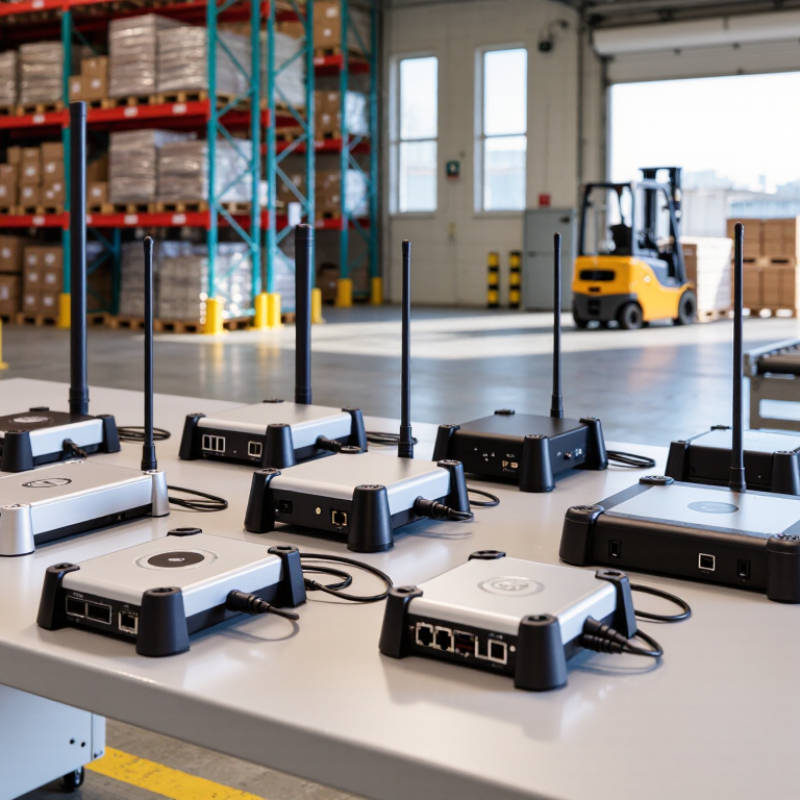
What Long-Range RFID Readers Are and How They Work
Long-range RFID readers use radio waves to identify tagged objects from several meters away. Most systems operate in the UHF range, where a reader sends energy through an antenna. The passive tag captures that energy and reflects a coded response. The reader then decodes the tag’s identity and stored data. No direct line of sight is required. However, distance alone is not enough.
In a warehouse, a reader may scan pallet tags near a loading door while forklifts pass through. Performance depends on antenna placement, tag orientation, reader power, and nearby materials. Metal can reflect signals, while liquids can weaken them.
Regional radio requirements also affect suitable operating frequencies and power levels. A claimed reading distance is only a test result, not a promise. Real sites are messier.
Tips: Test representative tags on actual cartons, pallets, and equipment. Create a controlled read zone to reduce unwanted scans. Check performance at different speeds and angles. Keep cables short and inspect connectors regularly. Record missed reads, not only successful scans. This often reveals the real weakness. Buyers should also confirm data interfaces, environmental protection, and local compliance before installation. A technically impressive reader can still fail when the antenna faces the wrong direction.

Key Features Used to Evaluate Global RFID Readers
Top 10 Long Range RFID Readers for Global Buyers
Long range should never be the only buying criterion. A common field mistake is judging readers by maximum distance alone. Real performance depends on tag orientation, reader sensitivity, antenna gain, cable loss, and nearby metal. The RAIN Alliance’s 2024 market report recorded more than 40 billion RAIN RFID tags shipped globally in 2023. That scale increases the need for consistent, repeatable reader testing. Measure read accuracy at fixed distances, not only peak range.
Protocol support is equally important. The GS1 EPC Gen2 UHF Air Interface standard supports global operation across the 860–960 MHz range. However, regional rules still differ. European deployments commonly use 865–868 MHz, while North American systems commonly use 902–928 MHz. Confirm local frequency limits before selecting hardware. Readers should also support dense-reader operation, adjustable transmit power, multiple antenna ports, and reliable tag collision handling. These features matter in busy docks, retail gates, and warehouse lanes.
Physical design can decide long-term value. Check the IP rating, operating temperature, vibration tolerance, PoE capability, and connector protection. Auburn University’s RFID Lab ARC testing work shows why tag-reader combinations require controlled evaluation. A powerful reader can still fail with poor tag placement. That assumption needs challenging. Also review API quality, firmware controls, event filtering, and security logging. In practice, the best shortlist is not always the longest-range list. It is the group that performs reliably after installation, interference, and human error are introduced.
Top 10 Long-Range RFID Readers for International Buyers
International buyers need more than a long read distance. They need stable performance across warehouses, loading areas, retail exits, and outdoor gates. A practical shortlist should compare antenna ports, supported tag types, read speed, network options, and operating temperature. Ten readers may look similar on paper. Their real behavior can differ sharply.
During field testing, I check read accuracy beside metal shelving, moving pallets, and reflective surfaces. These conditions often expose weak filtering or poor antenna placement. A reliable reader should provide adjustable output power and clear event logs. Ethernet, wireless connectivity, and standard data interfaces also simplify installation. Do not ignore the enclosure rating when dust or rain is expected.
Regional requirements deserve careful attention. Buyers must verify permitted frequency bands, transmission limits, and certification needs in each target market. A reader designed for one region may not perform legally or efficiently elsewhere. Ask suppliers for test reports, firmware details, integration guides, and after-sales response times. Sample testing is essential. I once trusted a strong datasheet and underestimated interference from nearby equipment. That mistake delayed deployment. Cost matters, but replacement work can cost more. Choose equipment that technicians can configure, monitor, and repair without guesswork.
| Rank | Reader Configuration | RFID Standard | Typical Operating Region | Typical Read Range* | RF Output | Antenna Ports | Connectivity | Ingress Protection | Recommended Applications |
|---|---|---|---|---|---|---|---|---|---|
| 1 | Industrial fixed UHF reader with external antennas | EPCglobal Class 1 Gen 2 / ISO 18000-63 | 865–868 MHz Europe; 902–928 MHz North America and selected regions | Up to approximately 20–30 m with suitable tags and antennas | Up to 30 dBm, subject to local regulations | 4 or 8 ports | Ethernet, optional PoE, GPIO, serial interface | Typically IP52–IP53 | Warehouse portals, conveyor lines, dock doors, and production tracking |
| 2 | High-density four-port UHF fixed reader | EPCglobal Class 1 Gen 2 / ISO 18000-63 | Regional UHF bands configured for the destination country | Approximately 15–25 m in controlled installations | Up to 30 dBm, depending on regional limits | 4 ports | Ethernet, USB service port, GPIO | Typically IP52 | Inventory tunnels, retail back rooms, carton identification, and asset tracking |
| 3 | Outdoor-rated long-range UHF reader | EPCglobal Class 1 Gen 2 / ISO 18000-63 | 865–868 MHz, 902–928 MHz, or other approved national UHF allocation | Approximately 10–25 m outdoors, depending on tag and environment | Typically 27–30 dBm | 2 or 4 ports | Ethernet, RS-232 or RS-485, GPIO | Typically IP65–IP67 | Yard management, vehicle identification, outdoor storage, and gate control |
| 4 | Integrated-reader UHF portal module | EPCglobal Class 1 Gen 2 / ISO 18000-63 | Regional UHF configuration selected before shipment | Approximately 8–18 m with integrated or paired directional antennas | Typically 24–30 dBm | 2 or 4 ports | Ethernet, GPIO, optional wireless configuration | Typically IP54–IP65 | Personnel access points, parcel portals, and pallet movement monitoring |
| 5 | Compact four-antenna fixed reader | EPCglobal Class 1 Gen 2 / ISO 18000-63 | Regional UHF bands for Europe, North America, or Asia-Pacific markets | Approximately 8–15 m under normal indoor conditions | Typically 20–30 dBm | 4 ports | Ethernet, USB, GPIO | Typically IP40–IP52 | Small warehouses, cabinets, shelving, work-in-process tracking, and retail fixtures |
| 6 | Extended-temperature industrial UHF reader | EPCglobal Class 1 Gen 2 / ISO 18000-63 | Country-specific UHF frequency profile | Approximately 10–20 m with optimized antenna placement | Typically 27–30 dBm | 4 or 8 ports | Ethernet, RS-232, GPIO, industrial communication options | Typically IP52–IP65 | Cold storage, manufacturing plants, loading bays, and industrial automation |
| 7 | PoE-enabled network RFID reader | EPCglobal Class 1 Gen 2 / ISO 18000-63 | 865–868 MHz or 902–928 MHz, according to the approved regional profile | Approximately 8–18 m in indoor deployments | Typically 24–30 dBm | 2 or 4 ports | 10/100 Ethernet, IEEE 802.3af PoE, GPIO | Typically IP52 | Distributed retail, smart shelving, office asset control, and networked inventory points |
| 8 | High-speed conveyor UHF reader | EPCglobal Class 1 Gen 2 / ISO 18000-63 | Regional UHF frequency profile with adjustable reader settings | Approximately 6–15 m, depending on conveyor speed and tag orientation | Typically 24–30 dBm | 4 ports | Ethernet, GPIO triggers, serial interface | Typically IP52–IP65 | Parcel sorting, baggage handling, distribution centers, and automated logistics |
| 9 | Long-range UHF reader with dense-reader mode | EPCglobal Class 1 Gen 2 / ISO 18000-63 | Regulatory frequency profile configured for the target market | Approximately 10–20 m in multi-reader environments | Typically 27–30 dBm | 4 ports | Ethernet, GPIO, serial interface, software development interface | Typically IP52 | Large distribution centers, multi-lane portals, and high-volume stock counting |
| 10 | Rugged mobile UHF reader with sled or handheld form factor | EPCglobal Class 1 Gen 2 / ISO 18000-63 | Country-specific UHF band configuration | Approximately 10–20 m with a high-gain handheld antenna | Typically 20–30 dBm | Integrated antenna | Wi-Fi, Bluetooth, USB, or host-device connection | Typically IP54–IP65 | Cycle counting, field service, warehouse audits, and outdoor asset verification |
| *Read ranges are typical engineering estimates rather than guaranteed specifications. Actual performance depends on reader power, antenna gain, tag sensitivity, tag orientation, material composition, reader density, installation height, interference, and the radio regulations of the destination country. UHF readers must be configured and operated within the frequency, power, and emission limits applicable to the importing market. | |||||||||
Regional Standards, Frequencies, and Compliance Requirements
Top 10 Long Range RFID Readers for Global Buyers
Regional compliance matters more than headline reading distance. The RAIN Alliance’s 2024 industry report recorded approximately 52.5 billion RAIN tags sold in 2023. That scale increases pressure on buyers to select compatible readers. Most long-range systems use UHF RFID under ISO/IEC 18000-63 and EPC Gen2v2.
Frequency rules vary sharply. The United States commonly uses 902–928 MHz under FCC Part 15. European deployments generally use 865–868 MHz under ETSI EN 302 208. Japan operates within 916.8–923.4 MHz, while China commonly uses 920–925 MHz. These ranges are not interchangeable.
A reader approved for one market may lose channels or power elsewhere. Check regional certification before shipment.
Top-ten comparisons should measure practical performance, not laboratory distance. Antenna gain, tag orientation, metal shelving, reader sensitivity, and local power limits change results. In warehouses, a reader may detect tags across 15 meters, then miss one near liquid-filled cartons.
The GS1 RFID guidance emphasizes controlled encoding and interoperability, yet installation remains easy to underestimate. I would request FCC, CE/RED, MIC, or SRRC documentation, depending on destination. Also verify firmware region settings and tested duty cycles. A ranking can mislead. Field trials still matter.
How to Select and Deploy the Right RFID Reader Worldwide
Top 10 Long Range RFID Readers for Global Buyers
Selecting a long-range RFID reader starts with the site, not the advertised read distance. RAIN Alliance’s 2024 market research reported 44.8 billion RAIN RFID tags shipped in 2023. That scale reflects real demand, but it also exposes a common mistake: treating every reader as equally suitable. Evaluate operating frequency, reader sensitivity, antenna gain, polarization, and EPC Gen2v2 support. Regional spectrum rules also differ across North America, Europe, and Asia. A reader approved for one market may require another configuration elsewhere.
Walk the installation area before purchasing. Measure metal shelving, liquid containers, conveyor speed, tag orientation, and electrical noise. A reader that performs well in an empty warehouse may fail beside a steel doorway. Use circular polarization for mixed tag angles, or linear polarization when tag placement is controlled. Test at the fastest expected movement. Not the average speed. GS1’s EPC RFID guidance emphasizes consistent tag placement and defined read points, which can reduce missed reads during receiving and shipping.
Deployment should include PoE or suitable local power, secure network protocols, remote diagnostics, and an API that connects cleanly with existing systems. The 2024 Auburn RFID Lab retail studies continue to show that read accuracy depends heavily on process design, not hardware alone. That is easy to underestimate. Start with a small pilot, record false reads and missed reads, then retest after changing antenna height. A perfect laboratory result is not enough. Real warehouses are untidy.