What Is Steel Rebar and How Is It Used?
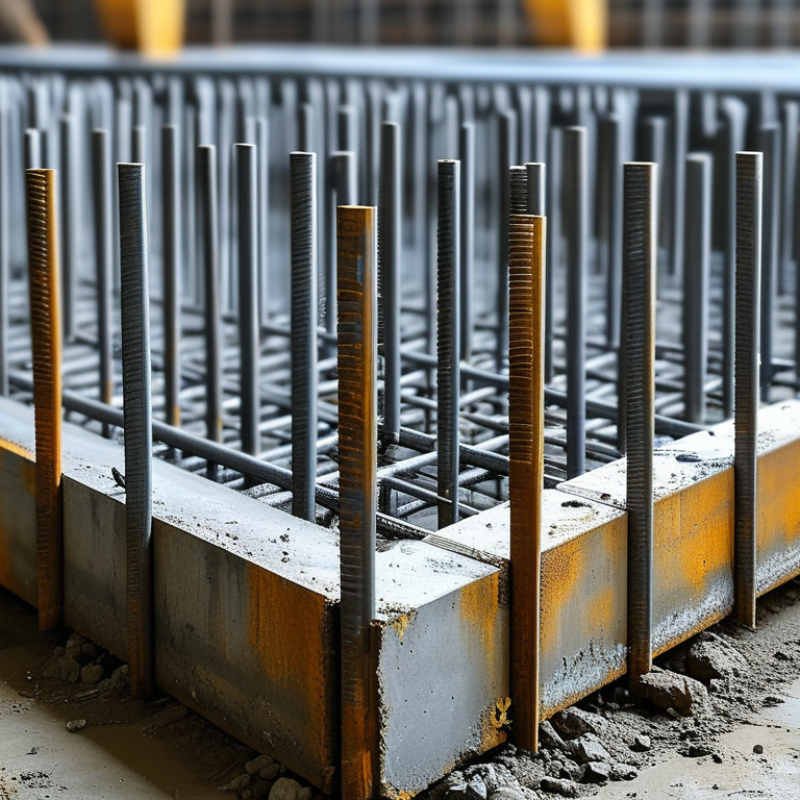
Steel Rebar is the ribbed steel reinforcement placed inside concrete to improve its tensile strength. Concrete handles compression well, but it performs poorly when stretched. Rebar helps control cracking, resist bending, and transfer loads through slabs, beams, columns, foundations, and retaining walls. It is usually manufactured from carbon steel, then cut, bent, and tied before concrete placement.
The global scale is substantial. The World Steel Association reported approximately 1.89 billion tonnes of crude steel production in 2023 in its World Steel in Figures 2024 report. Only part becomes reinforcement bar, yet this figure shows the industrial foundation behind modern construction. On a job site, workers may lay bars in a foundation grid, support them on concrete chairs, and check the specified cover before pouring. Small details matter. Insufficient cover can expose steel to moisture and corrosion.
Designers do not select bar size casually. They consider structural loads, spacing, anchorage, lap lengths, concrete strength, exposure conditions, and construction tolerances. ACI 318-19, Building Code Requirements for Structural Concrete, provides widely used requirements for reinforced concrete design and detailing. ASTM A615/A615M also specifies requirements for deformed and plain carbon-steel bars used in concrete reinforcement. Regional standards may differ, so project documents and local regulations remain decisive.
The simple picture is incomplete. Rebar does not make weak concrete automatically safe. Poor placement, congestion, inadequate vibration, or incorrect cover can reduce performance. Engineers, inspectors, and experienced crews must verify the details in the field. This guide explains what Steel Rebar is, how it works, and why its installation quality matters as much as its grade.
Steel Rebar: Definition, Composition, and Basic Properties
Steel rebar, or reinforcing bar, is a steel element embedded in concrete. Its main purpose is to resist tensile forces that concrete handles poorly. Most rebar is made from low-carbon steel, containing iron with small amounts of carbon, manganese, silicon, and other controlled elements. These additions affect strength, ductility, weldability, and corrosion performance.
The surface usually has raised ribs. They improve mechanical grip between the bar and surrounding concrete. Common specifications include 420 MPa and 500 MPa minimum yield-strength grades, depending on the governing standard. The World Steel Association reported about 1.89 billion tonnes of crude steel production worldwide in 2023. A significant portion supports construction, where reinforcement remains a major steel application. The exact rebar share varies by region and reporting method.
Rebar is cut, bent, and tied into cages before concrete placement. Engineers select its diameter, spacing, lap length, and concrete cover from structural calculations. Cover matters because moisture and chlorides can reach exposed steel and trigger corrosion. Galvanized or epoxy-coated reinforcement may reduce risk, but neither removes the need for good detailing. The American Concrete Institute and national building standards emphasize development length, anchorage, and crack control.
A tidy definition can mislead. Rebar does not make concrete invincible. Poor placement, insufficient cover, or careless vibration can still produce weak zones. On site, checking bar grade markings and measuring spacing is practical evidence, not paperwork alone. That small inspection can prevent a large structural problem.
Common Types and Sizes of Steel Rebar
What Is Steel Rebar and How Is It Used?
Steel rebar strengthens concrete by carrying tensile forces that concrete cannot resist well. Its raised ribs help it grip the surrounding concrete. Rebar is placed inside slabs, beams, columns, walls, and foundations. Spacing, overlap, and concrete cover all affect performance.
Common Types and Sizes of Steel Rebar
The most common type is carbon-steel deformed rebar. It is widely used in residential and commercial construction. Epoxy-coated and galvanized rebar provide extra protection in damp or corrosive environments. Stainless steel rebar offers stronger corrosion resistance, but it usually costs more. Welded wire reinforcement is different from standard rebar and suits thinner slabs or surfaces.
Sizes are identified by numbers in the inch-based system. Typical choices include #3, #4, #5, #6, #7, and #8. Their nominal diameters range from about 3/8 inch to 1 inch. Metric projects often use bars near 10, 13, 16, 19, 22, and 25 millimeters. The bar size does not determine strength alone. Steel grade, spacing, and placement also matter.
A #4 bar may suit a small slab, while a heavily loaded column needs a different design. That example is only a starting point. Project drawings and local structural standards should control the final selection. A practical inspection should check rust, clean bar surfaces, tie placement, and sufficient concrete cover. Small placement errors can become expensive cracks later.
How Rebar Reinforces Concrete Structures
What Is Steel Rebar and How Is It Used?
Steel rebar reinforces concrete structures by carrying tension that concrete handles poorly. Concrete performs strongly under compression, but it can crack when pulled or bent. Ribbed steel bars create mechanical bond with surrounding concrete. This bond helps transfer stresses across beams, slabs, columns, walls, and foundations.
The scale is enormous. The Global Cement and Concrete Association estimates that people use about 14 billion cubic meters of concrete each year. Much of this concrete relies on embedded steel for structural reliability. World Steel Association data reported approximately 1.89 billion tonnes of crude steel production in 2023, although only part became reinforcement products. In practice, engineers select bar diameter, spacing, grade, lap length, and concrete cover through structural calculations. ACI 318 and ASTM A615 provide widely used design and material requirements in the United States.
On a jobsite, workers place rebar on small supports before pouring concrete. The supports keep bars at the specified depth. Tied intersections must remain stable during vibration and concrete placement. Poor alignment can reduce cover and expose steel to moisture, chlorides, and corrosion. Rebar controls cracking, but it does not eliminate cracks. That expectation needs correction. Construction tolerances, congestion, and rushed inspections still create weaknesses. Engineers should verify drawings against actual placement, especially around openings, joints, and heavily loaded connections. A strong design can still fail its purpose when field details are ignored.
What Is Steel Rebar and How Is It Used? - How Rebar Reinforces Concrete Structures
| Dimension | Key Data | How It Supports Concrete Structures |
| Definition | Steel rebar is a ribbed steel reinforcing bar embedded in concrete. | It works together with concrete to form reinforced concrete members. |
| Primary structural role | Carries tensile forces that concrete handles poorly. | Helps resist bending and tension in beams, slabs, walls, and footings. |
| Concrete's complementary role | Concrete provides high compressive strength and protects embedded steel. | The steel-concrete combination creates a composite structural system. |
| Bond with concrete | Ribs on the bar surface mechanically interlock with the surrounding concrete. | Improves load transfer and limits slip between the steel and concrete. |
| Crack control | Closely spaced reinforcement distributes tensile strain across a wider area. | Helps control the width and concentration of shrinkage, temperature, and flexural cracks. |
| Typical steel grade | ASTM A615 Grade 60: minimum yield strength of 60 ksi (420 MPa). | Provides a commonly used balance of strength, ductility, and availability in reinforced concrete construction. |
| Common bar surface | Deformed bars with raised ribs are widely used. | The deformations increase mechanical bond compared with a smooth bar. |
| Beam reinforcement | Longitudinal bars are placed near tension zones; stirrups are placed transversely. | Longitudinal bars resist flexural tension, while stirrups help resist shear and hold the bar cage in position. |
| Slab reinforcement | Bars or welded reinforcement are arranged in one or two directions. | Resists bending and helps distribute loads, temperature effects, and shrinkage stresses. |
| Column reinforcement | Longitudinal bars are enclosed by ties or spiral reinforcement. | Contributes to axial and bending resistance and helps confine the concrete core. |
| Footing reinforcement | Bars are commonly arranged near the bottom of spread footings. | Resists tensile stresses caused by soil pressure and transfers structural loads into the ground. |
Common US Rebar Sizes and Nominal Properties
| US Bar Size | Nominal Diameter | Nominal Area | Nominal Weight | Common Applications |
| #3 | 9.5 mm (0.375 in) | 71 mm² (0.11 in²) | 0.560 kg/m (0.376 lb/ft) | Slabs, walls, small footings, and temperature reinforcement |
| #4 | 12.7 mm (0.500 in) | 129 mm² (0.20 in²) | 0.994 kg/m (0.668 lb/ft) | Residential slabs, walls, beams, and footings |
| #5 | 15.9 mm (0.625 in) | 199 mm² (0.31 in²) | 1.552 kg/m (1.043 lb/ft) | Beams, columns, walls, and medium-duty foundations |
| #6 | 19.1 mm (0.750 in) | 284 mm² (0.44 in²) | 2.235 kg/m (1.502 lb/ft) | Structural beams, columns, walls, and footings |
| #7 | 22.2 mm (0.875 in) | 387 mm² (0.60 in²) | 3.042 kg/m (2.044 lb/ft) | Heavily loaded beams, columns, and foundations |
| #8 | 25.4 mm (1.000 in) | 510 mm² (0.79 in²) | 3.973 kg/m (2.671 lb/ft) | Large beams, columns, retaining structures, and foundations |
Note: Bar selection, spacing, lap length, anchorage, concrete cover, and corrosion protection must be specified by the applicable structural design code and qualified design professional.
Applications and Performance Considerations of Steel Rebar
Steel rebar is a ribbed steel bar placed inside concrete to resist tension. Concrete handles compression well, but it performs poorly under pulling forces. Rebar closes that gap. It appears in foundations, columns, beams, retaining walls, bridge decks, and industrial slabs. The World Steel Association reported 1.892 billion tonnes of crude steel production in 2023. A small mistake in bar placement can still weaken an entire structure.
Performance depends on more than yield strength. Designers check ductility, rib geometry, bar diameter, lap length, concrete cover, and spacing. Higher-strength rebar may reduce congestion, yet it can complicate bending and field inspection. Seismic structures need dependable plastic deformation, not simply stronger steel. ASTM A706 requirements address weldability and controlled mechanical properties for demanding applications. That distinction matters on crowded construction sites.
Corrosion remains a practical concern. Water, oxygen, chloride salts, and cracked concrete can reach the steel surface. The Federal Highway Administration identifies corrosion as a major contributor to reinforced-concrete bridge deterioration in the United States. Adequate cover, low-permeability concrete, careful curing, and proper drainage improve service life. Coated or corrosion-resistant reinforcement may help, but it increases specification and quality-control demands. The International Energy Agency reports that iron and steel production creates about 7% of global energy-related emissions, so material efficiency deserves attention. Rebar is essential. It is not impact-free.
What Is Steel Rebar and How Is It Used?
Common Steel Rebar Yield-Strength Classes
Steel rebar is a ribbed steel reinforcement bar embedded in concrete to improve tensile capacity, control cracking, and provide structural strength. The values shown are nominal yield-strength classes commonly used for reinforced-concrete design. Higher-strength rebar can reduce steel quantities, but design decisions must also consider ductility, bond performance, weldability, corrosion protection, and local construction standards.