425 Sovereign Ct. St. Louis, MO 63011
SEARCH OUR WEBSITE

What Is Racking Storage and How Does It Work?

Racking Storage is more than rows of steel frames holding cartons. It is a practical system for using vertical space, organizing inventory, and supporting safer warehouse movement. In a well-planned facility, pallets sit at defined heights, aisles remain accessible, and forklifts follow predictable paths. The structure may look simple. The decisions are not.

Warehouse expert John J. Bartholdi III emphasizes this principle: “A warehouse is a system for storing and moving goods, not merely a building.” His observation explains why Racking Storage should be designed around product weight, pallet dimensions, turnover rates, and handling equipment. A fast-moving product might belong near dispatch doors. Slower stock may use higher levels. Small mistakes here can create daily delays.

The basic process is clear. Goods arrive, receive identification, and move into assigned rack locations. Operators retrieve them when orders are released. Vertical storage saves floor space, but it also introduces risks. Poor load distribution, damaged beams, blocked aisles, or missing inspections can weaken the entire operation. Safety comes first.

Still, no rack layout is perfect. Demand changes. Products change. Teams make errors. A useful design must allow adjustment without becoming confusing. This guide explains common racking types, how storage systems work, and which planning details deserve closer attention. It also examines the less visible problems, including wasted air space, unclear labeling, and layouts that look efficient but slow workers down.
What Is Racking Storage and How Does It Work?

Racking Storage Defined: Components, Load Units, and 18-Inch Fire Clearance

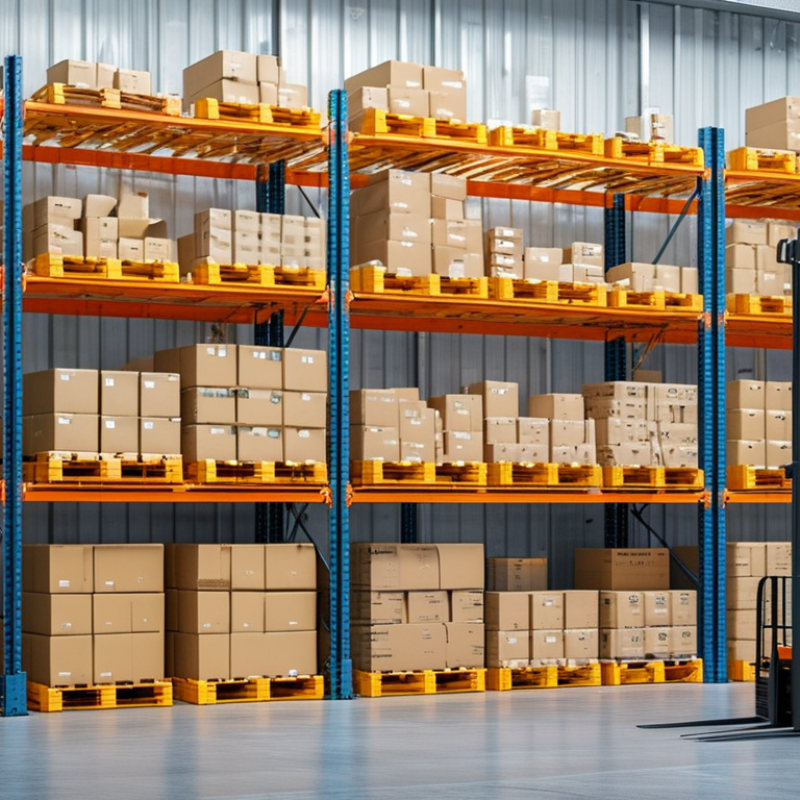
Racking storage is a framed system that holds palletized, boxed, or long-load inventory above the floor. Its main parts include uprights, horizontal beams, braces, wire decking, anchors, and load labels. Each bay must match the intended load unit. A pallet is not simply a platform; its dimensions, weight, stability, and overhang affect the rack design.

The 2024 MHI Annual Industry Report surveyed more than 2,000 supply-chain professionals. Its findings reinforce the need for better inventory visibility and disciplined material handling. In practice, operators should record beam levels, pallet weights, forklift impacts, and rack inspections. One missed load label can create a serious design error. I have seen layouts look efficient on paper, yet fail when pallets vary by several inches.

Fire clearance deserves equal attention. NFPA 13 commonly requires at least 18 inches between stored goods and sprinkler deflectors, although the exact rule depends on sprinkler type, storage height, commodity, and building conditions. Measure vertically from the highest stored item, not from the rack beam. Keep this gap visible. Do not use it for cartons or temporary equipment. OSHA 29 CFR 1910.176 also requires storage areas to remain orderly and safe for handling. The 18-inch figure is useful, but it is not universal permission to store higher. Local fire officials and the approved sprinkler design must control. I would recheck every clearance after seasonal inventory changes, because real warehouses rarely remain as tidy as their drawings.

Racking Storage: Pallet Footprints and Fire Clearance

Racking storage uses upright frames, horizontal beams, and decking to hold load units such as palletized goods. The chart compares widely used pallet footprints with an 18-inch fire-clearance reference. Pallet dimensions identify the space occupied by each load unit, while fire clearance is maintained separately above stored materials where required by the storage design and applicable fire code.

How Pallet Racks Work: Frames, Beams, Decking, and Rated Load Capacity

Pallet racks create vertical storage by connecting steel frames, beams, and decking into a stable structure. Upright frames stand on floor anchors and carry the main vertical load. Their columns usually include punched holes for adjustable beam levels. Beams lock between the frames and support each pallet position. The connectors matter. Loose or damaged connections can change how the rack carries weight.

Decking sits across the beams and supports pallets that do not rest safely on the beam edges. Common options include wire mesh, steel panels, and timber boards. Each option spreads weight differently and needs a suitable support arrangement. A clear load plaque should show the permitted capacity for each beam level and bay. Never treat the maximum number as a flexible target.

Rated capacity depends on beam length, frame height, upright design, pallet weight, and load placement. It also changes when levels are moved. The heaviest pallets should stay low when practical. Keep loads centered, with no serious overhang. Inspect bent frames, missing anchors, and impact damage quickly. A rack may look straight while hidden damage weakens it. That is an easy mistake. A qualified person should verify unclear ratings, altered layouts, and unusual loads before use. A simple sketch is not enough.

How to Choose Racking: Selective, Drive-In, Push-Back, and Cantilever Systems

Racking storage uses steel frames and beams to organize pallets, cartons, or long materials vertically. The right system depends on inventory turnover, pallet size, available floor space, and handling equipment. A poor choice can create blocked aisles, wasted capacity, or difficult stock rotation.

Selective racking offers direct access to every pallet. It suits warehouses with many product types and frequent picking. Drive-in racking stores pallets deep within rails, improving density for large quantities of similar goods. However, forklifts must enter the structure, and older stock can remain hidden. Push-back racking uses nested carts that move pallets toward the rear. It provides better selectivity than drive-in systems and works well when several pallets share one product. Cantilever racking supports long items, such as pipes, timber, or metal profiles. Its open arms make loading easier, but the base and columns need protection from impacts.

Measure carefully. Very carefully. Confirm pallet loads, beam levels, aisle widths, ceiling height, and forklift turning space before installation. Professional suppliers should provide load calculations and clear inspection guidance. Local building, fire, and workplace requirements also need review. In my experience, businesses often chase maximum density first. That can be a mistake. Faster picking, safer movement, and accessible inventory may deliver greater value than squeezing in a few extra pallets. Some layouts look efficient on paper, yet perform poorly during busy shifts. Test the proposed workflow with real operators before making the final decision.

How Warehouse Racking Operates: Receiving, Put-Away, Picking, and FIFO/LIFO

What Is Racking Storage and How Does It Work?

How Warehouse Racking Operates: Receiving, Put-Away, Picking, and FIFO/LIFO

Racking storage places goods in vertical levels, making better use of warehouse height and floor space. The process begins at receiving, where staff compare delivered cartons with purchase records. They check quantities, packaging condition, labels, and product dates. Damaged or unclear items should wait in a designated inspection area. Small errors here can spread through every later task.

After receiving, workers assign each load to a suitable rack location. Put-away decisions consider weight, size, turnover rate, and safe access. Heavy cartons belong on lower levels. Fast-moving items should stay near picking routes, although this plan may need regular adjustment. A location system records the rack, level, product code, and quantity. Clear labels help reduce searching and misplaced stock.

Picking follows the order list and the warehouse’s rotation policy. FIFO, or first in, first out, sends older stock out before newer stock. It suits goods with expiry dates or aging concerns. LIFO, or last in, first out, removes the newest accessible stock first. It can work for stable, non-perishable materials, but it may leave older units hidden behind newer ones. Supervisors should review inventory records, aisle congestion, and rack condition. In practice, the neatest layout can fail when demand changes suddenly. Regular cycle counts reveal those weaknesses before they become costly.

What Is Racking Storage and How Does It Work? — How Warehouse Racking Operates: Receiving, Put-Away, Picking, and FIFO/LIFO
Warehouse Stage Primary Purpose Typical Activities Racking or Storage Location Inventory Control Data Key Accuracy or Safety Checks
1. Receiving Confirm that incoming goods match the purchase order and delivery documentation before storage. Unload vehicles, count cartons or pallets, inspect for visible damage, verify product codes, record lot or serial numbers, and assign a receipt status. Receiving dock, inspection area, or designated quarantine location. Quantity receivedSKULot/serial numberCondition Separate damaged or unverified goods. Check pallet stability, labels, packaging condition, and delivery records before releasing stock.
2. Put-Away Move accepted inventory from receiving to an assigned storage position that uses warehouse space efficiently. Scan or record the item, select a location, transport the load, place it in the rack, and update the inventory location. Selective pallet rack, drive-in rack, carton flow rack, cantilever rack, shelving, or floor storage, depending on the load. Location IDPallet IDAvailable capacityStorage class Confirm load weight does not exceed the rack capacity. Keep aisles and flue spaces clear, position pallets correctly, and prevent loads from overhanging beams.
3. Storage Protect inventory while maintaining safe access and accurate visibility of stock levels. Maintain rack positions, replenish forward pick locations, perform cycle counts, monitor storage conditions, and review slow-moving or obsolete stock. Rack levels are commonly organized by product velocity, load size, weight, accessibility, and required environmental conditions. On-hand quantityReserved quantityCube utilizationInventory age Use heavier loads on lower levels where appropriate, maintain required clearances, inspect frames and beams, and keep fire-protection access unobstructed.
4. Order Release Convert customer or production demand into authorized picking work. Validate available inventory, allocate stock, group orders into waves or batches, print or transmit pick tasks, and set priority rules. Warehouse management system, order queue, and designated picking zones. Order numberAllocated quantityPriorityDue time Prevent allocation of quarantined, damaged, expired, or already committed inventory. Confirm that the requested stock meets lot and date requirements.
5. Picking Retrieve the correct product and quantity from storage for an order or production request. Travel to the location, verify the item and location, pick full pallets, cases, or individual units, and record the quantity removed. Full-pallet rack positions, case-pick modules, carton flow lanes, shelving, or automated storage locations. Pick quantityPick rateTravel distanceShort picks Use two-point verification where practical: match the location and product identifier. Check quantity, unit of measure, lot, serial number, and expiration date.
6. Replenishment Keep forward picking locations stocked so order fulfillment is not interrupted. Monitor minimum levels, move reserve stock to pick faces, confirm the replenishment quantity, and update both source and destination locations. Reserve rack positions feeding forward pick locations such as carton flow, shelving, or floor-level pallet positions. Minimum levelMaximum levelReserve stockStockout events Replenish before the pick face is empty. Use compatible products and verify that the destination location is labeled and physically available.
7. FIFO Flow Issue the oldest eligible inventory first to reduce aging, deterioration, or expiration risk. Arrange stock by receipt date, lot date, or expiration date; place newer stock behind or above older stock; pick the oldest eligible unit first. Carton flow rack, pallet flow rack, drive-through rack, or clearly sequenced locations. Receipt dateLot dateExpiration dateAgeing stock FIFO is a physical and system rule. It works best when locations, labels, and picking instructions make the oldest eligible stock easy to identify.
8. LIFO Flow Issue the most recently stored inventory first when product characteristics and accounting or operating policies permit it. Load and retrieve from the same access face, usually placing newer loads in front of older loads and removing the front load first. Drive-in rack, push-back rack, or tightly sequenced floor lanes designed for last-in, first-out movement. Load sequenceStorage dateLane statusProduct suitability LIFO is generally unsuitable for perishable or expiration-sensitive goods. Confirm product stability, lane design, and operating policy before using it.
9. Packing and Dispatch Verify picked goods, prepare them for transport, and transfer ownership or custody to the carrier or internal destination. Consolidate order lines, pack, weigh, label, stage by route or destination, document shortages, and load vehicles or outbound equipment. Packing stations, quality-check area, outbound staging lanes, and shipping dock. Order accuracyPacked quantityWeightDispatch time Match the parcel or pallet to the correct order and destination. Inspect packaging, secure the load, and keep emergency exits and traffic lanes clear.
10. Cycle Counting Detect and correct inventory discrepancies without waiting for a full physical inventory. Count selected locations or products, compare physical quantities with system records, investigate variances, and approve adjustments. All active storage, picking, receiving, and staging locations. Count accuracyVariance valueAdjustment frequencyRoot cause Prioritize high-value, fast-moving, frequently shorted, or regulated items. Record the reason for each approved adjustment.
Operational principle: Racking storage combines physical rack design, location labeling, material-handling equipment, and inventory-control rules. FIFO and LIFO describe the sequence in which inventory is issued; the appropriate method depends on product shelf life, handling characteristics, warehouse design, and operating policy.

How Automation Expands Capacity: AS/RS Cranes Reaching Over 100 Feet

Racking storage uses vertical frames, beams, and platforms to hold pallets or containers above the warehouse floor. In manual systems, forklifts place and retrieve goods from each level. Automated storage and retrieval systems use computer-controlled cranes instead. These cranes travel along narrow aisles and can reach more than 100 feet high.

That height changes the economics of a warehouse. A single aisle can store many pallet positions without expanding the building’s footprint. The crane receives location data, moves vertically, and places a load into an assigned slot. Sensors check position, weight, and clearance during each movement. Conveyors or guided carts then transfer goods between storage aisles and picking areas.

The details matter.

A high-bay system needs a very flat floor. Small alignment errors can become serious near the roof. Pallet quality also affects reliability, because damaged boards may shift during handling. Temperature, dust, fire protection, and maintenance access require careful engineering. Experienced teams usually test travel speeds and recovery procedures before full operation.

Automation can improve inventory accuracy and reduce forklift traffic. It does not remove every risk. Software settings, poor load data, or weak maintenance can reduce performance quickly. A design that looks efficient on paper may feel too rigid during seasonal demand. Flexible storage zones and regular inspections often protect capacity better than maximum height alone.

Scroll to Top