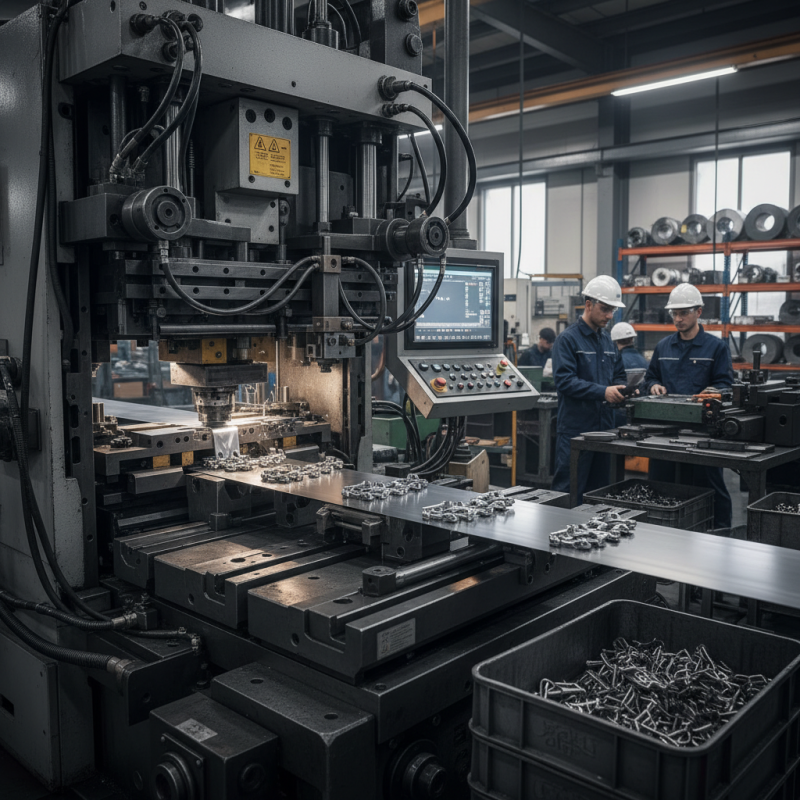
Why is Progressive Die Stamping Essential for Your Manufacturing Needs?
Progressive Die Stamping plays a vital role in modern manufacturing. This technique enables the efficient production of complex metal parts. Manufacturers rely on this process for its precision and speed.
The importance of Progressive Die Stamping lies in its ability to create high volumes of parts with minimal waste. This efficiency is crucial in today’s competitive market. Many industries, such as automotive and electronics, depend on this technology.
While this method offers numerous advantages, it also requires skilled operators and careful planning. Companies must consider initial costs and potential design limitations. Overall, Progressive Die Stamping stands out as an essential process for meeting diverse manufacturing needs. It enhances productivity while ensuring quality in metal fabrication.
Understanding Progressive Die Stamping in Manufacturing Processes
Progressive die stamping is a critical technique in modern manufacturing. This process allows for high-volume production of metal parts with intricate designs. It streamlines operations by combining multiple steps into one. Studies show that this method can improve productivity by as much as 30%. This efficiency can lead to significant cost savings. For manufacturers, understanding this technique is essential for staying competitive.
Precision is one of the most significant advantages of progressive die stamping. Each part produced maintains tight tolerances, reducing the need for additional machining. According to industry data, up to 80% of manufacturers report fewer defects when using this method. However, it requires careful design and tool preparation. A poorly designed die can lead to increased waste and operational downtime.
Tips for successful implementation include investing time in the design phase. Collaborate with skilled engineers who understand material properties. Regularly maintain stamping machines to prevent wear and tear. Monitoring production rates helps in identifying bottlenecks early. A proactive approach can keep operations running smoothly while maximizing output efficiency. Consistently assess your processes for potential improvements to maintain a competitive edge.
Key Advantages of Progressive Die Stamping for Mass Production
Progressive die stamping is pivotal for companies aiming for efficient mass production. This method combines multiple operations into one seamless process. As a result, it minimizes waste and reduces cycle times. According to a report by the Precision Metalforming Association, businesses using progressive die stamping can see up to a 30% reduction in production costs.
One significant advantage is the capability to produce intricately designed parts consistently. The precise nature of this technique allows for high tolerance levels. Studies show that parts produced via progressive die stamping often have a tolerance accuracy of ±0.002 inches. This precision is vital for industries such as automotive and aerospace, where even minor discrepancies can lead to significant issues.
Tip: Always consider the complexity of your designs. Simplifying designs can lead to lower costs and faster production.
Regular maintenance of the dies is essential for optimal performance. Wear and tear can lead to defects and increased downtime. It's recommended to implement a scheduled inspection routine to catch potential issues early. Reports indicate that neglecting maintenance can increase production failures by up to 15%.
Tip: Set aside a budget for maintenance. It can save costs in the long run.
Applications of Progressive Die Stamping in Various Industries
Progressive die stamping plays a critical role across various industries. This manufacturing process is essential for producing complex metal parts efficiently. It is widely used in automotive, aerospace, electronics, and medical sectors. Each of these industries benefits from the precision and speed that progressive die stamping offers.
In the automotive industry, for example, this technique produces components like brackets and frames. These parts require high consistency and tight tolerances. Aerospace applications often need lightweight structures that also maintain strength. Progressive die stamping fulfills these stringent requirements. In electronics, it aids in the production of small parts like connectors and housings, ensuring reliable performance.
**Tips:** Always collaborate with experienced engineers to select the right materials for your project. Regularly review and test your die to maintain precision in your products. Keep in mind that even small changes can significantly affect production quality and efficiency.
Applications of Progressive Die Stamping in Various Industries
Comparing Progressive Die Stamping with Other Stamping Techniques
Progressive die stamping stands out for its efficiency in manufacturing. This method improves production speed and accuracy compared to traditional stamping techniques. Unlike single-station stamping, progressive die stamping automates multiple steps in one continuous process. Reports indicate that this can reduce production time by up to 50%. In industries demanding high-volume parts, this speed can significantly enhance operational efficiency.
When comparing it to other methods, such as deep drawing, the differences are noteworthy. Deep drawing works well for deep shapes, but it often requires more complex setups and longer processing times. A study found that this method can lead to a waste rate of over 30% in raw materials for certain applications. Progressive die stamping, on the other hand, minimizes waste due to its inline material handling. This method typically maintains a waste rate below 10%, making it a more sustainable choice.
Flexibility is another area where progressive die stamping excels. It can accommodate diverse designs without extensive tooling changes. A report from the Metal Stamping Association shows that manufacturers using progressive dies experienced a 25% reduction in tooling costs. However, it doesn't come without challenges. Initial setup can be time-consuming and expensive. Manufacturers must decide if the long-term gains outweigh these initial hurdles.
Why is Progressive Die Stamping Essential for Your Manufacturing Needs? - Comparing Progressive Die Stamping with Other Stamping Techniques
| Stamping Technique | Production Speed | Complexity of Parts | Material Compatibility | Cost Efficiency |
| Progressive Die Stamping | High | High | Wide range | Cost-effective for large volumes |
| Transfer Die Stamping | Medium | Medium | Moderate range | Higher cost |
| Single Hit Stamping | Low | Low | Limited | Cost-effective for small runs |
| Draw Stamping | Medium | High | Wide range | Moderate cost |
Factors to Consider When Choosing Progressive Die Stamping Services
Progressive die stamping is a crucial process for manufacturers. It enables the creation of complex metal parts efficiently, ensuring high precision in production. When selecting progressive die stamping services, certain factors demand attention. The type of material used influences the overall durability and functionality of the stamped parts. Steel, aluminum, or copper varies in properties, dictating the choice of stamping technique.
Another vital consideration is the tooling quality. High-quality dies lead to better production results, reducing defects. According to a recent industry report, using premium tooling can decrease scrap rates by up to 30%. It is essential to verify the supplier’s capabilities and previous work. A trusted source can significantly impact the final product quality.
Tips: Always ask for samples of previous work. This helps gauge the quality and consistency. Additionally, ensure the supplier has experience in your industry. Industry-specific knowledge can lead to more efficient problem-solving. It's important to balance cost and quality. A cheaper service might compromise quality, leading to future costs. Consider the long-term implications of your choice.