How to Choose the Right Backhoe Loader Buckets?
Choosing the right Backhoe Loader Buckets can determine how efficiently a machine digs, loads, and handles materials. Bucket selection is not a minor attachment decision. It affects cycle times, fuel use, machine balance, and operator control.
Experienced operators usually begin with the worksite, not the catalog. Soft soil may require a wider digging bucket for productive passes. Compact clay often needs stronger teeth and reinforced cutting edges. Gravel, broken concrete, and abrasive rock demand heavier construction. A narrow trenching bucket can produce cleaner utility trenches, while a larger general-purpose bucket suits everyday excavation and loading.
The machine’s specifications matter just as much. Check loader capacity, hydraulic performance, pin dimensions, bucket weight, and recommended working limits. The attachment must fit securely without reducing stability. Manufacturer guidance and service records offer useful evidence, especially when working near underground utilities or unstable ground. A dealer or qualified technician can also identify compatibility problems before delivery.
There is no perfect bucket.
Many buyers focus only on width or purchase price. That approach can become expensive when teeth wear quickly or the bucket strains the linkage. I have seen productivity drop because an otherwise capable machine carried an attachment designed for different soil conditions. This is where careful judgment matters. Compare expected materials, digging depth, daily workload, and replacement-part availability. The right choice may not look impressive on paper, but it should perform predictably in real mud, gravel, and confined spaces. Allow room for review, because actual site conditions often challenge the original plan.
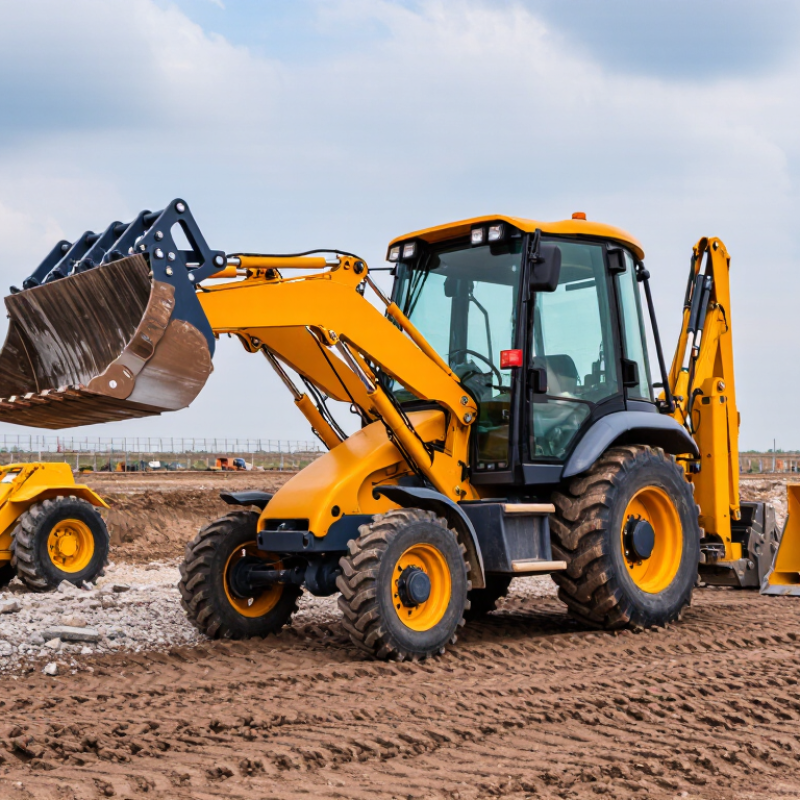
Define the Job by Digging Depth, Width, and Material Density
How to Choose the Right Backhoe Loader Buckets?
Define the Job by Digging Depth, Width, and Material Density
Bucket selection should begin with the excavation, not the machine’s appearance. Measure the required digging depth and compare it with the loader’s usable reach. A deep trench may need a narrower bucket for better clearance. A wide foundation cut may justify a larger bucket, but only when the machine can handle the added load.
Width also controls accuracy and productivity. A bucket slightly wider than the trench can reduce passes, yet it may disturb the sidewalls. For utility work, a narrow bucket often leaves cleaner edges. I once followed this rule too strictly. Loose soil moved quickly, but compacted clay made the narrow bucket painfully slow.
Material density changes the decision again. Sand, dry soil, clay, and broken rock place different demands on bucket strength and tooth design. Dense clay needs strong penetration and enough breakout force. Gravel may require a reinforced cutting edge. Wet material can cling inside the bucket, reducing the effective payload. Check the machine’s lift capacity, hydraulic pressure, and attachment limits before choosing the largest option. Bigger is not always better. Bucket weight matters.
Match Bucket Capacity to Loader Class: Approximately 0.06–1.00 m³
How to Choose the Right Backhoe Loader Buckets?
Match Bucket Capacity to Loader Class: Approximately 0.06–1.00 m³
Bucket capacity should match the backhoe loader’s operating class. Small machines often use buckets near 0.06–0.20 m³. Mid-sized loaders commonly handle about 0.20–0.50 m³. Larger units may support buckets approaching 1.00 m³. These figures are practical guidelines, not universal limits. I have seen operators choose larger buckets for faster loading, then lose control on wet, heavy soil. Capacity alone does not determine performance.
Check the loader’s rated lift, hydraulic pressure, linkage geometry, and attachment dimensions. Soil density matters greatly. A 0.40 m³ bucket filled with loose sand behaves differently from the same bucket filled with compact clay. Match the bucket to the task, too. Digging buckets need stronger teeth and cutting edges, while loading buckets benefit from higher volume and smoother profiles. Always confirm the manufacturer’s approved attachment range and the bucket’s actual weight. Small mismatches can reduce stability and increase wear.
Tips: Measure the material before choosing capacity. Estimate the bucket’s fill factor, not just its volume. Test the machine on level ground first. If the loader feels slow or unstable, the bucket is probably too large. Recheck your choice after several work cycles; field conditions often expose assumptions that looked correct on paper.
Choose Bucket Width Using the 300–900 mm Industry Range
Choosing the right backhoe loader bucket starts with width, not appearance. A practical industry range is 300–900 mm. Narrow buckets suit utility trenches, drainage lines, and compact urban work. Wider buckets move more soil per pass across open ground. However, width alone can mislead.
The Associated General Contractors’ 2024 workforce survey reported that 94% of construction firms struggled to fill craft positions. This shortage increases pressure on equipment productivity and operator efficiency. A 600 mm bucket often provides a useful middle ground for mixed excavation. It can maintain reasonable penetration while reducing unnecessary passes. For dense clay, a 300–450 mm bucket may control digging resistance better. Loose soil may justify a 750–900 mm bucket, if the loader has enough hydraulic capacity.
Measure the trench before ordering. A bucket should fit without scraping both walls. Check the machine’s lift capacity, breakout force, and coupler limits. These details matter more than a brochure’s maximum volume. I have seen operators choose the widest bucket, then lose cycle speed in wet ground. That choice looked efficient. It was not.
The 2024 Equipment Leasing & Finance U.S. Economic Outlook also emphasized disciplined capital use amid changing equipment costs. That supports selecting one primary width carefully, rather than buying oversized attachments. Soil moisture, haul distance, and operator experience can change the answer. A 900 mm bucket may be productive today, but wasteful on tomorrow’s narrow trench.
How to Choose the Right Backhoe Loader Buckets?
Choose bucket width according to the working space, trench width, and material. The 300–900 mm range covers common narrow-trenching, general-purpose, and wider excavation applications.
Nominal bucket widths shown: 300, 450, 600, 750, and 900 mm. Actual bucket fit and capacity depend on machine specifications, attachment geometry, and operating conditions.
Select Teeth and Cutting Edges for Soil, Gravel, or Rock
How to Choose the Right Backhoe Loader Buckets?
Bucket selection starts with the material, not the machine. In field inspections, loose soil usually works well with evenly spaced digging teeth. Clay needs sharper penetration, yet a smooth cutting edge can release sticky material more cleanly. Keep the edge reasonably sharp. A dull edge wastes hydraulic power and increases operator fatigue.
The USGS Mineral Commodity Summaries 2024 estimated U.S. crushed stone production at about 1.9 billion metric tons in 2023. Construction sand and gravel added roughly 960 million metric tons. These materials are not interchangeable. Rounded gravel often needs durable teeth with moderate penetration. Angular crushed stone creates more abrasion, so use stronger tooth points and a wear-resistant cutting edge. For fractured rock, short, heavy-duty teeth usually resist bending better than long, narrow points.
Inspect the bucket after every demanding shift. Look for uneven tooth wear, cracked adapters, and a cutting edge worn into a thin lip.
A simple site test helps: if the bucket skates across compacted ground, the teeth may be wrong. If it penetrates but carries little material, the edge or bucket profile may be unsuitable.
I would not treat these rules as permanent. Moisture, grading, and operator technique can change the result quickly. Field notes matter more than assumptions.