
425 Sovereign Ct. St. Louis, MO 63011
SEARCH OUR WEBSITE

How to Choose Squeezable Lip Gloss Tubes for Your Brand?

Choosing Squeezable Lip Gloss Tubes is not just a packaging decision. It shapes how your product feels in a customer’s hand, how neatly gloss reaches the applicator, and whether the tube looks at home beside your other products. A soft tube may be easy to squeeze, but an overly thin wall can feel flimsy. A glossy finish may look striking under studio lights, yet show fingerprints on a busy retail shelf. Details matter.

Brand strategist Walter Landor observed, “Products are made in the factory, but brands are created in the mind.” His point applies to packaging: shoppers often judge a gloss before trying it. For a practical comparison, look closely at tube material, capacity, nozzle shape, cap fit, decoration options, and how the package handles your formula. Ask suppliers for samples. Fill them, squeeze them, and leave them in a warm room before approving a design. Small tests can reveal leaks or awkward dispensing.

There is no perfect tube for every brand. A slim applicator may suit a precise, understated look; a wider opening may make filling easier. Trade-offs are real. This guide will help you compare options, ask suppliers clearer questions, and choose packaging that fits your product and audience. Still, a polished sample can hide production variation. Check specifications and confirm sample details before placing an order.
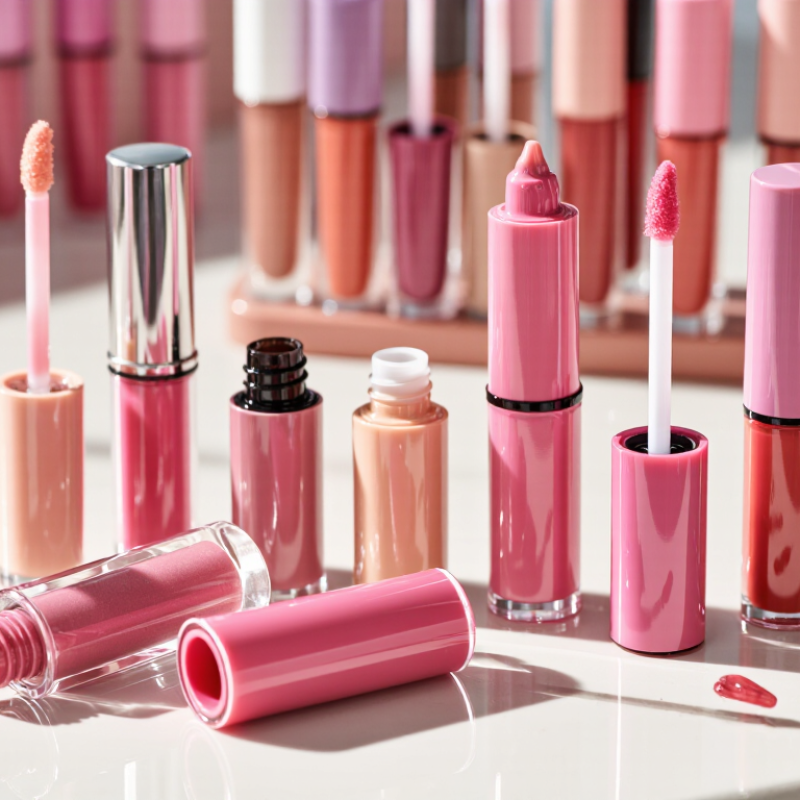
How to Choose Squeezable Lip Gloss Tubes for Your Brand?

Define Your Lip Gloss Formula and Packaging Requirements

A lip gloss formula should guide tube selection, not the other way around. Note its viscosity, oil content, pigment load, and sensitivity to air or light. A thin gloss may leak through a loose closure, while dense gloss may resist a narrow opening. Test the formula at room temperature and after warm storage. Small changes matter. Check whether shimmer settles, pigments cling to the tube shoulder, or oils affect the packaging material. These details are easy to miss on a specification sheet.

Then consider how people will apply and carry the product. A fine nozzle offers control, but may clog with thick or glitter-rich gloss. A wider opening feels effortless, though it can dispense too much. Consider capacity, cap fit, seal, and material compatibility together. Request samples and fill them with the intended formula, not a substitute. Store them upright, sideways, and in a bag; inspect for seepage, odor changes, or color shifts. Squeeze them repeatedly. It is tempting to choose by appearance alone, and that can be a costly shortcut. Record what works, including the awkward parts, before approving the final package.


Compare Tube Materials, Capacity, and Shape Options

A squeezable lip gloss tube should match the formula, not just the artwork. Soft polyethylene is easy to press and suits everyday glosses, while multilayer tubes can provide a stronger barrier for sensitive formulas. But mixed layers may complicate recycling. Recycled-content polyethylene can reduce reliance on virgin resin, though color and squeeze feel may vary between batches. Small details matter. Grand View Research valued the global cosmetic packaging market at USD 34.8 billion in 2023, underscoring how closely packaging choices compete for consumer attention.

Capacity and shape change the user experience. A 5–10 ml tube fits a small bag; a larger 10–15 ml option leaves more room for repeat use, but may feel bulky. Check the filled weight and how many squeezes deliver a comfortable amount.

Not always obvious.

Round tubes are familiar and roll easily, while oval or flat profiles can sit more steadily on a counter and create a different grip. Test the actual formula in each shape: a narrow opening can control flow, yet feel frustrating with thicker gloss. A broad applicator tip may spread product quickly, but can collect residue around the cap. Include headspace and cap fit in production samples; a beautiful empty tube tells you very little.

Choose an Applicator and Closure for Easy, Clean Use

A squeezable lip gloss tube should feel controlled, not messy. Match the applicator to the formula: a soft slant tip spreads thick gloss across the lips, while a narrow nozzle gives more precise placement. Test the tip with your actual formula; a glossy sample can flow differently after cooling. Small details matter. Check that the opening does not clog and that the tube dispenses without sudden spurts.

Choose a closure that stays secure through repeated squeezing. A threaded cap with a snug plug can help limit leaks and keep the applicator clean. Test filled tubes on their sides and upside down, then open and close them repeatedly. Still, no closure is foolproof if the tube shoulder or thread is poorly matched. McKinsey’s 2023 packaging survey covered more than 11,000 consumers in 11 countries and found recyclability is an important packaging consideration. So, assess whether the cap and tube materials can be separated for recycling, where local systems accept them.

Tips: Fill test tubes and use them for several days. Look for residue around the cap, gloss trapped at the tip, and sticky threads. Ask testers to apply the product with one hand; a cap that is easy to grip can make a real difference. Some designs look neat but feel awkward. That is worth revisiting.

Evaluate Branding, Decoration, and Customization Methods

Branding on a squeezable lip gloss tube has little room to hide. Check that the logo stays readable on the curved surface, even when the tube is partly full. A narrow typeface may look elegant on a screen but become hard to read at actual size. Small details matter.

Decoration affects both appearance and daily use. Screen printing can create crisp graphics, while foil accents add shine but may compete with small text. Ask for a physical sample, then rub the printed area with dry fingers and check it after repeated squeezing. Test the real tube. A glossy mockup cannot show how ink behaves on flexible material, and color can shift between a digital proof and production.

Customization should support the formula, cap, and intended shelf presentation. Compare tube colors, nozzle shapes, cap finishes, and print placement together rather than approving each in isolation. Leave clear space around seams and the squeeze area, where artwork may distort. If using several decoration methods, confirm that the added detail remains legible at the tube’s actual dimensions. There is a trade-off: more finishes can make a design feel distinctive, but they can also make quality checks harder. A simpler layout may be the more dependable choice.

How to Choose Squeezable Lip Gloss Tubes for Your Brand? - Evaluate Branding, Decoration, and Customization Methods

Evaluation Factor Common Options Branding and Use Considerations Customization Questions
Tube material Flexible plastics such as PE or laminated structures; material availability varies by supplier. Consider flexibility, product compatibility, squeeze feel, and whether the material suits the intended packaging claims. Which material is compatible with the formula? Is recycled content or a material-specific recycling instruction available?
Tube capacity and dimensions Capacity, tube length, and diameter can be selected according to the product and packaging format. Check that the chosen size is practical to hold, store, fill, and display. Confirm the fill volume and headspace requirements. What are the finished dimensions, nominal capacity, and allowable fill range?
Applicator and dispensing opening Options may include a nozzle opening or an applicator tip, such as a slanted tip, depending on the tube design. Match the dispensing method to the gloss viscosity and the desired application experience. Test for controlled dispensing and leakage. Does the opening dispense the formula consistently? Is the applicator comfortable and easy to clean or use?
Cap and closure Screw caps and other compatible closure styles; finishes may be coordinated with the tube. A secure closure can help reduce leakage during handling. Verify fit, opening and closing performance, and compatibility with the applicator. Has the assembled package been checked for closure fit, leakage, and repeated use?
Color and opacity Colored or translucent tube bodies, subject to material and manufacturing capabilities. Tube color affects how the product and printed artwork appear. Translucent packaging may show the formula, while opaque packaging can conceal it. Can the supplier provide color samples? How will the tube color affect the appearance of the filled product?
Printing and decoration Depending on the tube and supplier: direct printing, labeling, or other available surface decoration methods. Compare artwork coverage, print durability, color matching, and how decoration performs on a flexible curved surface. What decoration processes are available for this material and shape? Can production samples be approved before the full run?
Artwork and branding layout Logo, product name, shade information, and required product details arranged within the printable area. Keep text legible at the finished size and allow for curved surfaces, seams, and print-registration tolerances. What are the artwork dimensions, file requirements, safe areas, and review steps for a printed proof?
Surface finish Glossy, matte, or other finishes where supported by the chosen material and decoration process. Finish influences the visual effect and hand feel. Confirm that coatings or treatments are suitable for the packaging material and intended handling. Are finish samples available? Does the finish affect print appearance, scuff resistance, or recyclability instructions?
Production and order requirements Custom colors, decoration, and components may have different minimum order quantities and lead times. Custom tooling or multiple components can affect cost and production scheduling. Confirm all requirements before approving the order. What are the minimum order quantity, sample process, production lead time, and available quality checks?
Compatibility and quality testing Testing can include formula compatibility, dispensing, closure fit, leakage, and packaging durability. Evaluate the filled package under expected storage, transport, and consumer-use conditions before committing to production. Which tests are included, and can samples be evaluated with the actual formula and final components?

Note: Material, decoration, dimensions, and performance options depend on the tube design and supplier. Confirm specifications and test samples with the selected packaging supplier.

Check Supplier Quality, Safety, and Production Standards

Choosing squeezable lip gloss tubes starts with the supplier’s control over materials and manufacturing. Ask for written specifications covering the tube, cap, nozzle, and any inner coating. Request samples from the same production process used for bulk orders, not just a polished showroom sample. Small details matter.

Safety checks should match the formula and intended use. Ask for relevant material declarations and test reports, including compatibility or migration testing where appropriate. A tube may look clean yet affect gloss color, odor, or texture after storage. Check cap fit, sealed seams, and nozzle flow with filled samples. Ask for evidence.

Production standards matter when orders grow. Review how the supplier inspects incoming materials, controls production batches, and records defects. Ask how they test leakage and whether they can trace a finished lot back to its materials. If ordering custom colors or printing, approve a signed sample and confirm tolerances before production. Not every sample matches. I have seen small differences in squeeze resistance become noticeable during daily use, so include that check in your evaluation. A practical supplier should explain failures clearly, share records promptly, and agree on corrective steps rather than relying on reassuring promises.

Scroll to Top