How to Choose Sludge Dewatering Equipment for Your Needs
Choosing Sludge Dewatering Equipment requires more than comparing catalog specifications. The right choice depends on sludge type, daily volume, solids concentration, and final disposal requirements. A municipal plant may handle biological sludge, while an industrial facility may process abrasive mineral solids. These materials behave differently under pressure, rotation, or gravity. Small differences matter.
Begin with reliable operating data. Record feed flow, dry solids loading, polymer use, and seasonal changes. Collect representative samples, not only convenient ones. Laboratory tests can compare belt presses, centrifuges, screw presses, and filter presses. Measure cake dryness, filtrate clarity, power demand, and chemical consumption. Practical trials often reveal problems hidden by brochures. A machine may produce dry cake but require constant cleaning. Another may use less energy but need more floor space. There is no universal winner.
Consider the people operating the system. Easy access to bearings, screens, belts, and dosing points can reduce downtime. Noise, odor control, wash-water demand, and automation also affect daily performance. Ask suppliers for verified references from facilities with similar sludge characteristics. Review maintenance records when possible. Promises are not evidence. Equipment sizing should include realistic peak loads, but excessive capacity can increase unnecessary capital costs. That mistake happens.
A dependable decision balances performance, safety, lifecycle cost, and future expansion. Document every assumption, including uncertain laboratory results. Recheck the choice after pilot testing. Even experienced teams can overlook changing sludge chemistry or limited maintenance skills. Careful selection creates steadier operation, cleaner filtrate, and more predictable disposal costs. That is the real objective.
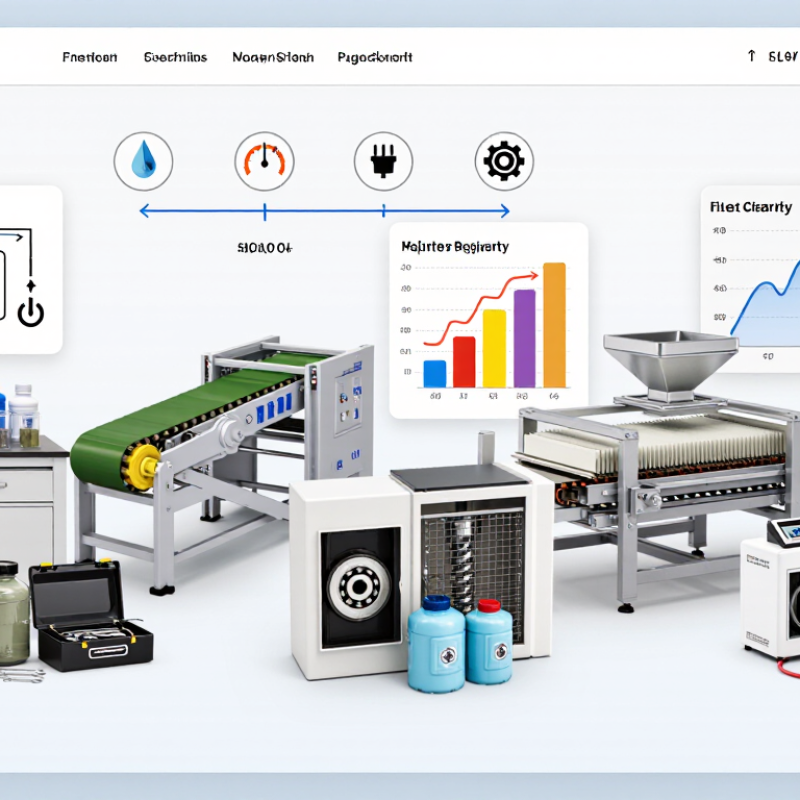
Assess Sludge Characteristics: Typical Feed Solids Range from 0.5–2%
How to Choose Sludge Dewatering Equipment for Your Needs
Assess sludge characteristics before comparing dewatering equipment. Typical feed solids range from 0.5–2%, according to U.S. EPA guidance in its Biosolids Technology Fact Sheet series. At 1% solids, 10,000 kilograms of sludge contains only about 100 kilograms of dry solids. The remaining mass is mostly water. This low concentration strongly affects hydraulic capacity, polymer demand, and power consumption.
A belt filter press can handle continuous flow, but dilute sludge may require careful conditioning and thickening. Centrifugal systems often accept variable feed rates, although high shear can increase polymer use. Screw presses may suit smaller facilities, but their performance depends heavily on sludge type and screen selection. WEF’s Manual of Practice No. 8 emphasizes testing sludge rheology, solids concentration, and expected cake dryness before final equipment sizing.
Do not rely on a single laboratory result. Collect samples during wet-weather flow, peak production, and normal operation. Record feed solids, volatile solids, temperature, polymer dose, and filtrate clarity. A 0.5% feed can overload a unit designed around 2% solids, even when the daily mass is unchanged. That mistake is surprisingly common. Pilot testing may also reveal uneven cake texture or unstable capture rates. Results can look excellent for one week and disappoint the next. Ask suppliers to test your actual sludge, not a convenient substitute. Equipment selection becomes more reliable when real operating variability is included.
Set Dewatering Targets: Compare Industry Cake Solids Benchmarks of 15–35%
Choosing sludge dewatering equipment should begin with a measurable cake solids target. For many municipal applications, 15–35% total solids is a practical industry benchmark. The correct range depends on sludge type, polymer response, and disposal requirements.
U.S. EPA Biosolids Technology Fact Sheets report typical belt filter press performance near 12–25% solids. Centrifuge performance commonly reaches about 20–35% solids. Recessed-chamber filter presses can achieve higher values, often above 30%, but they may require longer cycles and more operator attention. These figures are not guarantees. They are planning references.
Start with the number that affects operating cost. A 20% cake contains more water than a 30% cake, increasing hauling weight and fuel use.
20%
one dry tonne of solids produces roughly five tonnes of wet cake
30%
one dry tonne of solids produces about 3.3 tonnes
The difference is substantial.
The European Commission’s Best Available Techniques reference documents also emphasize sludge characteristics, energy demand, and downstream handling when comparing treatment options. Test your actual sludge before purchasing equipment. Measure feed solids, capture rate, cake dryness, polymer dose, and hourly throughput. Do not rely only on supplier brochures. Field data can be messy. Seasonal changes may reduce performance, and a 35% target may be unrealistic for biological sludge. A 25% target, achieved consistently, may deliver better value.
Sources: U.S. EPA, Biosolids Technology Fact Sheets; European Commission Joint Research Centre, Best Available Techniques Reference Document for Waste Treatment; Water Environment Federation, Manual of Practice No. 8.
Match Equipment to Sludge: Evaluate Belt, Screw, Centrifugal, and Filter Presses
Choosing sludge dewatering equipment starts with the sludge, not the machine. In field assessments, I examine solids content, particle size, oil levels, temperature, and biological activity. These details can change daily. A quick jar test often reveals more than a sales brochure.
Belt presses suit many biological sludges when steady flow and moderate dryness are acceptable. They need reliable polymer mixing and regular belt washing.
Screw presses use less wash water and operate quietly, but sticky sludge can reduce capacity. They may also struggle with very fine particles.
Centrifuges handle variable feed rates and produce a compact footprint. However, they require skilled adjustment, consistent polymer control, and careful maintenance.
Filter presses can achieve high cake solids, especially with difficult industrial sludge. Their batch operation takes more labor and floor space.
Measure the real conditions. Pilot testing matters. Compare cake dryness, polymer use, power demand, wash water, and operator time. A centrifuge may look efficient until energy costs rise. A belt press may seem simple until wash-water limits appear. I have seen both assumptions fail. That is why equipment selection should include seasonal testing and several feed conditions. Keep records from actual operation, not only laboratory trials. The best choice may still involve compromise. Be willing to revise the specification when the sludge changes.
Verify Lifecycle Costs, Footprint, Energy Use, and Maintenance Requirements
How to Choose Sludge Dewatering Equipment for Your Needs
A low purchase price can hide expensive operating demands. The cheapest quote misleads. Compare the full lifecycle cost, including installation, polymer, electricity, labor, spare parts, cleaning, and sludge disposal. Use local operating data whenever possible. For example, calculate costs per dry ton, not merely per operating hour. A system handling 500 cubic meters daily may perform differently during rainy-weather dilution or peak production. Request performance data from trials using sludge with similar moisture, temperature, and organic content.
Footprint affects more than the equipment pad. Leave room for cake conveyors, polymer preparation, access doors, lifting tools, and safe maintenance work. A compact unit may require awkward piping or costly building changes. Space is a cost. Check ceiling height and the route for removing worn parts. I have seen layouts look efficient on paper, then restrict access around a bearing housing. That oversight can extend downtime.
Energy comparisons should use measured kilowatt-hours per dry ton. Motor size alone says little about real consumption. Review water requirements, standby power, and performance at partial loads. Maintenance planning deserves equal attention. Ask how often screens, seals, belts, bearings, or pressure components need inspection. Confirm whether operators can complete routine servicing with ordinary tools. Keep a realistic allowance for training and unexpected stoppages. A spreadsheet cannot predict every failure, so test assumptions against site experience and revise them before purchasing.
How to Choose Sludge Dewatering Equipment for Your Needs
Comparison of representative energy, footprint, and maintenance burdens for common sludge dewatering technologies. Lower scores indicate lower resource and maintenance requirements.
The screening scores are normalized from representative planning values: energy use of approximately 20–70 kWh per tonne of dry solids, equipment footprint of approximately 10–40 m² per 1,000 kg of dry solids per hour, and annual maintenance labor of approximately 150–600 hours. Actual lifecycle costs depend on sludge characteristics, polymer consumption, throughput, automation, labor rates, spare parts, and disposal requirements.