How to Choose a VCB Breaker in 2026?
Choosing a Vcb Breaker in 2026 is not a catalogue exercise. It is a decision about the electrical system the breaker must protect. A compact breaker may suit one switchboard, yet fail to fit another installation’s fault level, operating conditions, or maintenance plan. Details matter.
“Choose for the duty, not the headline rating.” This is a practical editorial rule, not a quotation attributed to a named expert. No source article or verifiable expert quotation was provided, so assigning those words to a specialist would be misleading. For an E-E-A-T-focused guide, any named expert quote should be checked against its original source.
The selection process starts with system voltage, rated current, and the available short-circuit current. Check the breaker’s breaking capacity against the system study, not an assumption. Review the vacuum interrupter, operating mechanism, protection relay compatibility, and expected switching frequency. A site’s altitude, ambient temperature, enclosure, and indoor or outdoor location can also affect the specification. Small details. Expensive consequences.
In 2026, buyers should also compare installation clearances, service access, spare-part availability, and manufacturer documentation. Confirm which applicable standards and test reports match the project and purchasing requirements. Do not rely on a product label alone; request complete ratings and technical evidence. Even then, the “best” choice may involve trade-offs between initial cost, lifecycle support, and operational needs. This guide explains how to assess those trade-offs and ask suppliers precise questions before choosing a Vcb Breaker. A careful review can reduce avoidable mismatches, though it cannot replace a qualified engineering assessment of the actual system.
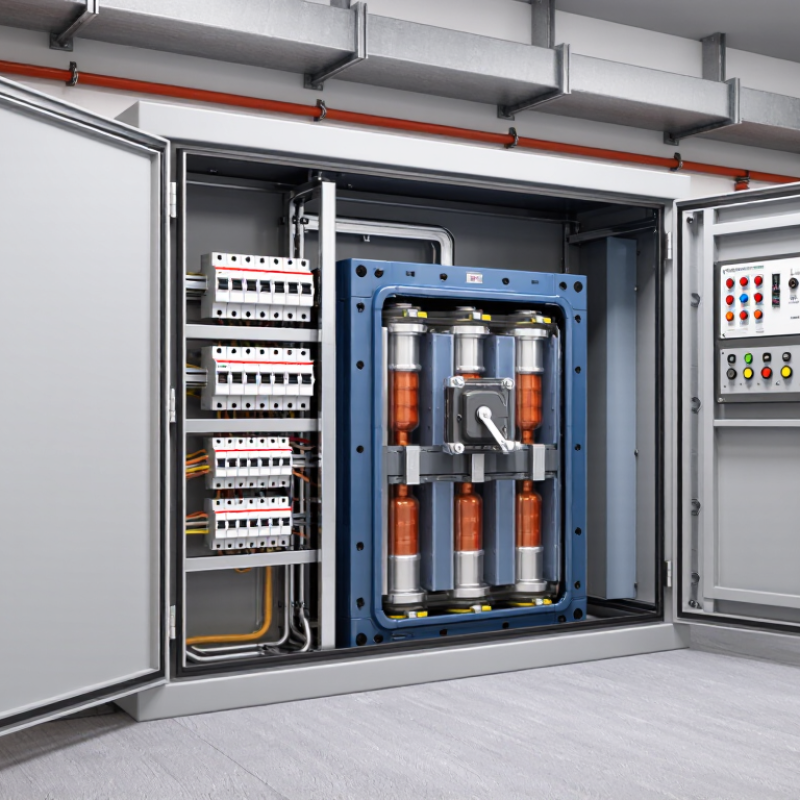
Understand What a Vacuum Circuit Breaker Does
A vacuum circuit breaker (VCB) interrupts electrical current when a fault or switching command requires the circuit to open. Inside its sealed interrupter, contacts separate and an arc forms briefly. The vacuum helps extinguish that arc as current passes through zero. That matters. A protection relay detects abnormal conditions and signals the breaker; the relay and breaker must work together. In practical selection, check system voltage, continuous current, short-circuit breaking capacity, and operating frequency. A breaker that fits the panel may still be unsuitable for the fault level.
Tips: Compare the breaker’s ratings with the actual system study, not just the existing equipment label. Confirm control voltage, installation conditions, and coordination with upstream and downstream protection. Ask how inspections and operating tests will be handled.
A neat specification can still mislead if the installation has dust, heat, vibration, or frequent switching. Check the manufacturer’s technical documentation and applicable equipment standards, then have a qualified engineer verify the selection. Vacuum interrupters generally need less contact maintenance than some alternatives, but they are not maintenance-free. Follow the service schedule and inspect the mechanism, connections, and trip circuit. Small details are easy to overlook.

Define the System Voltage, Current, and Fault Requirements
For a VCB selection, use the system’s highest operating voltage, not only its nominal label. IEC 62271-100:2021 covers AC circuit-breakers above 1 kV at 50 or 60 Hz. Match the breaker’s rated voltage and insulation level to the network, including altitude and site conditions. A 12 kV system, for example, needs equipment rated for the applicable highest system voltage and required insulation withstand—not simply a “12 kV” nameplate. Check the utility’s single-line diagram and grounding method. Small details matter.
Next, calculate continuous load current and the maximum prospective fault current at the installation point. Select a continuous-current rating that accommodates expected loading and temperature-related derating inside the switchgear enclosure. For fault duty, verify symmetrical breaking current, peak making current, and short-time withstand against the latest short-circuit study. IEC 62271-100 sets out breaker performance requirements; the study supplies the site-specific fault values. Include the system X/R ratio and protection clearing time, since these affect peak stress and duration. A 25 kA label alone is not enough. Reclosing duty and future load growth are easy to overlook, and I would recheck both before approving the specification.
Compare VCB Ratings, Design, and Installation Options
How to Choose a VCB Breaker in 2026?
Compare VCB Ratings, Design, and Installation Options
Choosing a vacuum circuit breaker (VCB) starts with the system’s operating conditions, not a catalog headline. Match rated voltage and continuous current to the switchgear and expected load. Then compare short-circuit breaking capacity with the fault level calculated for the installation. Check insulation ratings and operating sequence requirements, too. A higher rating is not automatically a better fit; it can affect size, cost, and coordination.
Tips: Confirm the site’s fault-current study, enclosure dimensions, and cable entry direction before ordering. Fit matters. Ask a qualified engineer to review protection settings and applicable local requirements. Keep the latest equipment drawings close at hand.
VCBs may use fixed or withdrawable designs. A withdrawable unit can simplify inspection and replacement, but needs suitable compartment space and interlocks. Fixed designs may suit compact layouts, though maintenance access deserves careful review. Check whether the mechanism is manual, motor-operated, or equipped for remote control.
Installation details matter: verify mounting clearances, grounding points, control wiring, and lifting access against the approved drawings. Small details count. A specification can look complete on paper, yet overlook a cramped cable bend or awkward service route. Recheck those assumptions before procurement.
Assess Site Conditions, Controls, and Maintenance Needs
How to Choose a VCB Breaker in 2026?
Assess the actual installation, not just the nameplate. Record system voltage, available fault current, switching frequency, and load type. Note altitude, heat, dust, moisture, and corrosive air; these affect insulation and enclosure choices. Check the panel dimensions and cable entry points, too. A breaker that fits electrically may still be awkward to install or inspect. Small details matter.
Controls must suit the way the site operates. Confirm the trip and close coil voltages match the station DC supply, and check auxiliary contacts, interlocks, remote commands, and backup power. EIA’s Electric Power Annual reports about 5.5 hours of average U.S. customer interruptions in 2022, excluding major event days. This is not an industrial-site prediction, but it underlines why dependable control power and clear operating signals matter. A tidy control diagram can still miss a real-world failure point.
Tips: Ask maintenance staff how often the breaker operates and what tools they use. Review access for racking, testing, and contact inspection. Check the maintenance instructions and spare-part availability before selection. Keep records. In a dusty room, inspection intervals may need adjustment; follow the manufacturer’s guidance and site conditions. One detail is easy to overlook: whether technicians can safely reach the test position without moving nearby equipment.
How to Choose a VCB Breaker in 2026: Assess Site Conditions, Controls, and Maintenance Needs
Start by matching the breaker’s rated voltage class to the system voltage. These are common pairings; confirm the applicable local standard and insulation coordination. Then check short-circuit duty, site altitude and environment, control-circuit requirements, and the maintenance access and schedule needed for the installation.
Voltage classes shown are common IEC-based values. Final selection depends on the project specifications and the breaker’s certified ratings.
Verify Standards, Safety Features, and Lifecycle Costs
Choosing a vacuum circuit breaker (VCB) in 2026 means checking evidence, not just catalogue ratings. Confirm compliance with the applicable editions of IEC 62271-100 for AC circuit-breakers and IEC 62271-200 for metal-enclosed switchgear. Match rated voltage, short-circuit breaking current, operating sequence, and transient recovery voltage to the actual network. Ask for type-test records and verify that the tested configuration matches the proposed panel. Small details matter. Check interlocks, earthing provisions, and internal-arc classification against the installation’s risks.
Lifecycle cost deserves equal attention. The IEA’s Electricity 2025 report expects global electricity demand to grow by close to 4% annually through 2027. That is useful context, not a substitute for a site-specific load forecast. Compare purchase price with inspection intervals, expected mechanical operations, spare-part availability, outage exposure, and replacement access. Request a maintenance schedule and price assumptions in writing. A spreadsheet can still miss the cost of a delayed shutdown. I would also challenge optimistic service-life claims unless they are supported by operating-duty data and clear inspection criteria. The cheapest breaker may not be the lowest-cost choice.
How to Choose a VCB Breaker in 2026? - Verify Standards, Safety Features, and Lifecycle Costs
| Selection dimension | What to verify | Practical selection guidance | Why it matters |
|---|---|---|---|
| Applicable standards | Confirm the locally adopted editions and applicable clauses of IEC 62271-1 and IEC 62271-100, or the relevant national standards. For IEEE-based projects, check the applicable C37 standards and project specifications. | Request the manufacturer’s type-test documentation and a clear statement of the standards, editions, ratings, and test duties covered. Do not assume IEC and IEEE ratings are interchangeable. | Standards define rating methods and test requirements; the governing edition and jurisdiction can affect what evidence is acceptable. |
| Rated voltage | Check the system’s highest voltage and the breaker’s rated voltage, insulation level, and compatibility with the switchgear assembly. | Select ratings against the actual system design and applicable standard—not only the nominal system voltage. Confirm clearances and insulation coordination for the installation. | Insufficient voltage or insulation capability can compromise reliable interruption and dielectric performance. |
| Continuous current | Compare the breaker’s rated normal current with the maximum expected load, ambient conditions, enclosure design, and any required derating. | Use the project’s load study and the switchgear manufacturer’s temperature-rise and installation limits. Include anticipated load growth where justified. | A suitable continuous-current rating helps prevent excessive heating during normal service. |
| Short-circuit interrupting capability | Obtain the prospective fault-current study at the installation point, including relevant system configurations and X/R or equivalent asymmetry requirements where applicable. | The breaker’s rated short-circuit breaking current and associated making and short-time withstand ratings must meet the project’s calculated duties under the governing standard. | A rating that does not cover the available fault duty can result in equipment failure and serious hazards. |
| Operating sequence and endurance | Verify the required operating sequence, mechanical endurance class, electrical endurance, and expected switching frequency for the application. | Match the specified duty to the breaker’s documented ratings. Ask for limits on switching capacitive or inductive loads and for any application-specific guidance. | Frequent switching or demanding duties can affect contact wear, maintenance needs, and service life. |
| Protection and control interface | Check trip and close coil voltage, auxiliary contacts, anti-pumping logic, trip-circuit supervision, and compatibility with the protection and control scheme. | Confirm wiring diagrams, terminal arrangements, control-power tolerances, and required signaling before procurement. | Correct interface design supports dependable tripping, closing, status indication, and integration with the substation system. |
| Safety interlocks and isolation | For withdrawable designs, verify the interlocking scheme for service, test, and disconnected positions, plus shutters, earthing arrangements, and position indication as specified. | Review the complete switchgear assembly and operating procedure. Interlocks supplement—not replace—site isolation, lockout/tagout, and safe-work practices. | Coordinated interlocks can reduce the risk of unsafe operations, but overall safety depends on the system and work procedures. |
| Internal-arc and enclosure requirements | Determine whether internal-arc classification is required for the switchgear installation and verify the tested assembly configuration, accessibility, and installation conditions. | For metal-enclosed switchgear, assess IEC 62271-200 or the applicable local requirements. Confirm that the tested arrangement matches the proposed lineup and room layout. | Internal-arc performance is an assembly-level consideration and should not be inferred from the breaker alone. |
| Installation environment | Check indoor or outdoor use, altitude, ambient temperature, humidity, pollution, corrosion, seismic requirements, and enclosure ingress protection as applicable. | Compare site conditions with declared operating limits and obtain any required derating or design provisions in writing. | Environmental conditions can influence insulation performance, thermal capability, mechanical operation, and maintenance intervals. |
| Maintenance and condition monitoring | Request the inspection schedule, operating-counter guidance, contact-wear limits, mechanism checks, spare-parts list, and recommended condition-monitoring methods. | Base maintenance planning on the operating environment, switching duty, fault interruptions, and the manufacturer’s documented instructions; do not assume vacuum interrupters are maintenance-free. | A defined maintenance plan helps manage availability, wear, and repair costs over the equipment life. |
| Lifecycle cost and support | Compare purchase and installation costs with expected maintenance labor, spare parts, outage impact, training, testing, and replacement planning. | Use a consistent lifecycle-cost period and documented assumptions. Check parts availability, repair capability, technical support, and warranty terms. | The lowest initial price may not result in the lowest total cost of ownership or best operational availability. |
| Documentation and acceptance | Require rated data, outline and interface drawings, wiring diagrams, type-test evidence, routine-test records, operation manuals, and commissioning requirements. | Define inspection and acceptance criteria in the purchase specification, including any project-required witness tests or site tests. | Complete, traceable documentation supports safe commissioning, future maintenance, and verification of contractual compliance. |
Note: Final ratings and compliance requirements should be confirmed by the project’s qualified electrical engineer against the applicable local codes, system studies, and adopted standards.