Why Choose a Chlorine Analyser for Water Treatment?
Water treatment depends on more than adding disinfectant. Operators also need to know whether chlorine levels remain appropriate as water moves through the process. A Chlorine Analyser provides measurements that can support routine monitoring, process adjustments, and timely investigation when readings change. That makes it useful in municipal plants, industrial systems, and other facilities where disinfection is part of treatment.
The right analyser depends on the water and the job. A system measuring free chlorine may not answer questions about total chlorine, so the measurement method should match the treatment objective. Flow conditions, sample quality, response time, and integration with existing controls also matter. A clear display helps, but it cannot compensate for poor installation or neglected calibration. Small details count.
Reliable readings support better decisions, not automatic ones. Operators still need to compare instrument results with established procedures and investigate unexpected changes. Maintenance may involve cleaning sensors, checking reagents where applicable, and reviewing calibration records. These tasks take time. And readings can drift. A practical choice balances measurement performance with the skills, service access, and budget available at the site. This guide explores why facilities choose a Chlorine Analyser, which features deserve attention, and what to consider before installation. No instrument removes every uncertainty; careful operation remains essential.
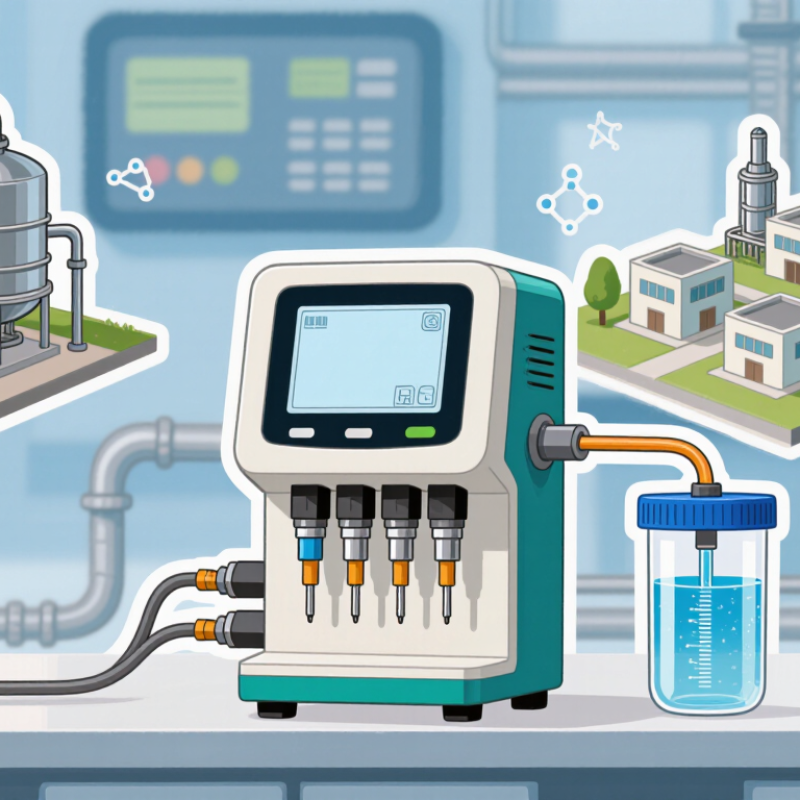
Chlorine Analyzers: Measuring Free and Total Residual in Water
Why Choose a Chlorine Analyser for Water Treatment?
A chlorine analyser helps operators track whether disinfectant residuals remain within the process target. It can measure free chlorine, the readily available disinfectant, or total residual, which includes free and combined chlorine. The distinction matters. A free-chlorine reading may fall while total chlorine remains higher, indicating that combined forms such as chloramines are present.
Imagine an operator comparing an online reading with a handheld test near a treatment basin. A steady analyser trend may reveal a gradual drop before routine manual checks. Yet measurements are only useful when the sample represents the main flow. Stagnant tubing, air bubbles, pH changes, or a dirty sensor can affect results. Small details matter.
The right measurement depends on the treatment goal and water chemistry. Free-chlorine monitoring can support disinfection control, while total-residual measurement can help assess combined chlorine. Analyser readings should be checked against an appropriate reference method, with regular cleaning and calibration. No instrument replaces judgement. Results may lag behind changes in the main flow, and one reading rarely explains a shift. Reviewing trends alongside flow, pH, and sampling conditions helps operators investigate unexpected changes before adjusting dosing.
Why Choose a Chlorine Analyser for Water Treatment? - Chlorine Analyzers: Measuring Free and Total Residual in Water | Measurement Dimension | Free Chlorine | Total Chlorine | Water-Treatment Relevance |
| What the result represents | Hypochlorous acid (HOCl) and hypochlorite ion (OCl⁻) available for disinfection. | Free chlorine plus combined chlorine, including chlorine present as chloramines. | Comparing the two results helps operators understand how much chlorine is available as free disinfectant and how much is combined. |
| Common reporting unit | Usually reported as mg/L as Cl₂. | Usually reported as mg/L as Cl₂. | Using the same units supports consistent comparison with process targets and laboratory results. |
| Common measurement approach | Online colorimetric systems commonly use the DPD method without the iodide reagent used for total chlorine. Amperometric sensors are another option. | Online colorimetric systems commonly use DPD with potassium iodide to measure free and combined chlorine together. | The appropriate method depends on the water matrix, required monitoring frequency, maintenance capacity, and process conditions. |
| Combined chlorine estimate | Measured directly as free chlorine. | Measured directly as total chlorine. | Combined chlorine can be estimated by subtracting the free chlorine result from the total chlorine result when measurements are comparable. |
| Operational use | Useful for monitoring free-disinfection residual after dosing and at distribution-system sampling points. | Useful where chloramines may be present or where total residual is part of process monitoring. | Continuous readings can help operators identify changes sooner than periodic grab sampling alone. |
| Important factors affecting readings | pH affects the balance between HOCl and OCl⁻. Sample flow, temperature, and sensor or reagent condition can also affect performance. | Reagent condition, sample flow, and other oxidizing substances in the sample may affect colorimetric results. | Follow the analyzer’s method requirements and verify performance with suitable calibration and reference checks. |
| Choosing an analyzer | Select a measurement configuration that matches whether the process needs free residual, total residual, or both. | Also consider response time, sample conditioning, reagent or sensor maintenance, output integration, and the applicable monitoring requirements. |
Why Residual Matters: WHO’s 5 mg/L Guideline Value for Chlorine
Chlorine helps control harmful microorganisms as water moves through treatment and distribution. But the WHO guideline value of 5 mg/L for free chlorine is a health-based limit, not a routine operating target. In practice, treatment operators aim to maintain an effective residual while keeping levels appropriate for their system. The right level depends on factors such as water quality, contact time, and local requirements.
A chlorine analyser measures residual concentrations at key points, such as a treatment outlet or storage tank. That measurement can reveal a falling residual before water travels farther through the network. A reading near 5 mg/L should prompt attention, not reassurance: taste and odour may already concern consumers, and the cause of the elevated level needs checking. A single reading can mislead. Sampling location, calibration, and whether the instrument measures free or total chlorine all matter.
Operators can compare analyser readings with manual checks and review trends, rather than relying on one number. Other parameters matter too. Turbidity and contact time, for example, affect how well disinfection works. Monitoring is useful, but it does not prove water is safe on its own. Real systems are messy, and instruments need routine maintenance. A missed calibration can make precise-looking data unreliable.
Why Choose a Chlorine Analyser for Water Treatment?
Why Residual Matters: WHO’s 5 mg/L Guideline Value for Chlorine
Reference values, not site measurements. WHO sets a health-based guideline value of 5 mg/L for free chlorine. Its guidance also recommends at least 0.5 mg/L after 30 minutes of contact at pH below 8 for effective disinfection, and a minimum residual of 0.2 mg/L at the point of delivery. Monitoring residual chlorine helps operators check disinfection and maintain an appropriate residual through the water system.
Source: WHO, Guidelines for Drinking-water Quality.
Monitoring Against the U.S. EPA’s 4.0 mg/L Chlorine MRDL
The U.S. EPA’s chlorine maximum residual disinfectant level, or MRDL, is 4.0 mg/L, expressed as chlorine. It is a regulatory ceiling, not a recommended operating target. Compliance depends on prescribed sampling and calculation rules, so one analyzer reading cannot establish compliance by itself. Still, continuous measurement can reveal changes between scheduled samples. Small shifts matter. A gradual rise near a treatment outlet may call for checking dosing settings, while a sudden drop farther along the line may point to changing demand or a sampling issue.
A chlorine analyzer is most useful when its measurement matches the plant’s monitoring needs, such as free or total chlorine. Operators should check calibration, inspect sample lines for bubbles or deposits, and compare readings with an appropriate reference method. These steps are easy to postpone during a busy shift. That is a weakness worth admitting. A clean-looking display can still be wrong if the sample flow is poor or the sensor has drifted. Trend records, alarms, and routine verification help teams spot problems early, but they support—not replace—required sampling and sound operating judgment.
Choosing a Method: DPD (Standard Methods 4500-Cl G) or Amperometry
Why Choose a Chlorine Analyser for Water Treatment?
Choosing a Method: DPD (Standard Methods 4500-Cl G) or Amperometry
A chlorine analyser helps operators track disinfectant residual before it drifts too low or high. The method matters. DPD, described in Standard Methods 4500-Cl G, reacts with chlorine and produces a measurable pink colour. It is familiar and useful for grab samples or automated testing. But sample colour, turbidity, reagent handling, and timing can affect readings. A faint pink shade is easy to misjudge under poor lighting.
Amperometric analysers measure an electrical response linked to chlorine concentration. They can provide frequent readings for process control, but reliable results depend on correct flow, calibration, and sensor maintenance. A sensor is not maintenance-free. Neither method escapes practical problems. The U.S. EPA’s drinking-water rules set a maximum residual disinfectant level of 4.0 mg/L for chlorine; that limit is not a day-to-day operating target.
WHO’s Guidelines for Drinking-water Quality describe maintaining at least 0.5 mg/L free chlorine after 30 minutes of contact at pH below 8, and at least 0.2 mg/L at delivery. These figures make stable monitoring important, but local water conditions still matter. DPD may suit periodic checks and verification; amperometry may suit continuous control. Compare each analyser with a reference method using real plant samples, especially when water is coloured or chemically variable. The awkward truth: the “best” method can change with the sample.
Where to Monitor: Treatment Outlets, Storage Tanks, and Distribution Networks
A chlorine analyser helps operators see whether disinfection remains effective as water moves through a treatment system. At the treatment outlet, a measurement can confirm the residual after contact time, rather than relying only on the dose set at the pump. Use a representative sample point with steady flow. A poorly maintained sample line can give a misleading reading.
Storage tanks deserve attention too. Water may sit for hours, and residual levels can change with temperature, sunlight, and demand. A sensor near the inlet may not reflect conditions at the outlet, especially where mixing is uneven. That detail is easy to overlook. Periodic checks at more than one point can reveal dead zones or unexpected chlorine loss.
Tips: In distribution networks, monitor locations near far ends, pressure zones, and areas with changing demand. Compare online readings with a suitable field test during commissioning and routine checks. Keep sample tubing short, flush it consistently, and document calibration. Free chlorine and total chlorine are not interchangeable measures, so choose the parameter that matches the treatment process. Readings still need context; one number cannot explain every change in water quality.