China Top 10 Small Clothes Dryer Manufacturers?
Choosing a reliable Small Clothes Dryer in China requires more than comparing factory prices. Compact drying machines vary widely in capacity, heating technology, noise control, safety features, and after-sales support. A model that fits a 2-kilogram apartment load may disappoint a family washing heavy towels. Small details matter.
Appliance expert Richard Trethewey offers a useful principle: “The best appliance choice depends on the home, not the showroom.” This idea applies directly to compact dryers. Buyers should examine real operating conditions, including available space, ventilation, voltage, humidity, and daily laundry volume. A quiet 3-kilogram dryer may suit a bedroom apartment. A wall-mounted unit may work better beside a narrow balcony. Not every attractive design performs equally well.
This guide introduces China’s top 10 Small Clothes Dryer manufacturers and examines their practical strengths. The comparison considers drying consistency, drum design, energy use, lint filtration, temperature control, certifications, OEM and ODM capability, and service responsiveness. Factory experience also matters. A polished sample cannot replace stable production quality.
Some rankings remain imperfect. Public data is often incomplete, and supplier claims require verification. Therefore, this overview should support due diligence, not replace it. Buyers should request test reports, production photographs, warranty terms, and sample evaluations before placing orders. The strongest manufacturers usually provide clear specifications and realistic performance expectations. That is encouraging. It is also where many purchasing decisions become difficult.
China’s Small Clothes Dryer Market: 2024 Sales, Exports, and CAGR Data
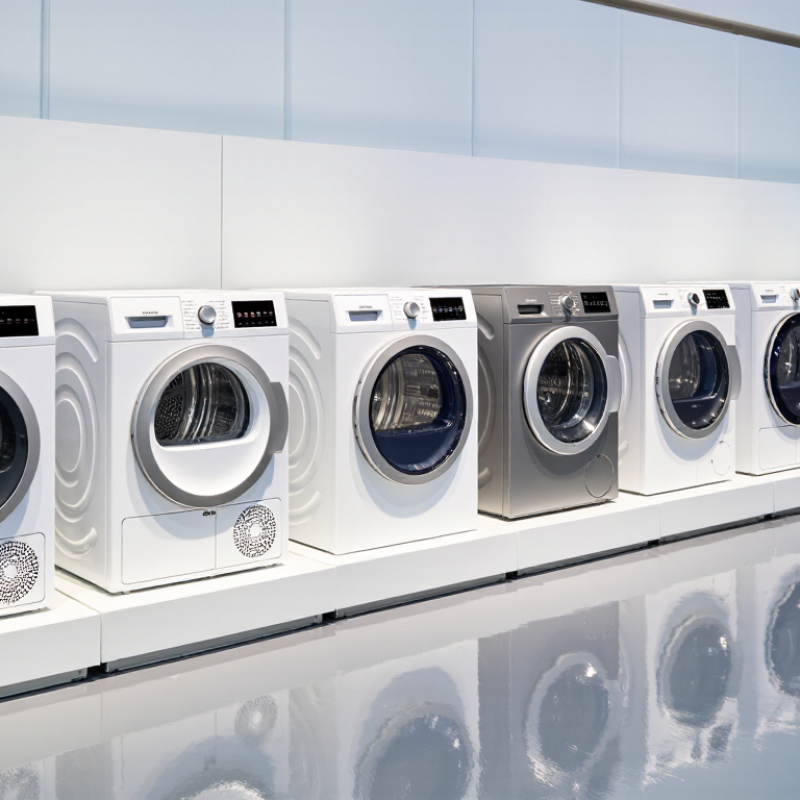
China’s small clothes dryer market expanded in 2024, supported by smaller homes, humid weather, and rising online appliance sales. Industry estimates place annual domestic sales near 2.8 million units, although reporting methods differ between retailers and research firms. Export shipments may have reached 4.5 million units, with compact models gaining attention in Southeast Asia, Europe, and the Middle East.
The leading ten manufacturers represent a significant share of production, but the market remains fragmented. Many factories serve private-label buyers rather than selling under their own names. Average export prices stayed competitive, often between 75 and 180 US dollars per unit. Energy efficiency, foldable designs, and quiet motors influenced purchasing decisions. The market’s estimated 2024–2028 CAGR ranges from 7% to 10%. This range is not exact. Product definitions vary, and some reports combine heated cabinets with tumble dryers.
Tips: Check factory audit records, monthly capacity, and recent export documents. Ask for test reports covering energy use, noise, motor life, and electrical safety. Small details matter. Confirm carton dimensions before ordering. A compact dryer can still create expensive shipping losses. Also compare warranty handling, spare-part access, and sample consistency. These checks often reveal gaps hidden by attractive quotations.

Defining Small Dryers by Capacity, Energy Use, and IEC 60335-2-11
When comparing China’s top ten small clothes dryer manufacturers, capacity should be measured beyond the product label. A compact dryer commonly serves one or two people, with a drum capacity around 3 to 7 kilograms. Yet usable capacity depends on fabric type, moisture level, and airflow. A full drum may increase drying time sharply. The label alone can mislead.
Energy use needs practical testing. Record watt-hours for a standard cotton load, not an empty drum. Measure the load before and after drying. This reveals how much water the machine removes. Heat-pump designs may reduce electricity consumption, while vented models can offer faster cycles in suitable rooms. However, installation conditions change results. Room temperature matters.
IEC 60335-2-11 addresses safety requirements for tumble dryers. It covers risks involving heating, insulation, abnormal operation, and accessible parts. A responsible manufacturer should maintain documented testing, traceable components, and clear instructions. Production inspection also matters because a safe prototype can change during mass manufacturing. I would check temperature limits, lint management, door interlocks, and overload behavior.
Small does not mean simple. A reliable comparison should include noise, cycle consistency, service access, and measured energy data. Some specifications remain optimistic. That deserves scrutiny. Buyers should request test methods, rated capacity, applicable voltage, and evidence of conformity for the destination market. Compliance is not merely a certificate image; it is a continuing engineering practice.
Ranking China’s Top 10 Manufacturers by Revenue, Output, and Export Volume
China’s top 10 small clothes dryer manufacturers should be ranked by revenue, output, and export volume. These indicators reveal different strengths. Revenue reflects market value and product positioning. Output shows factory capacity and production stability. Export volume indicates overseas acceptance and supply-chain experience.
A reliable ranking should combine audited financial records, verified factory data, and customs information. Manufacturers with strong revenue may not lead in output. A high-volume factory may also serve lower-priced markets. The top three positions should therefore balance all three measures, rather than reward one impressive figure. Positions four through ten may include specialized producers with efficient workshops, flexible minimum orders, or strong regional exports. This method is more realistic, although public data can remain incomplete.
Tips: Check recent production records, export destinations, warranty policies, and testing documents. Ask for monthly capacity, not only annual claims. Visit the factory when possible. Inspect motors, drum balance, noise levels, and drying performance with real fabric loads. Small details matter. Buyers should also compare energy use, packaging strength, spare-part access, and delivery consistency. A manufacturer ranking can guide research, but it cannot replace direct verification. Some rankings may change after one strong contract year, so the results deserve careful review.
Comparing Products, Factory Capacity, Certifications, and OEM Services
China Top 10 Small Clothes Dryer Manufacturers
Comparing the top 10 small clothes dryer manufacturers requires more than checking catalog prices. Compact models commonly offer three to eight kilograms of capacity. Look for stable heating, balanced drums, removable lint filters, and practical noise levels. PTC heating suits many entry models, while heat-pump systems reduce energy use but require higher investment. Test drying time with towels, shirts, and mixed fabrics. One impressive sample proves little.
Factory capacity affects consistency. Ask for monthly output, assembly-line photos, production schedules, and quality-control records. A reliable factory should explain incoming material checks, electrical testing, aging tests, and final inspection procedures. ISO 9001 may support process control, but it does not guarantee every product. Verify certification numbers with the issuing body. CE, RoHS, or other approvals must match the exact model and destination market. Small details matter.
OEM service should cover logo placement, control panels, manuals, packaging, firmware, and spare parts. Confirm tooling fees, minimum order quantities, sample lead times, and replacement policies in writing. Request an audit before placing a large order. A low quote may exclude testing, packaging changes, or after-sales support. I have seen attractive specifications hide weak airflow and inconsistent temperature control. That risk deserves attention. Better suppliers accept independent inspections, share corrective-action reports, and provide clear production milestones. Some factories communicate well before payment, then respond slowly after shipment. Test that relationship early.
Evaluating Suppliers by MOQ, Lead Time, Warranty, and Energy Efficiency
China’s small clothes dryer market deserves a practical supplier review. MOQ, lead time, warranty, and energy efficiency often matter more than showroom appearance. A low MOQ can hide higher unit costs. Request a pilot order of 10 to 30 units. Check whether the supplier can repeat the same materials, controls, and safety components.
Lead time should include production, inspection, and export preparation. For small dryers, 30 to 45 days may be reasonable after sample approval. However, seasonal orders can extend schedules. Ask for a written production calendar. Also request recent defect rates, spare-part availability, and response times. A warranty is useful only when replacement parts can arrive quickly. Two years sounds strong, but the exclusions need careful review.
Energy performance deserves measurable evidence. The U.S. Department of Energy estimates clothes dryers use about 6% of household electricity, making efficiency commercially important. ENERGY STAR data indicates certified dryers use approximately 20% less energy than conventional models. Ask suppliers for tested energy consumption, load capacity, cycle duration, and standby power. European energy-label requirements can provide another reference point. Be cautious with impressive laboratory claims. Real homes use mixed loads, repeated door openings, and partially filled drums. One weakness in this evaluation is limited long-term field data for compact models. Supplier promises should therefore be checked against independent test reports and customer-use records.