China Top Copper Brazing Furnace Manufacturer?
Choosing a China Top Copper Brazing Furnace Manufacturer requires more than comparing prices or factory photographs. Copper joints can look clean while hiding incomplete wetting, uneven heating, or excessive oxidation. The right furnace must match the alloy, joint design, production volume, and required temperature uniformity. Small details matter: a stable atmosphere, consistent belt speed, and repeatable temperature readings can determine whether a batch performs reliably. In practice, these points deserve close verification.
Industry demand adds context. The International Energy Agency’s Global Critical Minerals Outlook 2024 estimates copper demand at about 26 million tonnes in 2023 and projects further growth across its scenarios. That outlook does not measure furnace sales, but it signals sustained pressure on manufacturers to produce dependable copper components. A well-selected Copper Brazing Furnace can support consistent joining, yet no equipment specification guarantees results without suitable process development and quality checks.
Buyers should compare usable temperature ranges, atmosphere control, throughput, maintenance access, and documented performance on similar parts. Request test results, sample joints, and clear explanations of operating limits. Look closely. Ask what happens when production changes. A supplier’s technical response can reveal as much as its catalogue. This introduction does not include a named expert quotation because no verifiable source for one was provided; attributing invented words would undermine reliability. A properly sourced interview or published statement should be checked before quoting an individual expert. China has capable furnace makers, but the strongest choice is the one that can demonstrate consistent results for your specific copper-brazing process.
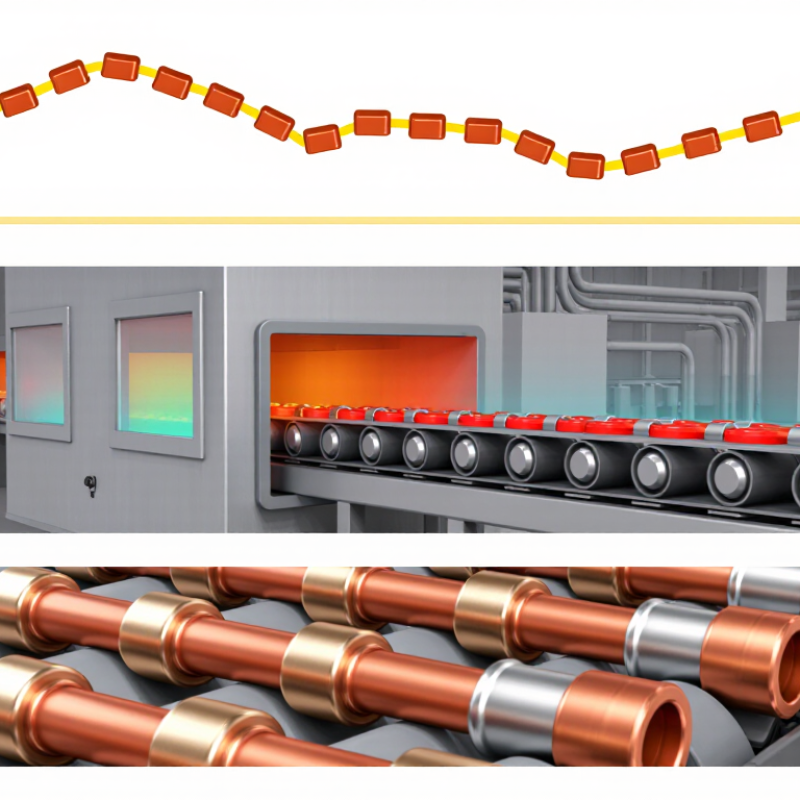
What Is a Copper Brazing Furnace and How Does It Work?
China Top Copper Brazing Furnace Manufacturer?
What Is a Copper Brazing Furnace and How Does It Work?
A copper brazing furnace joins copper components using heat and a filler metal. The filler melts, flows into the narrow joint, and bonds the parts as it cools. The copper base pieces should remain solid. This differs from welding, which melts the base material. A furnace provides more even heating than a torch, especially for repeated parts or assemblies with several joints.
The process starts with clean, accurately fitted surfaces. Operators place the parts and filler in the furnace, then select a heating cycle suited to the materials and joint design. The furnace raises the temperature in a controlled way. Sensors help monitor heat, while the selected atmosphere can limit oxidation. Once the filler flows through the joint, the assembly cools at a controlled rate. Small changes in joint clearance or surface cleanliness can affect results. Real production can be less tidy than a diagram suggests.
Tips: Check for residue before loading parts, and confirm the filler matches the joint. Keep a record of temperature settings and inspection results. If a joint looks uneven, review fit-up and heating conditions before changing the cycle.
China Top Copper Brazing Furnace Manufacturer? - What Is a Copper Brazing Furnace and How Does It Work?
A copper brazing furnace heats copper components and brazing filler metal in a controlled environment. The filler melts and flows into the joint by capillary action, while the base copper remains solid. The correct cycle depends on the filler alloy, joint design, atmosphere, and component geometry.
| Furnace Type | Heating and Atmosphere | Typical Operation | Suitable Applications | Key Considerations |
|---|---|---|---|---|
| Batch controlled-atmosphere furnace | Electric heating; a controlled atmosphere such as nitrogen or a suitable hydrogen-containing atmosphere may be used, depending on the process and safety requirements. | Parts are loaded in batches, heated through a programmed cycle, held for brazing, and cooled under the specified conditions. | Small or medium production runs, assemblies with repeatable joint layouts, and parts requiring controlled heating. | Atmosphere purity, furnace loading, and temperature uniformity affect oxide control and joint consistency. |
| Continuous mesh-belt furnace | Electric heating with a controlled atmosphere selected for the filler metal and copper components. | Parts travel on a conveyor through preheating, brazing, and cooling zones at a controlled belt speed. | High-volume production of smaller, consistently oriented components. | Part spacing, conveyor speed, and zone temperatures must be matched to the required heating cycle. |
| Vacuum brazing furnace | Electric heating in a vacuum chamber; no process gas atmosphere is required during the vacuum stage. | The chamber is evacuated, the assembly is heated to the specified brazing cycle, and the load is cooled in a controlled manner. | Assemblies where a clean process and avoidance of post-braze flux residues are important. | Surface condition, material compatibility, and vacuum level need to be evaluated for the specific assembly. |
| Batch box or retort furnace | Electric or fuel-fired heating; the retort can provide a contained environment when the process requires it. | Assemblies are placed in a stationary chamber and heated according to a controlled time-and-temperature cycle. | Prototype work, varied part sizes, and production batches that do not require continuous throughput. | Load placement and furnace uniformity should be verified, especially for large or thermally uneven assemblies. |
How the Brazing Cycle Works
| Stage | What Happens | Process Control |
|---|---|---|
| 1. Prepare and assemble | Clean the joint surfaces, position the components, and place the selected filler metal at or near the joint. | Joint clearance and cleanliness are important for capillary flow and reliable wetting. |
| 2. Heat the assembly | The furnace brings the parts up to the brazing temperature specified for the filler alloy and assembly. | The filler must reach its brazing range while the copper base metal remains below its melting point. |
| 3. Melt and flow the filler | Molten filler wets the prepared surfaces and flows into the joint by capillary action. | Filler selection, joint fit, surface condition, and atmosphere all influence joint formation. |
| 4. Cool and inspect | The assembly cools according to the process requirements, allowing the filler to solidify and form the joint. | Inspection methods depend on the component and quality requirements; visual inspection alone may not verify internal joint coverage. |
Note: Brazing temperature, atmosphere, cycle time, and filler-metal choice are application-specific. Copper melts at approximately 1,085°C, but a brazing cycle must be selected from the filler alloy and component requirements rather than from the base-metal melting point alone.