China Best Velocity Sensor Supplier for Global Buyers?
For global buyers, choosing the right China-based Velocity Sensor supplier involves more than comparing unit prices. The sensor must match the application, whether it monitors a rotating shaft, a moving vehicle, or industrial machinery. Range, accuracy, response time, mounting method, and signal output all affect performance. Small mismatches can create extra work during installation. Details matter.
A dependable supplier should explain how products are tested, calibrated, and checked before shipment. Ask for clear specifications, sample results, connector details, and guidance on integrating the sensor with your control system. A datasheet is useful, but it may not answer every practical question. Request a sample when your project allows, and compare its readings under realistic operating conditions. Also review communication quality, production capacity, packaging, and expected lead times. These details help buyers assess consistency, not just promises.
There is no single supplier that is best for every project. A factory suited to high-volume production may not offer the engineering support a smaller order requires. Likewise, a low quotation can hide costs tied to customization, testing, or delivery. This introduction explores how global buyers can evaluate Chinese Velocity Sensor suppliers with a balanced, evidence-led approach. No checklist replaces careful verification. Supplier claims deserve questions, and even a strong first impression may need a second look.
What Is a Velocity Sensor and How Does It Work?
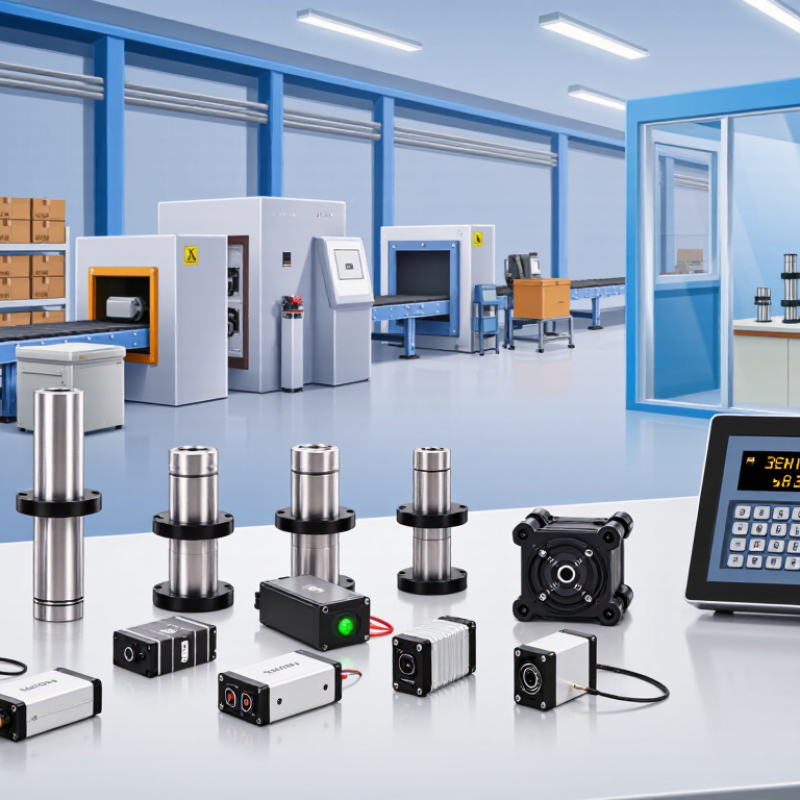
A velocity sensor measures how quickly a machine part moves, usually as vibration velocity in millimeters per second. A common electrodynamic design contains a coil and magnet. When a bearing housing vibrates, their relative motion induces a voltage. Within the sensor’s operating range, that voltage tracks vibration velocity. Simple in principle. Installation still matters: a loose mounting surface can distort readings.
Technicians often mount the sensor near a motor bearing and compare readings over time. ISO 20816-1 describes evaluating machine vibration at measured locations; acceptable levels depend on machine type and operating conditions. A single number is not a diagnosis. The U.S. Department of Energy’s 2002 U.S. Industrial Electric Motor Systems Market Opportunities Assessment estimated that motor systems used about 68% of U.S. industrial electricity. That older estimate helps explain why monitoring rotating equipment matters, but it does not predict one plant’s savings. Velocity sensors can reveal changing vibration, yet they may miss faults outside their frequency range. Calibration and consistent sensor placement are essential—and easy to overlook.
China Best Velocity Sensor Supplier for Global Buyers? - What Is a Velocity Sensor and How Does It Work?
| Sensor Type | What It Measures | How It Works | Typical Applications | Key Advantages | Important Considerations |
|---|---|---|---|---|---|
| Electromagnetic velocity transducer (geophone) | Vibrational velocity of a moving surface or structure | A coil moves relative to a magnet, generating a voltage proportional to motion over the sensor’s specified operating range. | Seismic monitoring, machinery vibration checks, and structural testing | Can provide a direct velocity-related electrical output without first integrating acceleration. | Performance depends on frequency response, mounting, orientation, and the transducer’s sensitivity. |
| Laser Doppler vibrometer | Velocity of a vibrating surface along the laser beam | Measures the Doppler frequency shift of laser light reflected from a moving target. | Non-contact vibration testing of components, panels, and structures | Measures remotely and avoids adding mass to the test object. | Needs a suitable optical path and adequate reflected light; the result is along the beam’s line of sight. |
| Doppler radar velocity sensor | Radial velocity of a moving target | Determines motion from the frequency shift of radio waves reflected by the target. | Traffic monitoring, motion detection, and industrial target-speed measurement | Non-contact measurement; can operate without physically attaching a sensor to the target. | Measures the component of velocity toward or away from the sensor, and readings can depend on target angle and conditions. |
| Ultrasonic flow velocity sensor | Velocity of a fluid, such as air or liquid, in a pipe or channel | Common transit-time designs compare the travel times of sound pulses sent with and against the flow. | Flow measurement in pipes, ventilation systems, and process equipment | No moving parts are required in many designs, and some configurations clamp onto the outside of a pipe. | Accuracy can depend on installation, flow profile, pipe or channel conditions, and the fluid’s acoustic properties. |
| Hot-wire anemometer | Local air velocity | Airflow cools a heated wire; the instrument relates the cooling effect or the power needed to maintain wire temperature to air speed. | Ventilation testing, laboratory airflow studies, and cleanroom measurements | Sensitive to low-speed airflow and suitable for measuring at a specific point. | The probe can be delicate, and readings may be affected by temperature, airflow direction, and contamination. |
| Inertial sensor with velocity estimation | Estimated velocity derived from acceleration | An accelerometer measures acceleration; software integrates the signal over time to estimate velocity. | Mobile equipment, navigation systems, and motion analysis | Can estimate motion without an external optical or radio reference. | Small acceleration offsets and noise accumulate during integration, causing velocity drift unless corrected or combined with other measurements. |
Selection note: A velocity sensor measures or estimates how quickly an object or fluid changes position over time. Before choosing one, confirm the measurement medium, velocity direction, operating range, frequency response, output interface, installation method, and environmental requirements. Actual specifications vary by sensor design and model.