What Is a Cement Plant and How Does It Work?
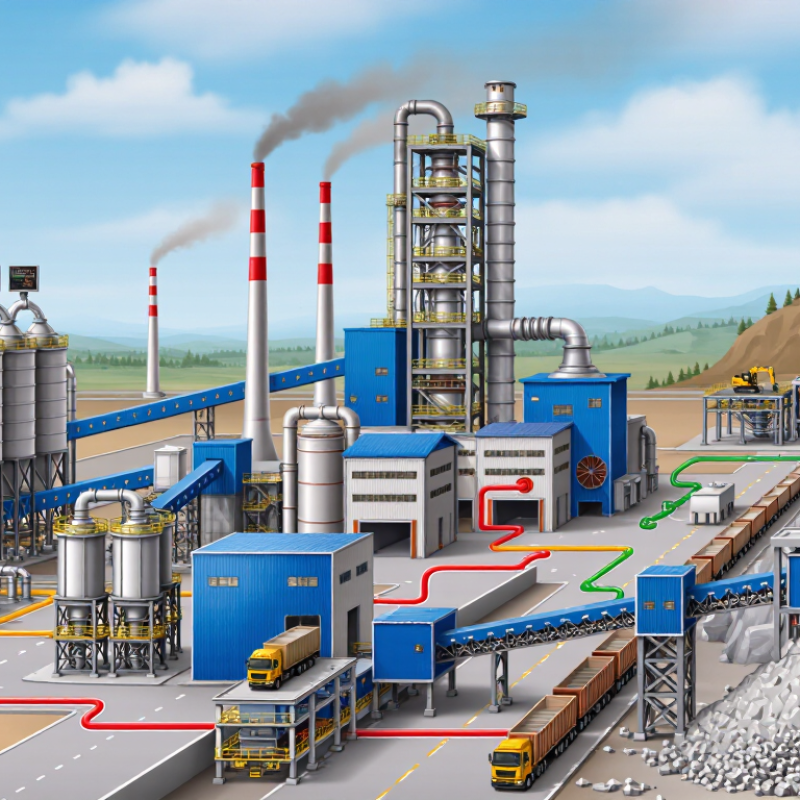
A Cement Plant is an industrial facility that transforms limestone, clay, and corrective materials into cement. It supports construction by producing the binding powder used in concrete, mortar, and infrastructure projects. Behind the tall tower, conveyor belts, mills, kilns, and storage silos work as one connected system.
Production begins with quarrying and controlled crushing. Workers blend raw materials to achieve a stable chemical composition. Large vertical mills then grind the mixture into a fine raw meal. This powder enters a preheater and rotary kiln, where temperatures can approach 1,450°C. The heat creates clinker, small, dark-grey nodules with a hard ceramic texture.
The clinker cools rapidly before entering a finish mill. Gypsum and other approved additions help control setting time and performance. Laboratory technicians test fineness, strength, and chemical balance throughout production. These checks matter because small variations can affect an entire concrete project. Modern plants also use dust filters, energy monitoring, and automated controls to reduce emissions and fuel consumption.
Yet no Cement Plant operates perfectly. Moisture changes, equipment wear, and raw material differences can disturb production. Skilled operators must interpret data and respond carefully. Some explanations make the process sound simple. In reality, reliable cement production requires maintenance, process knowledge, safety discipline, and environmental responsibility. This guide examines each stage clearly, while recognizing that plant designs differ by location, technology, and product requirements.
What Is a Cement Plant?
A cement plant is an industrial facility that turns limestone, clay, and corrective minerals into cement. It is more than a large kiln. The plant combines crushing, grinding, heating, cooling, and quality control in one continuous system. Limestone arrives as rough, pale rock. Crushers reduce it to manageable pieces, while mills produce a fine raw meal. The meal then enters a preheater and rotary kiln, where temperatures can approach 1,450°C. This intense heating forms clinker, the hard gray nodules later ground into cement with gypsum and other approved materials.
The scale is substantial. The International Energy Agency reported global cement production of about 4.1 billion tonnes in 2022, with direct process and energy emissions near 2.3 billion tonnes of CO2. These figures explain why modern plants monitor fuel use, kiln stability, dust, and clinker quality so closely. A few degrees can affect mineral reactions. Moisture matters too. The process looks orderly on paper, but real plants are less tidy. Material chemistry changes across a quarry, and equipment sometimes responds slowly. Operators therefore test raw meal, clinker, and finished cement throughout the day. The final product may leave in bulk tankers or sealed bags, ready for concrete production. A cement plant is essentially a controlled mineral transformation facility, but its performance depends on careful human judgment. According to the IEA’s Cement report, reducing clinker content and improving thermal efficiency remain important industry priorities. That challenge is ongoing.
What Is a Cement Plant and How Does It Work? - What Is a Cement Plant?
| Plant Area or Stage | Main Function | Typical Materials or Conditions | Main Output |
| Quarrying and Material Supply | Extracts and supplies the mineral materials required for clinker production. | Limestone is the principal calcium-bearing material. Clay, shale, sand, and iron-bearing materials may provide silica, alumina, and iron. | Quarried and prepared raw materials |
| Crushing | Reduces large rocks to smaller pieces suitable for conveying, proportioning, and grinding. | Jaw, impact, or hammer crushers may be used depending on the material properties and required size. | Crushed mineral feed |
| Raw Material Proportioning | Controls the chemical balance of the feed before grinding and heating. | The blend is adjusted to provide appropriate levels of calcium, silicon, aluminum, and iron compounds. | Chemically balanced raw mix |
| Raw Mill | Dries and grinds the proportioned materials into a fine, uniform powder. | Vertical roller mills or horizontal ball mills are commonly used. Hot process gases can provide drying heat. | Raw meal |
| Homogenization Silo | Blends and stores the raw meal to reduce chemical variation before kiln treatment. | Air-fluidized or mechanically assisted storage systems help mix the fine powder. | Uniform raw meal feed |
| Preheater and Precalciner | Uses hot exhaust gases to heat the raw meal and begin the decomposition of limestone. | Limestone decomposition releases carbon dioxide and produces reactive calcium oxide. | Heated and partially calcined meal |
| Rotary Kiln | Heats the material until chemical reactions form cement clinker minerals. | The burning zone commonly reaches approximately 1,450°C for the material. The kiln rotates slowly to move and mix the feed. | Hot clinker nodules |
| Clinker Cooler | Rapidly cools clinker and recovers heat for reuse in the combustion process. | Grate coolers are widely used to transfer cooling air through the hot clinker bed. | Cooled clinker and recovered hot air |
| Clinker Storage | Stores clinker between kiln production and final cement grinding. | Storage protects clinker from moisture and provides a buffer for continuous kiln operation. | Stored clinker |
| Cement Mill | Grinds clinker into fine cement powder and controls its setting behavior. | A small quantity of gypsum is normally added. Other permitted mineral additions may be used for specific cement types. | Finished cement |
| Cement Storage and Packing | Stores, measures, and dispatches cement in bulk or packaged form. | Cement is kept dry in silos. Packing systems fill bags, while loading systems transfer cement to bulk vehicles. | Packaged or bulk cement |
| Environmental Control | Limits dust, manages combustion emissions, and improves energy efficiency across the process. | Bag filters or electrostatic precipitators collect particulate matter. Process control, heat recovery, and alternative fuels may reduce resource use. | Controlled emissions and improved process efficiency |
How Raw Materials Are Prepared for Cement Production
Raw materials determine how reliably a cement plant can produce clinker. Limestone usually provides calcium, while clay, shale, sand, or iron-bearing materials supply other essential minerals. The pile looks ordinary. Its chemistry is not.
Operators inspect incoming materials for moisture, particle size, and chemical composition. A laboratory sample may reveal excess silica or unwanted impurities before production begins. Limestone is often blasted, then reduced by crushers into smaller stones. Smaller pieces move more evenly through conveyors and grinding equipment.
The crushed materials are stored in separate piles or blending beds. Careful stacking reduces chemical variation between different quarry sections. Moisture changes everything. Wet material can block chutes, increase grinding energy, and reduce mill efficiency. Drying equipment may use controlled hot gas to remove this moisture safely.
After proportioning, feeders deliver the materials to a raw mill. Inside, heavy rollers press the mixture against a rotating table, producing a fine powder called raw meal. Air carries the lighter particles toward separators, while coarse particles return for further grinding. In practical plant work, this circulation is never perfectly smooth. Sensors help, but operators still investigate unusual vibration, dust levels, or sudden changes in power demand. A stable raw meal requires repeated testing, not a single adjustment. Mistakes can begin with one uneven sample.
How Cement Is Manufactured Step by Step
A cement plant turns limestone and other minerals into a finely controlled building material. The process starts in a quarry, where limestone is extracted and transported for crushing. Large rocks become smaller pieces. Clay, shale, or iron-bearing materials may be added to balance the chemical composition.
The crushed materials are proportioned and ground into raw meal. Powerful mills reduce the mixture to a powder. Moisture matters here. Even small changes can affect grinding efficiency and kiln performance. The raw meal then passes through preheaters, where hot exhaust gases remove moisture and begin calcination. Inside the rotary kiln, temperatures can reach about 1,450°C. Limestone breaks down, and new mineral compounds form into hard gray nodules called clinker.
Clinker leaves the kiln and enters a cooler, where air lowers its temperature quickly. This recovered heat improves fuel efficiency. The cooled clinker is mixed with gypsum and carefully selected additions. The final mixture is ground into cement with a controlled particle size. Quality technicians test fineness, setting time, strength, and chemical composition. Storage silos protect the powder from moisture before shipment. The process looks orderly on paper, but real plants face blockages, changing raw materials, and equipment wear. Good operators adjust conditions continuously. That judgment is not always perfect. Small errors can still influence cement performance.
What Equipment and Systems Does a Cement Plant Use?
A cement plant turns limestone, clay, and corrective materials into clinker, then grinds clinker into cement. Its equipment works as one connected production system. The process begins with drilling and quarry transport, followed by crushers that reduce large rocks into manageable pieces. Covered conveyors move the crushed material to storage halls. Stackers and reclaimers help maintain a consistent chemical mix.
The raw mill dries and grinds the feed into fine powder. In modern plants, cyclone preheaters recover hot gases before the material enters the rotary kiln. A precalciner supplies additional heat and removes much of the limestone’s carbon dioxide. The kiln then forms clinker at roughly 1,450°C. A grate cooler rapidly lowers its temperature and recovers heat for combustion. These heat-recovery systems matter. The International Energy Agency reported in its 2023 cement-sector analysis that cement production contributes about 7% of global energy-related carbon dioxide emissions.
Clinker passes through a cement mill with gypsum and selected additions. Bag filters control fine dust around mills, silos, and transfer points. Laboratory systems check lime saturation, silica, and alumina ratios. Distributed control systems adjust feed rates, fuel, temperature, and pressure in real time. Water and compressed-air networks support cooling, cleaning, and pneumatic transport. The Global Cement and Concrete Association’s 2021 roadmap identifies energy efficiency and clinker reduction as major decarbonization measures. Still, a control screen cannot reveal every issue. A blocked chute, worn separator, or leaking seal may quietly reduce efficiency. This is where experienced operators remain essential.
What Is a Cement Plant and How Does It Work?
Typical electrical energy use by major cement plant section, measured in kilowatt-hours per tonne of cement. Values represent common operating ranges for modern dry-process plants.
Raw-material grinding and finish grinding generally consume the most electricity because they use large mills and separators. The kiln and clinker-cooling system mainly require thermal energy from fuel, while their electrical demand is comparatively lower.
How Cement Plants Manage Quality, Energy, and Emissions
What Is a Cement Plant and How Does It Work?
How Cement Plants Manage Quality, Energy, and Emissions
A cement plant turns limestone, clay, and corrective materials into clinker. Limestone is crushed, blended, and ground into a fine raw meal. In a preheater tower, hot gases remove moisture before the meal enters the rotary kiln. Inside the kiln, temperatures can reach about 1,450°C. This heat changes the raw meal into hard, dark clinker. The clinker is cooled quickly, then ground with a small amount of gypsum to control setting time.
Quality management begins with careful sampling. Laboratory teams check chemical balance, fineness, moisture, and clinker performance. X-ray analysis can identify changes in calcium, silica, alumina, and iron. Operators also watch kiln temperature, pressure, and oxygen levels. Small variations matter. Too much free lime may affect strength. A sensor can drift, however, so experienced staff compare instruments with physical samples. No control room is perfect.
Energy use is closely linked to process stability. Efficient preheaters, heat recovery systems, and well-maintained grinding equipment can reduce fuel and electricity demand. Variable-speed drives also help match power use to production needs. Emission control requires layered measures. Bag filters capture fine dust, while combustion adjustments can reduce nitrogen oxides. Continuous monitoring tracks dust, gases, and carbon dioxide. Much carbon dioxide comes from limestone itself, not only fuel. This makes deeper reductions technically difficult. Plant data may look clean for one shift, yet long-term performance needs honest review.