
425 Sovereign Ct. St. Louis, MO 63011
SEARCH OUR WEBSITE

What Is Canned Lychee and How Is It Used?

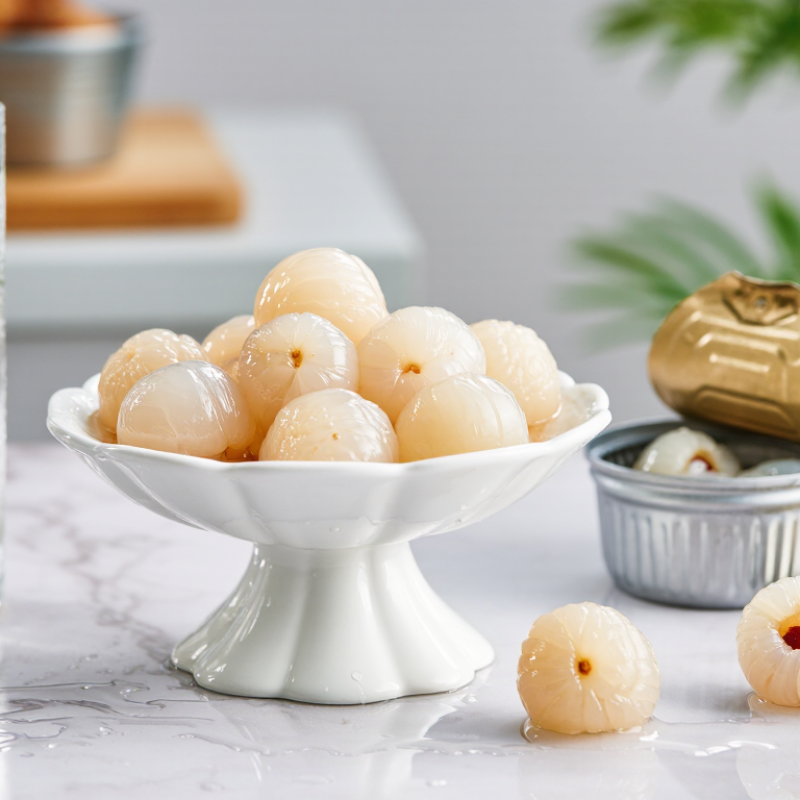
Canned Lychee is more than a sweet fruit sealed in syrup. It is a processed food shaped by harvest timing, heat treatment, packaging, and international trade. Fresh lychees bruise quickly and lose quality soon after picking. Canning slows that decline. It also creates a soft, translucent fruit with a floral aroma and a consistent sweetness. In a dessert bowl, the fruit feels cool and tender. In a drink, it adds fragrance without requiring peeling or pitting.

Industry data explains why this format remains relevant. FAOSTAT crop statistics identify Asia as the dominant region for lychee cultivation, with China, India, and Vietnam among the leading producers. However, production figures do not equal canned supply. That distinction matters. UN Comtrade records prepared or preserved fruit under broader HS categories, so lychee-specific trade values can be difficult to isolate. USDA FoodData Central also shows that canned fruit products may differ considerably in calories and sugar, depending on syrup concentration and drained weight. Labels deserve attention.

Canned Lychee is commonly used in fruit salads, milk teas, jellies, cakes, ice cream, and tropical cocktails. It can also support restaurant kitchens because each piece offers predictable size and texture. Unopened cans are convenient for storage, while opened fruit should be refrigerated in a clean container. Quality still varies. Some products taste bright and floral; others seem overly sweet or slightly metallic. That is not always a defect, but it deserves evaluation. Understanding the can, syrup, origin, and intended use helps buyers choose more intelligently.
What Is Canned Lychee and How Is It Used?

What Is Canned Lychee? Definition, Varieties, and Commercial Forms

Canned lychee is peeled lychee preserved in syrup, water, or juice, then sealed and heat-processed. The fruit is usually harvested before full softness, so it survives handling better. Its translucent white flesh, floral aroma, and firm bite remain recognizable after processing. However, texture can become slightly rubbery. That detail is often overlooked.

Common commercial varieties include Mauritius, Brewster, and Hak Ip, although product labels may identify only “lychee.” Varieties differ in sweetness, seed size, color, and flesh firmness.

Commercial forms include whole peeled fruit, pitted halves, slices, and lychee pulp. Whole fruit suits desserts and beverage garnishes. Pulp works better in sauces, fillings, and blended drinks.

A 2023 industry assessment by IndexBox reported that canned fruit remains a substantial international processed-fruit category, supported by long shelf life and foodservice demand. Trade figures from UN Comtrade classify many preserved lychee shipments under HS 2008, rather than a lychee-only code, which makes precise global totals difficult.

Nutrition also deserves careful reading. USDA FoodData Central lists canned lychees in heavy syrup at about 74 calories and 18.8 grams of carbohydrate per 100 grams, though formulations vary. Drain the syrup. The fruit then tastes less intensely sweet.

Storage matters too: cans should be intact, dry, and free from swelling or deep rust. After opening, refrigerate the fruit in a covered container. I would not assume every “natural” label means low sugar. Check the ingredient panel.


How Canned Lychee Is Made: Peeling, Syrup Filling, and Heat Processing

Canned lychee begins with sound, mature fruit, not overripe fruit. Processors wash the fruit, remove the rough shell, and separate the seed carefully. The white flesh must stay intact. A small tear can release juice and reduce the finished product’s appeal. I find this stage less simple than it looks.

The peeled lychees enter cans with a measured sugar syrup. USDA FoodData Central reports that canned lychees in syrup provide about 75 calories and 19 grams of carbohydrate per 100 grams. Syrup protects texture, carries sweetness, and limits air around the fruit. However, sugar does not replace sanitation. Water quality, container cleanliness, and accurate filling remain essential. Processing staff also check the liquid-to-fruit balance and remove trapped air before sealing.

Heat processing follows sealing. Commercial facilities use validated time-and-temperature schedules for low-acid or acidified products. The U.S. Food and Drug Administration’s 21 CFR Part 113 requires scheduled processes that control hazards from heat-resistant microorganisms in shelf-stable canned foods. Codex food hygiene guidance also emphasizes process control, equipment sanitation, and traceability. Exact heating conditions vary with can size, syrup strength, fruit temperature, and factory equipment. That variation matters. A fixed internet recipe cannot replace a validated process. The texture may soften too much, and my own preference for firm lychee can make “perfect” processing seem subjective. After heating, cans cool, dry, and undergo checks for swelling, leakage, seam damage, and fill consistency. These quiet inspections protect the bright fruit inside.

What Codex Standards Measure: Net Weight, Drained Weight, and Defects

What Is Canned Lychee and How Is It Used?

Canned lychee contains peeled fruit packed in syrup, juice, or another permitted liquid medium. Codex Alimentarius Standard CXS 78-1981 separates two practical measurements: net weight and drained weight. Net weight includes the lychees and packing liquid. Drained weight measures the fruit remaining after the specified draining procedure. This difference matters. A full-looking can may contain more syrup than fruit.

Codex quality checks also examine defects. Inspectors may assess abnormal color, damaged pieces, peel fragments, pits, stems, and other visible impurities. The standard expects acceptable texture, flavor, and appearance for the declared style. It does not treat every broken lychee as a safety failure. However, excessive damage can reduce commercial quality. The FAO/WHO Codex Procedural Manual supports sampling and conformity checks, while national authorities may apply additional labeling rules. These documents are useful references, but actual retail specifications can be stricter.

Tips: Compare both weights, not net weight alone. Then inspect several cans, not just one. Turn a drained sample onto a white plate. Look for dark spots, crushed fruit, and excess skin. A small mistake remains possible: draining time, sieve angle, and fruit size can influence the result. For purchasing, record the label declaration, lot code, can condition, and measured drained weight. For desserts, lychee pairs well with tea jelly, coconut, fruit salads, and chilled drinks. The syrup can add sweetness, so reduce other sugar carefully.

What Is Canned Lychee and How Is It Used? - What Codex Standards Measure: Net Weight, Drained Weight, and Defects

Data Dimension What It Means for Canned Lychee How It Is Measured or Checked Why It Matters
Product definition Canned lychee is peeled lychee fruit packed in a hermetically sealed container, usually with a liquid medium such as syrup or juice, and processed by heat to achieve commercial sterility. Review the product composition, processing record, container integrity, and label description. It distinguishes a shelf-stable canned fruit product from fresh, frozen, dried, or aseptically packed lychee.
Net weight The total quantity of product inside the container, including the lychee fruit and any packing liquid, but excluding the container and packaging materials. Weigh the sealed container, subtract the weight of the empty container and closure, and express the result in an appropriate unit of mass, commonly grams or kilograms. It indicates the total declared contents and supports quantity control during inspection and trade.
Drained weight The weight of the lychee fruit remaining after the packing liquid has been drained under a defined procedure. Open the container, transfer the contents to a suitable sieve, allow the liquid to drain for the specified time, and weigh the retained fruit. It shows how much edible fruit is supplied compared with the total contents.
Drained-weight percentage A calculated indicator of the fruit proportion in the can. Formula: drained weight ÷ net weight × 100. For example, 340 g drained weight ÷ 565 g net weight × 100 = approximately 60.2%. It helps compare pack composition, but the applicable legal or Codex requirement should be checked for the specific product category and market.
Packing liquid The liquid surrounding the fruit, which may be water, fruit juice, or syrup. It can affect sweetness, flavor, texture, and declared product identity. Inspect the ingredient declaration and, where relevant, test soluble solids using a refractometer and check acidity using an appropriate laboratory method. It helps verify that the product description and composition match the contents.
Fruit appearance and color The fruit should have an appearance and color reasonably characteristic of properly prepared lychee, although slight variation can occur because of cultivar, maturity, and processing. Examine representative units for abnormal darkening, excessive discoloration, collapse, or other appearance defects. Appearance affects consumer acceptance and can indicate poor raw material quality or processing problems.
Texture and integrity The fruit should retain an acceptable structure for its declared style and should not be excessively mushy, broken, or disintegrated. Visually examine the drained fruit and assess firmness and structural damage using a representative sample. Texture determines whether the lychee is suitable for eating directly, dessert preparation, or use in mixed fruit products.
Defects Defects may include damaged or crushed fruit, excessive discoloration, skin or seed remnants, blemishes, abnormal pieces, and other material that reduces quality or usability. Sort and count or weigh defective pieces according to the relevant product specification, sampling plan, and applicable Codex or national requirements. Defect evaluation provides an objective basis for grading, acceptance, rejection, and quality improvement.
Foreign matter Foreign matter means material not expected to be part of the product, such as fragments of packaging, metal, glass, stones, or other extraneous substances. Inspect the product and container, and use appropriate physical, chemical, or instrumental methods when contamination is suspected. Foreign matter is a food-safety and quality concern and is generally unacceptable.
Container condition The container should be properly sealed and free from swelling, leakage, severe rust, perforation, or other damage that could compromise the product. Check the exterior, seams, closures, vacuum condition where applicable, and evidence of leakage or abnormal pressure. Container integrity is essential for maintaining commercial sterility and shelf stability.
Common uses Canned lychee can be eaten as a ready-to-serve fruit or used in fruit salads, desserts, beverages, sauces, bakery fillings, and other prepared foods. Drain the fruit when a recipe requires solid fruit; retain some packing liquid when sweetness, moisture, or lychee flavor is desired. Its long shelf life, consistent availability, and ready-to-use format make it convenient for household and food-service applications.

Note: Codex requirements can differ according to the applicable commodity standard, general food-labelling provisions, sampling method, and national regulations. The numerical example is an arithmetic illustration, not a claim about a specific product.

What Nutrition Data Show per 100 g: Energy, Sugars, and Micronutrients

Canned lychee is peeled lychee preserved in water or sugar syrup. It is commonly used in fruit salads, chilled drinks, jellies, and desserts. The texture becomes softer than fresh lychee, with a glossy surface and floral sweetness. Drain it well before weighing.

The USDA FoodData Central record for canned lychees in heavy syrup, drained, reports about 81 kcal per 100 g. That portion contains roughly 20.4 g of carbohydrate and 18.1 g of sugars. Dietary fiber remains modest, at about 1.3 g. Protein and fat are very low, near 0.4 g and 0.1 g. The micronutrient profile is limited. Potassium is approximately 99 mg, while calcium provides 7 mg, magnesium 9 mg, and iron about 0.3 mg per 100 g. Vitamin C falls to nearly 1.4 mg, far below the level found in many fresh lychees.

The syrup matters. A product packed in light syrup may show different sugar and energy values. The USDA data also describe drained fruit, not the liquid. I would not treat one database as laboratory truth. Serving size, draining time, and processing conditions can change the result. Checking the nutrition panel remains sensible, especially when the fruit looks harmless but tastes intensely sweet.

How It Is Used: Desserts, Drinks, Garnishes, and Foodservice Recipes

Canned lychee is peeled lychee preserved in light syrup or juice. The fruit has a soft, translucent texture and a floral, honey-like flavor. In my kitchen tests, draining the fruit first gives desserts a cleaner taste. Rinsing it briefly can reduce excess sweetness, although it may weaken the aroma. The texture is softer than fresh lychee. That difference matters.

For desserts, fold drained lychee into coconut pudding, rice porridge, fruit salads, or vanilla ice cream. Cut each fruit into small pieces for even distribution. Lychee also works well in chilled drinks. Add it to iced tea, sparkling water, milk tea, or a blended fruit cooler. A spoonful of the canning syrup can sweeten drinks, but it may quickly become overpowering. Start with less.

Use whole lychees as garnishes for cakes, mocktails, and plated desserts. A small mint leaf or lime zest adds color and balances the fruit. In foodservice kitchens, sliced lychee can support large-batch recipes, including fruit punches, dessert cups, sauces, and banquet salads. Keep portions consistent for reliable presentation. Store unopened cans in a cool, dry place, and refrigerate leftovers in a covered container after opening. Use a clean utensil each time. I sometimes prefer fresh fruit for firm salads, but canned lychee remains practical when preparation time is limited. Availability varies.

What Is Canned Lychee and How Is It Used?

Canned lychee is peeled, pitted lychee preserved in sweet syrup. Its floral flavor and tender texture make it convenient for desserts, drinks, garnishes, and larger foodservice recipes.

The chart shows practical whole-fruit amounts commonly used per serving: desserts typically use 5–6 lychees, drinks 3–4, garnishes 1–2, and foodservice preparations 7–10. Actual quantities vary by recipe size and presentation.

Scroll to Top