Best Solinco String Machine in 2026?
Choosing the Best Solinco String Machine in 2026 takes more than comparing price tags. A stringing machine must hold the frame securely, pull tension consistently, and make repeated jobs feel predictable. Solinco is best known for tennis strings, so this guide also checks whether the machines discussed are genuinely Solinco-branded or simply suitable for stringing Solinco products. That distinction matters.
A useful industry reference is Nate Ferguson, a veteran racquet technician known for professional racquet preparation. His experience makes consistency a sensible benchmark, but no source was provided to verify a direct quotation from him on this specific topic. Rather than invent one, this guide uses that benchmark openly: look for repeatable tension, stable mounting, and controls that are easy to use when the workbench is busy.
Small details count. Does the turntable stay still? Can you read the tension display without leaning over the frame? Are clamps easy to adjust with tired hands? We’ll consider machine type, build quality, setup, and value, while noting where product claims need independent verification. Not every buyer needs a premium unit. And, honestly, a machine that suits one stringer may frustrate another. This review aims to help you compare carefully, spot trade-offs, and decide whether a Solinco String Machine—or another compatible option—fits your space, workload, and budget.
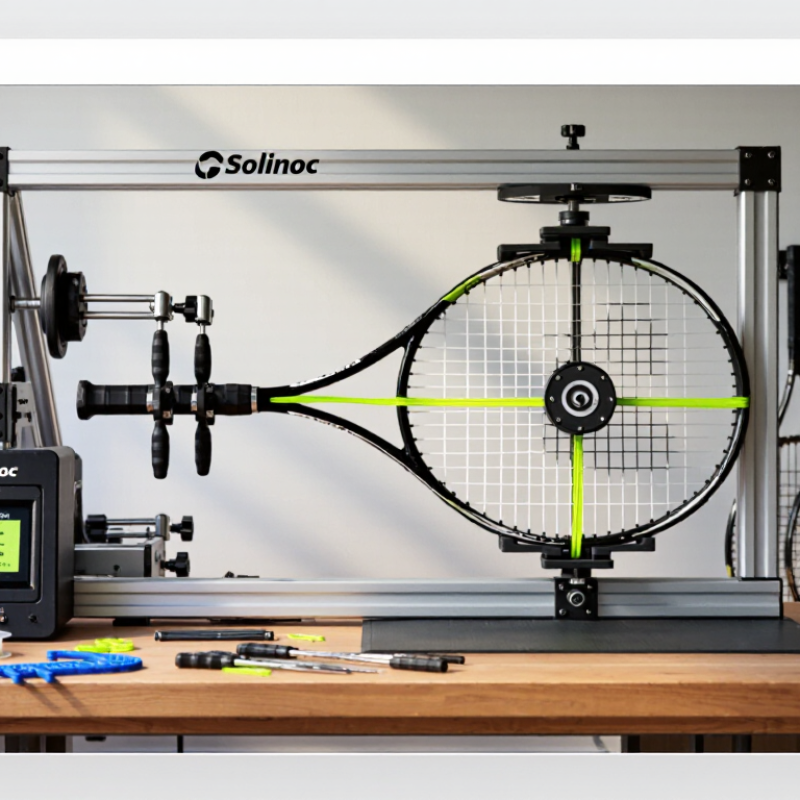
What “Solinco String Machine” Means in the 2026 Tennis Market
In the 2026 tennis market, “string machine” usually means equipment that tensions and installs strings in a racket. A search phrase pairing a string label with “machine” can be unclear: it may describe a retailer’s wording, not a distinct machine category. The useful comparison is mechanical. Look at tension consistency, mounting stability, clamp design, repair access, and whether the machine suits occasional home use or daily shop work. Small details matter. A slipping clamp can leave uneven string beds and wasted time.
Demand for racket services has a broad participation backdrop. The SFIA 2024 Topline Participation Report recorded 23.8 million U.S. tennis players in 2023, 33% more than in 2019. The ITF Global Tennis Report 2021 estimated about 87 million players worldwide. These figures track participation, not string-machine sales, so they cannot prove which model is best. The category is still changing, and online listings sometimes blur manual, electronic, and drop-weight designs.
Tips: Before buying, string three practice frames and check whether the displayed tension repeats. Ask about calibration, replacement clamps, and service support. A cheaper machine may be fine for a few rackets monthly; frequent work needs durable mounting and dependable tension readings. I would not choose from headline claims alone. One test at the local shop can reveal more.
Best Solinco String Machine in 2026? — What “Solinco String Machine” Means in the 2026 Tennis Market
“Solinco string machine” does not describe a machine type or a standard specification. When comparing stringing machines, check the tension range and whether it covers the settings you use. The chart shows unit conversions, not machine specifications or recommended tensions.
Solinco’s Stringing Equipment Range and Model Availability
Choosing the best stringing machine in 2026 depends less on a headline than on fit and current availability. When reviewing a manufacturer’s equipment range, compare tabletop and floor-standing designs, then check whether each model uses manual or electronic tensioning. These categories affect cost, workspace, and setup time. A compact machine can suit a home bench, while a busy shop may value faster adjustments and sturdy mounting.
Check the details. A clear listing should state tension range, clamp type, included tools, warranty, and replacement-part support. Model availability can vary by region, and retailer pages may lag behind current stock. Confirm the exact model number and delivery estimate before purchasing.
If possible, inspect clamp movement and frame stability; even small slips can disrupt a consistent pull. Calibration matters, too. Ask how it is checked and whether service is accessible nearby. A polished feature list is useful, but it cannot replace support after the sale. I would not assume the most expensive option is automatically the best; that is an easy mistake. For a shortlist, compare the models actually in stock against your weekly workload, bench space, and preferred stringing routine.
Key Criteria for Comparing Stringing Machines in 2026
When comparing stringing machines in 2026, focus on repeatable tension, secure mounting, clamp grip, and adjustment range. A digital display looks reassuring, but it does not prove accuracy. Check tension with an independently calibrated instrument, then repeat the same pull several times. The 2023 Tennis Industry Association report counted 23.8 million U.S. tennis players, up 1.3 million from 2022. More players mean more potential stringing work, but your own workload matters more than a headline figure. Busy shop? Consistency counts.
Look closely at the turntable, mounting posts, and clamps. A frame should stay still while you tighten a knot; clamps should hold without crushing or marking the string. USRSA educational guidance emphasizes calibration and sound stringing technique, so compare how easily each machine supports those checks. Also assess service access, replacement-part availability, warranty terms, and whether the machine fits your bench. Bring a racquet and test it, if possible. Watch for clamp slip during repeated pulls. One caveat: setup affects results, and I would not trust a showroom demonstration alone. The “best” machine may be less impressive than the one you can calibrate, maintain, and use comfortably every day.
Matching Machine Features to Player and Stringer Needs
Choosing a stringing machine starts with the work it must handle. A home player restringing a few frames each season may value compact storage and simple tension adjustment. A busy stringer needs a stable turntable, dependable clamps, and quick, repeatable operation. USTA’s 2024 tennis participation report counted 25.7 million U.S. players in 2023, up 8.3% from 2022. That growth does not prove every shop needs an electronic machine. It does suggest stringers may face a wider mix of players, frames, and preferred tensions. Match the machine to actual weekly volume, not an imagined future rush.
For occasional use, a manual crank can offer straightforward control without extra electronics. Frequent restringing can make electronic constant-pull tension and adjustable mounting more valuable, especially when switching between tight and open string patterns. Check clamp movement with a frame mounted, not just on an empty machine. Small detail. Also consider the space around the unit: a cramped bench makes loading and weaving slower. No machine is perfect. Even a premium feature cannot compensate for slipping clamps or inconsistent technique. I would compare warranty coverage, calibration procedures, and replacement-part access before prioritizing speed. If your workload is uncertain, track restringing frequency for a month; that estimate may be less glamorous, but more useful than guessing.
Setup, Calibration, and Maintenance Considerations
A stringing machine is only as consistent as its setup. Mount the frame level, then tighten supports until they touch without squeezing the hoop. The International Tennis Federation’s Rules of Tennis, Appendix II, sets maximum racket dimensions at 29 inches long and 12.5 inches wide. That matters: poorly positioned supports can distort a frame within those limits. Keep the turntable clean, and check that clamps hold string without crushing its surface. Small details matter.
Calibration needs a repeatable test. Use a calibrated tension gauge or load cell, and compare readings at several settings, such as 40, 50, and 60 pounds. Record results and follow the machine’s stated tolerance; a single test point can hide drift elsewhere. The Tennis Industry Association’s 2024 participation report counted 23.8 million U.S. players in 2023, a reminder that heavily used equipment may need more frequent checks. That figure does not predict any one shop’s workload, though. Inspect clamp bases, brake movement, and gripper teeth regularly. Replace worn parts before they mark string or slip under load. One easy-to-miss check: confirm the tension head returns smoothly after each pull. It can feel fine, until it doesn’t.