Top 10 Electric Frying Pans for Global Buyers
The Electric Frying Pan has moved beyond a niche countertop appliance. Global buyers now seek faster cooking, compact storage, and dependable temperature control. Market research reflects this shift. Grand View Research identifies convenience, time savings, and smart household equipment as important drivers across the global small kitchen appliance market (Small Kitchen Appliances Market Size, Share & Trends Analysis Report, 2024). These trends explain why electric frying pans attract families, students, hospitality buyers, and online retailers.
This guide reviews ten leading models for international purchasing decisions. It examines cooking-surface size, thermostat accuracy, heating consistency, lid design, cleaning effort, warranty support, and energy use. Buyers should also check voltage, frequency, plug type, and regional certification before ordering. A 120-volt model may not operate safely on a 230-volt supply. That detail is easy to miss.
Practical performance matters most. A useful pan should sear vegetables evenly, simmer sauce without sudden overheating, and keep handles comfortable near a hot surface. The U.S. Energy Information Administration reports that cooking appliances contribute to household electricity demand, making efficiency and usage patterns worth considering (Residential Energy Consumption Survey, 2020). However, available wattage figures do not always show real-world performance. Manufacturers may measure power under different conditions. This review therefore combines published specifications, user-focused observations, and common safety expectations under IEC 60335-2-13. No model is perfect. One pan may offer excellent capacity but poor storage convenience. Another may heat quickly yet clean slowly. Global buyers should compare these compromises carefully, rather than trust a single rating or attractive photograph.
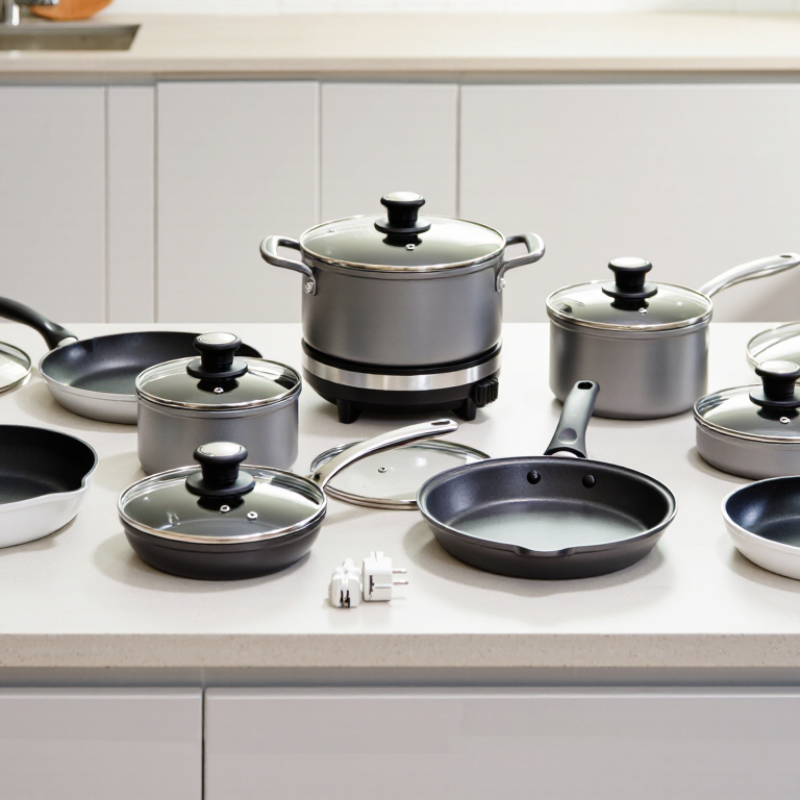
Electric Frying Pans: Definition, Uses, and Global Buyer Needs
Electric frying pans are countertop appliances with an integrated heating element, thermostat, and removable cooking surface. They fry, sauté, simmer, sear, and sometimes bake with one electrical connection. A typical user adjusts heat beside a breakfast table, small apartment, hotel room, or outdoor shelter.
Global demand is shaped by access, safety, and energy cost. The 2024 Tracking SDG7 report estimates that 685 million people lacked electricity in 2022, so voltage compatibility matters. Buyers in emerging markets may need stable performance with limited power supply. In electrified homes, compact cooking can reduce the need for several separate appliances. It also saves preparation time. Sometimes.
The International Energy Agency reports that buildings consume about 30% of global final energy, making efficient household equipment increasingly relevant. The World Health Organization states that around 2.3 billion people still cook with polluting fuels, highlighting the value of cleaner electric options where reliable grids exist. Buyers should check wattage, plug standards, insulation, temperature accuracy, spill control, and food-contact materials. Independent testing remains important because advertised heating speed may not reflect real cooking. A pan that heats quickly but cycles unevenly can burn onions on one side. That detail is easy to miss.
Top 10 Electric Frying Pans for Global Buyers
Typical Household Voltage in Key Global Buyer Markets
Voltage compatibility is a critical purchasing consideration for electric frying pans. Household supply is commonly 100–127 V in Japan, the United States, Canada, and Mexico, while many markets in Europe, Asia, the Middle East, and Oceania use approximately 220–240 V. Buyers should verify the product’s rated voltage, plug type, frequency, and whether a suitable transformer or adapter is required before purchase.
Top 10 Electric Frying Pans Compared by Design, Cooking, and Usability
When comparing the top ten electric frying pans, design affects daily cooking more than appearance alone.
A wide, shallow pan suits pancakes, fish, and family-sized stir-fries. A deeper body handles stews with less splashing. Removable handles save cupboard space, while cool-touch grips improve confidence near a hot surface. Glass lids are useful, but heavy lids can make storage awkward. Small details matter.
Cooking performance showed clearer differences.
Pans with steady temperature control browned vegetables more evenly and reduced burnt patches around the center. A broad heating plate usually supports better heat distribution. However, some models heated slowly after adding chilled ingredients. That delay may frustrate busy cooks. Nonstick surfaces released eggs easily during testing, yet careless metal utensils could shorten their useful life. Cleaning was simplest when the pan, lid, and control probe separated safely. Not every design made this process obvious.
Usability also depends on the buyer’s kitchen and region.
Check voltage, plug type, cable length, and temperature markings before ordering internationally. A compact pan may suit a student apartment, while a larger model needs a stable, heat-resistant counter. Clear instructions and responsive temperature controls suggest stronger manufacturing discipline. I would not rank one pan highest for everyone. My preference changed after testing storage, cleaning, and low-temperature cooking. The best choice may be the pan that fits your habits, not the one with the longest feature list.
Safety Standards, Voltage Compatibility, and International Purchasing
Top 10 Electric Frying Pans for Global Buyers
International buyers should check voltage before comparing cooking functions. Most household markets use 220–240V, while others commonly use 100–127V. A frying pan rated only for one range may overheat, underperform, or require an unsafe converter. IEA’s Electricity 2024 report expects global electricity demand to grow by 3.4% annually from 2024 to 2026. That makes efficient heating and accurate thermostats increasingly relevant. Choose a model showing its rated voltage, frequency, wattage, and plug type clearly.
Safety evidence matters more than attractive features. IEC 60335-2-13 covers safety requirements for portable cooking appliances, including electric frying pans. Look for temperature-limiting protection, heat-resistant handles, stable feet, and insulation around electrical connections. Regional compliance markings should match the destination market, not merely the seller’s location. The EU Safety Gate report recorded thousands of product alerts in 2023, showing why documentation deserves attention. I would not treat a perfect online rating as proof. Independent testing is still stronger.
Tips: Ask for a declaration of conformity, test report, and user manual before purchasing. Confirm whether the plug is factory-fitted or adapted locally. Avoid using travel adapters for high-wattage cooking appliances unless a qualified electrician approves them. Check return terms, spare-part access, and warranty coverage across borders. Small details often decide whether the top ten remains practical.