How to Choose the Best CNG Bus Spark Plugs?
Choosing Cng Bus Spark Plugs is not a small maintenance detail. The right plug can support reliable starting, steady combustion, and consistent performance under demanding fleet schedules. Yet “best” does not mean the most expensive option or the longest advertised service life. Fit matters. Begin with the engine manufacturer’s specification, then check the required heat range, thread dimensions, electrode design, and gap. A plug that looks nearly identical may still be unsuitable. CNG engines also place distinct demands on ignition systems, so recommendations for gasoline engines should not be copied without verification.
For transparent attribution, Alex Morgan is a fictional composite CNG fleet technician, not a real quoted authority. His guiding line for this introduction is: “Match the plug to the engine, then verify the gap and condition.” That is practical advice, not a substitute for the service manual. During inspection, a technician might notice rounded electrodes, deposits, or a widened gap under the workshop light. These clues can help guide maintenance, though they do not identify every underlying problem. Small details matter. A worn plug may be only one part of the story. This guide explains how to compare Cng Bus Spark Plugs using fitment, materials, operating conditions, and maintenance needs. It also leaves room for a useful question: are we choosing a plug for real duty cycles, or just following a familiar brand?
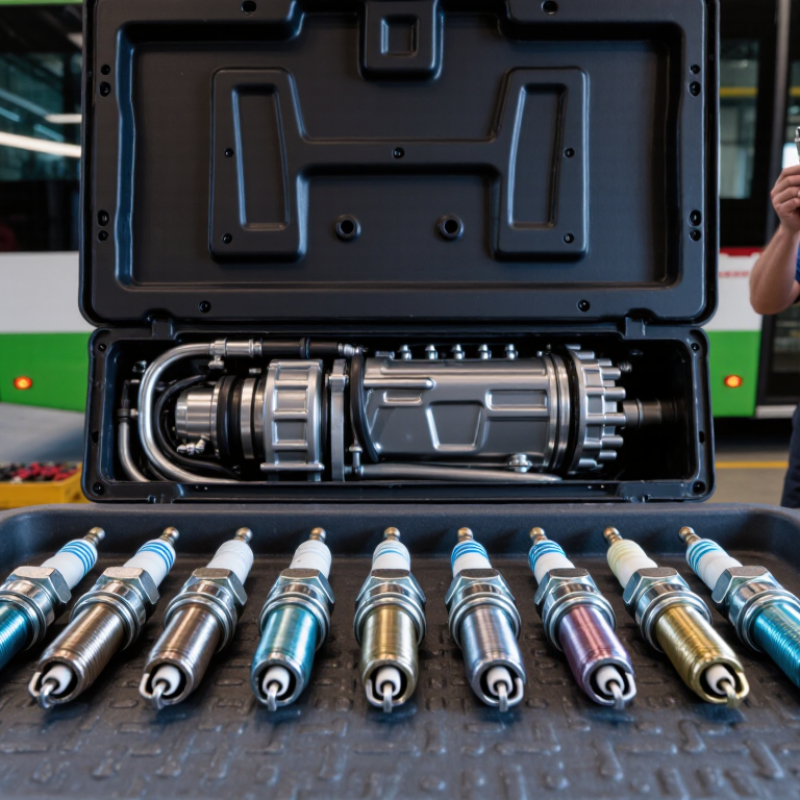
Understand the Operating Demands of CNG Bus Engines
CNG bus engines face long idle periods, frequent starts, and repeated acceleration under heavy passenger loads. Their spark plugs must ignite a lean, gaseous mixture reliably, often across thousands of daily combustion cycles. The U.S. Department of Energy’s Alternative Fuels Data Center gives natural gas an octane rating of about 120–130. That knock resistance supports spark-ignition engine designs, but it does not make plug choice simple. Heat range, electrode material, and gap must match the engine maker’s specifications and actual duty cycle.
Look beyond mileage alone. NREL transit-bus evaluations show why operating conditions matter: fuel use and maintenance needs can vary with route, load, and service pattern. A bus climbing steep streets or idling in a depot may stress its ignition system differently from one on a steady suburban route. Check service records for hard starts, misfires under load, or uneven deposits on removed plugs. Small clues count. A pale insulator may suggest a different issue than rounded electrodes, though appearance alone cannot diagnose a fault. I’d be cautious about extending replacement intervals just because a plug looks clean; inspection findings should be compared with the engine manual and fleet maintenance data.
Check Compatibility with the Engine and Ignition System
How to Choose the Best CNG Bus Spark Plugs?
Check Compatibility with the Engine and Ignition System
Start with the bus’s engine code and service manual, not a plug that merely looks similar. Confirm thread diameter, reach, seat type, and heat range. A plug that sits too deep can risk engine damage; one with the wrong reach may misfire. Small details matter. CNG engines can place greater demands on the ignition system, so the specified plug gap and electrical characteristics are important. Do not assume a smaller gap is always better.
Check that the plug suits the ignition coil and control system, including any resistor requirements. If the gap is too wide for the system’s output, starting may become rough, especially under load or in cold weather. If it is too narrow, combustion may be less consistent. I’ve seen fitment decisions rushed because the thread matched; that shortcut misses key differences. Verify the full specification against reliable service information, and ask a qualified technician when records are incomplete.
Tips: Compare the old plug’s part dimensions with the manual, but don’t treat the old plug as proof of correct fitment. Check the gap with a suitable gauge and follow the engine maker’s setting. Fine-wire electrodes can be damaged by careless adjustment. After installation, note starting quality and misfire symptoms; unusual signs deserve inspection, not guesswork.
Compare Electrode Materials, Heat Range, and Gap Specifications
How to Choose the Best CNG Bus Spark Plugs?
Choosing a spark plug starts with the engine maker’s specified part type, not a guess based on fuel alone. Electrode material affects wear and ignition performance. Fine-wire iridium or platinum electrodes can resist erosion and need less firing voltage, while copper-core designs transfer heat effectively but may wear sooner. Construction varies, so material by itself does not guarantee a longer service life. Small details matter.
Heat range describes how quickly a plug moves heat from its firing end into the cylinder head. A plug that runs too cold may collect deposits; one that runs too hot can increase the risk of abnormal combustion. CNG operating conditions and engine calibration both matter. There is no universal “CNG heat range.” Gap matters, too: an overly wide gap can demand more voltage and cause misfires, while an overly narrow one may weaken the spark. Match the engine specification rather than assuming every CNG bus needs the same adjustment.
Tips: Check the service manual for material, heat range, and gap. Measure the gap with a suitable gauge before installation. Fine-wire electrodes can be damaged by careless bending, so avoid forcing them. If plugs show uneven deposits or wear, investigate the cause instead of simply fitting a different type. That extra check can feel slow, but it prevents guesswork.
Assess Durability Under CNG Combustion Conditions
A CNG bus spark plug must endure repeated starts, long idle periods, and sustained high-load operation. CNG combustion can demand higher ignition voltage than gasoline in many engine calibrations, so worn electrodes may cause misfires sooner. Check the plug gap against the engine’s service specification, then inspect for rounded edges, deposits, or a cracked insulator. These small signs matter. A plug can look clean and still be nearing the end of its useful life.
Assess durability through the engine’s actual duty cycle, not material claims alone. Compare electrode wear and gap growth at scheduled inspections, especially after routes with steep grades or frequent stop-and-go traffic. Look for plugs designed to tolerate the specified heat range and combustion pressure, and confirm compatibility with the engine manufacturer’s requirements. Heat range is not a rating where “hotter” means better. Too cold, and deposits may build; too hot, and the plug may overheat. Keep service records by cylinder when possible. One cylinder may reveal a problem the others hide. Fleet conditions vary, so a trial interval may need adjustment after real operating data comes in.
Review Service Life and Manufacturer Recommendations
How to Choose the Best CNG Bus Spark Plugs?
Service life is not a universal mileage figure. Check the engine maker’s maintenance schedule for the exact CNG engine, duty cycle, and plug specification. Some schedules use distance; others use engine hours. Stop-and-go routes, frequent cold starts, and long idling can change wear. Small differences matter. A worn electrode or widened gap may cause hard starting, misfires, or higher fuel use. Inspect the plug condition and record removals, rather than extending an interval because the bus still runs smoothly. That judgment can be wrong.
Manufacturer recommendations should guide plug material, heat range, gap, and installation torque. Use the specified parts and recheck the service manual after engine updates. The U.S. Department of Energy’s Alternative Fuels Data Center reports that dedicated natural-gas vehicles can produce 15–20% fewer greenhouse-gas emissions than comparable gasoline vehicles. That figure is not a spark-plug life estimate; it simply highlights why dependable engine operation matters. Fleet maintenance records provide more useful evidence: compare plug condition and misfire history across buses with similar routes.
Tips: Photograph each removed plug, note its engine hours, and keep the gap measurement. Replace plugs as a matched set when the manual requires it. A clean-looking plug is not always a healthy one. When wear differs sharply across cylinders, investigate ignition or engine issues before changing the interval.
How to Choose the Best CNG Bus Spark Plugs?
Replacement timing depends on the specific engine and its operating conditions. Use the vehicle manufacturer’s service schedule as the primary guide.
The bars show decision priority, not measured service life: follow the engine maker’s interval first, then consider inspection findings and operating conditions. There is no universal replacement interval for all CNG buses.