What Is the Best China Drink Water Bottle Supplier?
Choosing the best China Drink Water bottle supplier requires more than comparing prices. A reliable partner must prove product quality, manufacturing experience, and communication discipline. Buyers should examine bottle materials, cap performance, leak resistance, and production consistency. Food-grade stainless steel, BPA-free plastic, and glass each serve different markets. The right choice depends on use, budget, shipping conditions, and customer expectations.
Hydration researcher Dr. Ronald Maughan offers a useful warning: “More water is not automatically better.” This principle also applies to supplier selection. More customization does not always mean better value. A supplier should provide test reports, factory information, quality-control records, and clear order terms. Certifications may include FDA, LFGB, or other market-specific requirements. However, certificates alone are not enough. Buyers should request recent documents and confirm whether they match the actual factory and product.
Small details reveal practical experience. Check the cap after repeated opening. Test a filled bottle inside a work bag. Review the surface finish under bright light. Ask how defects are handled before shipment. Production capacity matters too, especially during seasonal demand. A low minimum order quantity can help new brands, but it may increase unit costs. Large factories may offer stronger efficiency, yet smaller suppliers can sometimes provide closer communication.
No supplier is perfect. That is worth admitting. The best China Drink Water bottle supplier is the one that offers dependable quality, transparent evidence, realistic lead times, and responsive support. A careful audit may feel slow, but it prevents expensive surprises later.
Understanding China’s Drinking Water Bottle Supplier Market
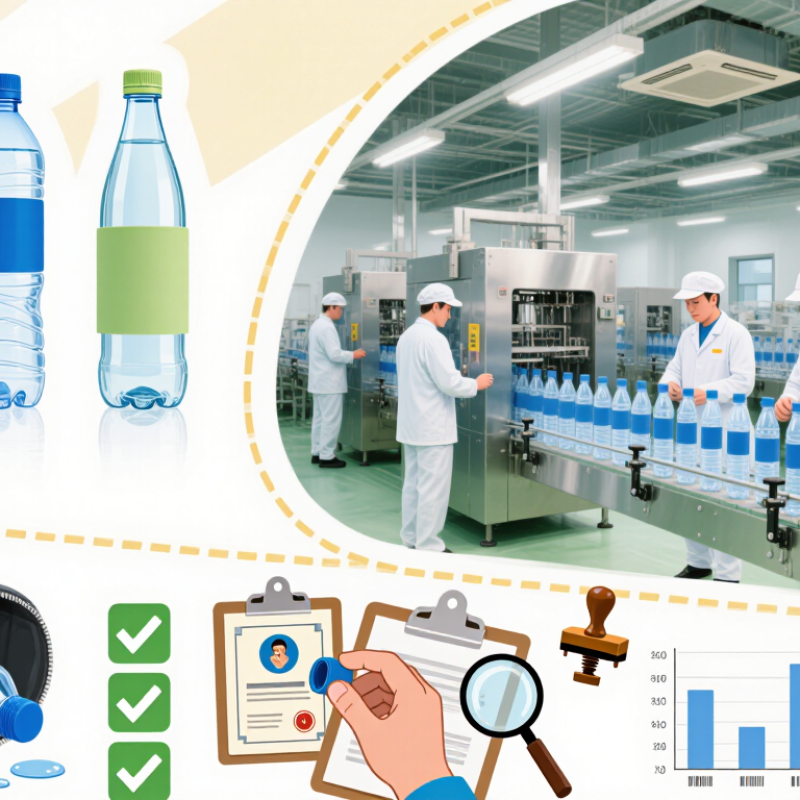
China’s drinking water bottle supplier market is broad, but it is not uniform. Suppliers range from small workshops to integrated factories with molding, printing, and packing lines. A low quotation may reflect thin walls, basic caps, or limited inspection. In practical sourcing, the product sample matters more than a polished catalog. Hold the bottle filled with water. Check the cap thread, squeeze resistance, odor, and base stability. Samples can mislead. Small defects become expensive after thousands of units.
Reliable suppliers usually explain material grades, production capacity, testing routines, and replacement policies clearly. Ask for food-contact documentation, batch records, and test reports matching the actual bottle. Confirm whether certificates cover the lid, gasket, coating, and printing ink. These details are often overlooked. They should not be. A factory visit, live video inspection, or independent pre-shipment check can reveal crowded storage, inconsistent labeling, or rushed packing. Such evidence is more useful than promises.
The best supplier depends on your market, order volume, design, and delivery schedule. A custom sports bottle needs different tooling and quality controls than a simple reusable bottle. Discuss minimum order quantities, mold ownership, sample fees, carton strength, and port arrangements before payment. Communication speed also matters. One unclear drawing can create hundreds of incorrect units. I have seen sourcing plans fail because buyers focused only on price. That mistake is understandable, but it deserves review. Supplier selection should balance cost, repeatability, documentation, and honest problem handling.
What Is the Best China Drink Water Bottle Supplier? - Understanding China’s Drinking Water Bottle Supplier Market
| Evaluation Dimension | Common Market Benchmark | What Buyers Should Verify | Why It Matters |
|---|---|---|---|
| Main Production Regions | Eastern and southern coastal manufacturing clusters, including Zhejiang, Guangdong, Jiangsu, Fujian, and Shanghai-area facilities | Factory address, production scope, export experience, and proximity to suitable ports | Regional specialization can affect tooling access, logistics cost, and production efficiency |
| Bottle Materials | PET, HDPE, PP, Tritan-type copolyester, stainless steel, aluminum, and glass | Material declaration, food-contact compliance, recycled-content claims, and temperature limitations | Material selection influences safety, durability, weight, appearance, and shipping cost |
| Typical Product Capacity | Approximately 250 ml to 2,000 ml for common consumer drinking bottles | Actual fill volume, dimensional drawings, weight tolerance, and compatibility with filling lines | Capacity affects product positioning, packaging design, and freight calculations |
| Minimum Order Quantity | Stock items may start at several hundred to a few thousand units; customized items often require several thousand units or more | Separate MOQ for blank bottles, custom colors, printing, packaging, and new molds | MOQ directly affects inventory risk and the feasibility of test orders |
| Sampling Lead Time | About 3–10 working days for existing products; longer when new artwork, colors, or tooling are required | Whether samples are made from production materials and whether sample charges are refundable | Representative samples reduce the risk of discovering quality problems after mass production |
| Mass Production Lead Time | Approximately 15–45 working days after artwork, specifications, and deposit are confirmed | Production schedule, peak-season capacity, packaging readiness, and inspection timing | Lead time must align with launch dates, promotional campaigns, and shipping schedules |
| Customization Options | Color matching, screen printing, heat transfer, labeling, laser engraving, lids, sleeves, and retail packaging | Artwork approval process, color tolerance, decoration durability, and tooling ownership | Reliable customization protects visual consistency and brand presentation |
| Food-Contact Compliance | Compliance may include applicable requirements in the destination market, such as FDA food-contact rules, EU food-contact regulations, or GB standards | Current test reports, declarations of compliance, migration testing, and traceable material records | Documents should match the exact material, color, coating, lid, and intended use |
| Quality Management | Documented incoming-material inspection, in-process checks, final inspection, and defect classification | Quality manual, inspection records, corrective-action process, and agreed acceptance criteria | A repeatable system is more reliable than a visual factory visit alone |
| Leak and Performance Testing | Common checks include leakage, cap torque, drop resistance, dimensional accuracy, odor, appearance, and thermal performance where relevant | Test method, sample quantity, pass criteria, and test results for the final production batch | Testing helps prevent leakage, broken closures, and inconsistent assembly |
| Packaging and Export Support | Individual polybags or boxes, master cartons, palletization, export cartons, and standard shipping documentation | Carton dimensions, gross weight, packing count, pallet details, Incoterms, and export documents | Accurate packing data supports freight quotations and reduces customs delays |
| Best Supplier Selection Criteria | A strong match combines verified compliance, stable quality, transparent pricing, suitable MOQ, dependable lead time, and responsive communication | Compare quotations using identical specifications, approved samples, inspection terms, and total landed cost | The lowest unit price does not always provide the lowest total procurement cost |
Note: The figures above are indicative industry benchmarks. Actual specifications, minimum order quantities, prices, testing requirements, and lead times vary by product design, order volume, destination market, and customization level.