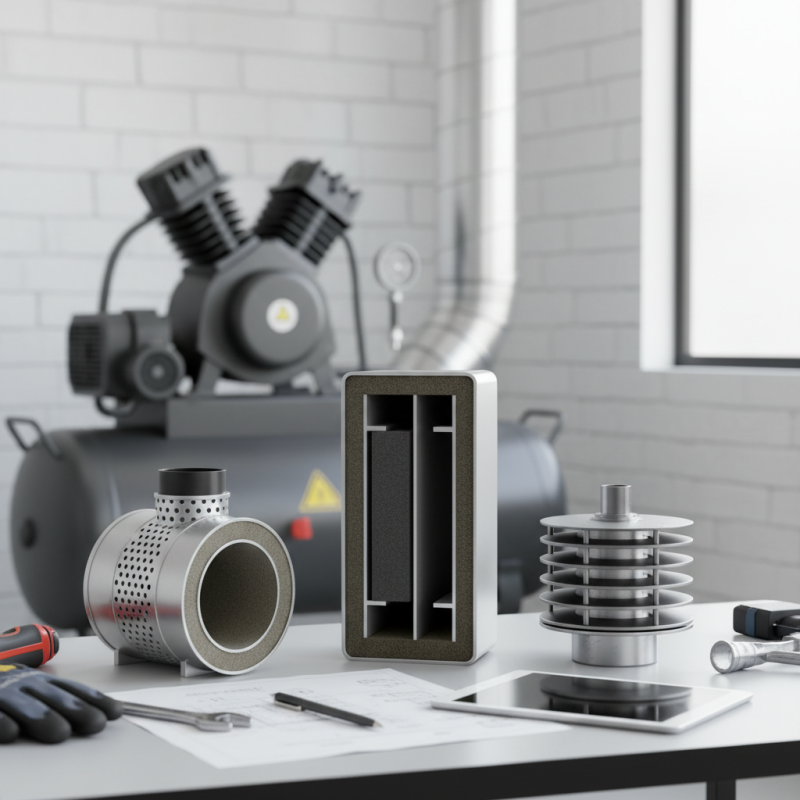
Best Air Muffler Silencer Types for Noise Reduction?
Choosing the right Air Muffler Silencer can greatly impact noise levels in various settings. These silencers help reduce sound pollution in residential, commercial, and industrial areas. Effective options are available for different needs and budgets.
When selecting an Air Muffler Silencer, it's essential to consider factors like size, material, and design. Some models are more effective in specific applications, while others are versatile. Still, not all silencers perform equally well under different conditions. Users may face challenges finding the best match for their situation.
Real-world applications show that the right Air Muffler Silencer can significantly improve comfort. However, occasional complaints about performance may arise. Users should evaluate their choices carefully and be open to experimenting with different types. Each setting may require different adjustments to achieve optimal noise reduction.
Overview of Air Mufflers and Their Importance in Noise Control
Air mufflers play a crucial role in controlling noise levels in various applications. They help mitigate unpleasant sounds generated by machinery, compressors, and industrial processes. According to industry reports, noise levels can significantly impact worker productivity and health. Excessive noise exposure is linked to hearing loss and increased stress. Therefore, air mufflers are essential for creating a safer, more comfortable working environment.
When selecting an air muffler, it’s important to understand the different types available. Passive mufflers often absorb sound energy through materials designed to dampen vibrations. Active mufflers, on the other hand, use electronic components to cancel out noise using sound wave interference. Each type serves specific needs, depending on the source of the noise and the desired decibel reduction.
Tips: Consider the decibel reduction rating of each air muffler type. Evaluate your specific environment to choose the most effective solution. Ensure proper installation to maximize noise reduction benefits. Regular maintenance can also keep mufflers functioning effectively, providing long-term noise control.
Types of Air Muffler Silencers Available in the Market
When choosing air muffler silencers, one must consider various types available in the market. Common options include reactive silencers, absorptive silencers, and combination types. Reactive silencers use acoustic chambers to reflect sound waves, while absorptive silencers typically incorporate sound-absorbing materials to minimize noise. Each type has its own strengths in reducing specific frequency ranges.
Data from recent studies indicate that absorptive silencers can reduce noise levels by up to 25 dB. For environments with continuous noise, this can create a more comfortable space. Reactive models may be better suited for high-frequency noises, with capabilities to reduce sound in the 2000 Hz range. Selecting the right type deeply affects overall performance and sound quality.
Tip: Always measure the noise levels in your environment. This will help you determine the right type of silencer for your needs. Consider installation requirements and maintenance efforts, as these aspects can be overlooked.
Another point to ponder: while certain silencers excel in specific applications, they may fall short in others. A silencer that provides excellent noise reduction in one setting may not perform as well in a different environment. Always balance expectations with real-world performance and limitations.
Best Air Muffler Silencer Types for Noise Reduction
| Type of Air Muffler Silencer | Noise Reduction (dB) | Material | Typical Use | Cost Range (USD) |
| Absorptive Muffler | 20 - 30 | Fiberglass/Steel | Industrial machinery | $50 - $150 |
| Reflective Muffler | 15 - 25 | Steel | Automotive applications | $30 - $120 |
| Combination Muffler | 25 - 35 | Steel/Fiberglass | Heavy equipment | $100 - $200 |
| Inline Muffler | 10 - 20 | Aluminum/Steel | Residential HVAC | $40 - $80 |
| Silencer Box | 25 - 40 | Acoustic foam/Steel | Commercial HVAC | $100 - $300 |
How Air Muffler Design Influences Noise Reduction Efficiency
Air muffler design plays a crucial role in reducing noise. Different designs can significantly impact how effective a muffler will be. For instance, studies show that a chambered muffler can reduce noise levels by up to 50% in certain applications. This makes it a popular choice in various industries.
The materials used also matter. For example, steel and aluminum are common but vary in sound absorption. In a recent report, it was noted that acoustic foam insulations can enhance sound dampening, improving muffler performance. The thickness and density of the muffler walls play a vital role in noise reduction too. Thicker materials tend to block sound more effectively, but they can add weight.
However, not all air mufflers work perfectly in every scenario. Some may struggle in high-frequency noise reduction. This shortcoming requires careful consideration of design specifications. Finding an optimal solution often involves trial and error. Achieving ideal noise reduction is not always straightforward, and understanding the relationship between design and functionality is important for future innovations.
Factors to Consider When Choosing the Right Muffler Silencer
When choosing the right air muffler silencer, several factors should be considered. Noise level is crucial. You want something effective in reducing sound yet not overly restrictive. Material plays a significant role too. Stainless steel lasts longer, while fiberglass offers different sound qualities. Think about your environment. Urban settings may require more noise reduction. What about the type of vehicle or equipment? Consider how the muffler fits into your specific situation.
Installation is another factor worth pondering. Some models are easier to install than others. You may require professional help, which can add to costs. Also, think about the intended use. For occasional use, you might choose a lighter silencer. For heavier demands, a robust option is essential. After all, not every silencer excels in all conditions.
Lastly, don’t forget about maintenance. Some mufflers need regular checks to perform at their best. Ask yourself if you are ready for that. Visualize how it integrates with your current setup. The choice isn't just about noise reduction; it’s about practicality, durability, and fit. Reflect on what works best for you. Balancing these factors can lead to a more satisfying choice.
Maintenance Tips for Ensuring Optimal Muffler Performance
To maintain optimal muffler performance, regular checks are crucial. Inspect for any rust, cracks, or loose connections. These issues can lead to reduced efficiency. Ensure that the exhaust system is tightly sealed. Leaks can increase noise, making the muffler less effective. A visual inspection can save you from costly repairs later.
Cleaning is another important task. Dust and debris can accumulate over time. Using a brush or compressed air helps clear any blockage. Sometimes, a simple rinsing can work wonders. Consider using a mild detergent for stubborn grime. Remember, neglecting maintenance can lead to muffler failure.
Lastly, pay attention to the sound. Unusual noises can indicate problems. A louder noise than usual may suggest a leak. Trust your instincts; if something feels off, it probably is. Regular maintenance will prolong the life of your muffler and improve its performance. Stay proactive in caring for your muffler.
Best Air Muffler Silencer Types for Noise Reduction
This chart compares different types of air muffler silencers based on their noise reduction capabilities measured in decibels (dB). Resonator mufflers provide the highest level of noise reduction, while straight-through mufflers offer the least. Understanding these differences can aid in making informed decisions for optimal muffler performance.