What is Aluminum Nitride Uses and Benefits for Industry?
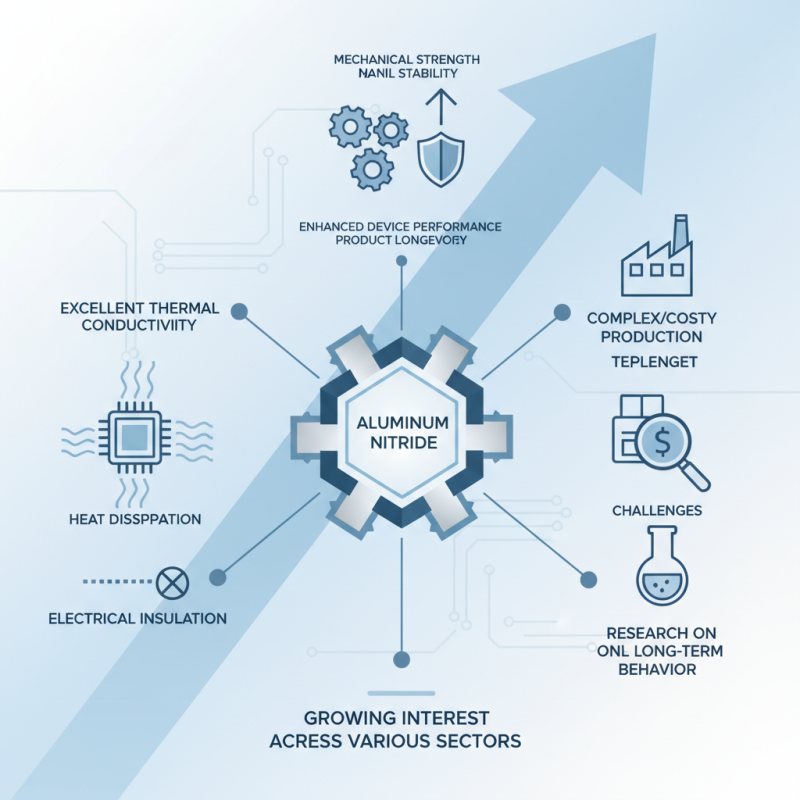
Aluminum Nitride is a compound gaining attention in various industries. Its unique properties make it particularly beneficial for high-performance applications. With excellent thermal conductivity and electrical insulation, Aluminum Nitride stands out in semiconductor manufacturing and electronics.
Industries utilize Aluminum Nitride for its ability to dissipate heat efficiently. This trait enhances the performance of electronic devices. Moreover, its chemical stability and mechanical strength contribute to its reliability in harsh environments. Companies are increasingly adopting this material to improve product longevity.
However, the growth of Aluminum Nitride applications comes with challenges. The production process can be complex and costly. Furthermore, understanding the long-term behavior of this material in different conditions is still a subject of research. Despite these considerations, the advantages of Aluminum Nitride continue to drive interest across various sectors.
What is Aluminum Nitride and Its Chemical Properties in Industry
Aluminum nitride (AlN) is a ceramic compound with unique chemical properties. It consists of aluminum and nitrogen atoms and has a hexagonal crystal structure. This material stands out due to its high thermal conductivity and excellent electrical insulation. AlN can withstand high temperatures, making it suitable for various industrial applications.
In electronics, aluminum nitride is increasingly favored for substrates and packaging materials. Its ability to dissipate heat effectively helps prolong the life of electronic devices. Additionally, its insulative properties prevent unwanted electrical conductivity. However, these benefits come with challenges. For instance, the production process can be complex and costly. There is also a risk of defects that may affect material performance.
AlN is also used in the automotive sector for sensors and components requiring high thermal stability. Its lightweight nature contributes to overall vehicle efficiency. However, the balance between durability and performance can be tricky. Innovations in processing techniques are crucial for advancing its applications while addressing these issues.
What is Aluminum Nitride Uses and Benefits for Industry?
| Property | Description |
| Chemical Composition | AlN (Aluminum Nitride) |
| Thermal Conductivity | High thermal conductivity ~ 200 W/mK |
| Electrical Insulation | Excellent electrical insulator |
| Mechanical Properties | High hardness and good wear resistance |
| Applications | Used in electronics, optoelectronics, and as a substrate for LEDs |
| Benefits | Enhances device performance and reliability |
Key Applications of Aluminum Nitride in Electronics and Semiconductors
Aluminum nitride (AlN) is increasingly recognized for its critical role in electronics and semiconductors. One of its primary applications is as a substrate material in power electronics. AlN substrates exhibit excellent thermal conductivity, exceeding 200 W/mK. This feature allows for efficient heat dissipation in high-power devices, which is essential for enhancing reliability and performance.
In the semiconductor industry, AlN plays a vital role in the production of high-frequency devices. The material has a wide bandgap, making it suitable for high-voltage and high-temperature applications. According to a report by ResearchAndMarkets, the global market for AlN in electronics is expected to reach USD 500 million by 2026. These advancements can lead to more compact and efficient devices, essential as technology demands smaller components.
Despite its advantages, challenges remain in scaling the production of AlN substrates. The deposition methods can be costly, which limits widespread adoption. Moreover, the potential for defects during manufacturing can impact the overall performance of devices. Addressing these issues is crucial for the future of aluminum nitride in the electronics sector.
Aluminum Nitride Uses and Benefits for Industry
Aluminum nitride (AlN) is a promising material widely used in various industrial applications. This bar chart illustrates the key applications of aluminum nitride, highlighting its importance in electrical insulation, heat dissipation, semiconductor technologies, LED technologies, and optoelectronics. The data represents the estimated percentage distribution of these applications, showcasing the material's versatility and performance benefits in electronics and semiconductors.
Thermal Conductivity of Aluminum Nitride: Data and Industry Relevance
Aluminum nitride (AlN) stands out due to its exceptional thermal conductivity. This property is vital in various industrial applications. For example, it acts as a heat sink in electronic devices. AlN efficiently dissipates heat away from sensitive components, thus enhancing their performance and longevity.
In industries like semiconductors, managing heat is crucial. With AlN, manufacturers can create substrates that improve heat management. This quality minimizes the risk of overheating, which can damage electronic circuits. The material’s high thermal stability further supports its reliability in harsh environments.
Despite its advantages, there are challenges. Fabricating AlN components can be complex. The cost of production may be higher than alternatives like silicon. While AlN shows great potential, further research is necessary to optimize its manufacturing processes. Understanding these hurdles is vital for those considering its use.
Aluminum Nitride in Optical Devices: Benefits and Market Trends
Aluminum nitride (AlN) has gained significant attention in the optical devices sector. Its unique properties, like wide bandgap and thermal conductivity, make it a valuable material. AlN is used in the production of high-performance optical devices such as lasers and light-emitting diodes (LEDs). These devices benefit from AlN's ability to withstand high temperatures without deteriorating.
The current market trends indicate a growing demand for AlN in photonics applications. Several industries leverage its efficiency. For instance, aerospace and telecommunications sectors are increasingly adopting AlN for advanced optical technologies. However, its production can be challenging and may require further innovation and improvement. Researchers are continually exploring the best methods to enhance AlN's optical properties, pushing the boundaries of its applications. Balancing cost and performance remains a critical area for developers.
Sustainability Considerations in Aluminum Nitride Production and Use
Aluminum nitride (AlN) is becoming crucial in various industries, particularly in sustainability efforts. The production of AlN requires less energy compared to other ceramics. According to recent industry reports, up to 40% less energy is consumed during its synthesis. This reduction is significant for companies striving to lower their carbon footprints.
However, the environmental impact of sourcing raw materials for AlN production is a concern. The mining practices for aluminum can lead to land degradation and habitat loss. Furthermore, it’s important to address the sustainability of these materials. Recycling processes for AlN are emerging but remain underdeveloped. Industry studies suggest that improving these processes could enhance the overall sustainability of AlN.
Additionally, AlN exhibits excellent thermal conductivity, making it highly efficient in energy transfer applications. This characteristic can help systems operate more efficiently, thereby reducing energy consumption in the long run. The balance between performance and environmental impact is a key focus area. Despite its benefits, the reliance on raw materials highlights the need for more sustainable sourcing practices. Exploring innovative production methods may help mitigate these concerns.