Top ABS LED Camping Lights for Outdoor Use
A reliable camping light can make a dark tent, picnic table, or campsite feel easier to manage. This guide to Top ABS LED Camping Lights for Outdoor Use focuses on practical features, not flashy claims. It considers brightness, beam spread, battery life, charging options, controls, and carrying comfort. A Led Camping Light Abs model may offer a lightweight housing that handles everyday bumps, while its LED can provide efficient, useful light. Still, ABS construction alone does not prove a lamp is waterproof or unusually durable. No lamp is perfect.
Choosing the right light depends on how you camp. A wide, diffused beam can help illuminate a tent without creating harsh glare. A focused beam may suit a path or gear check. Compare stated runtime at different brightness settings, since high output often drains batteries faster. Check whether the lamp uses replaceable batteries or recharges by USB, and look for clear information about its water-resistance rating. Small details matter: a stable base, a reachable switch, and a handle that feels secure can improve use after sunset. Product specifications are useful, but they cannot predict every real-world condition. That trade-off matters. The recommendations ahead help readers compare common features and choose a light suited to their trips, while keeping expectations grounded in verified product details.
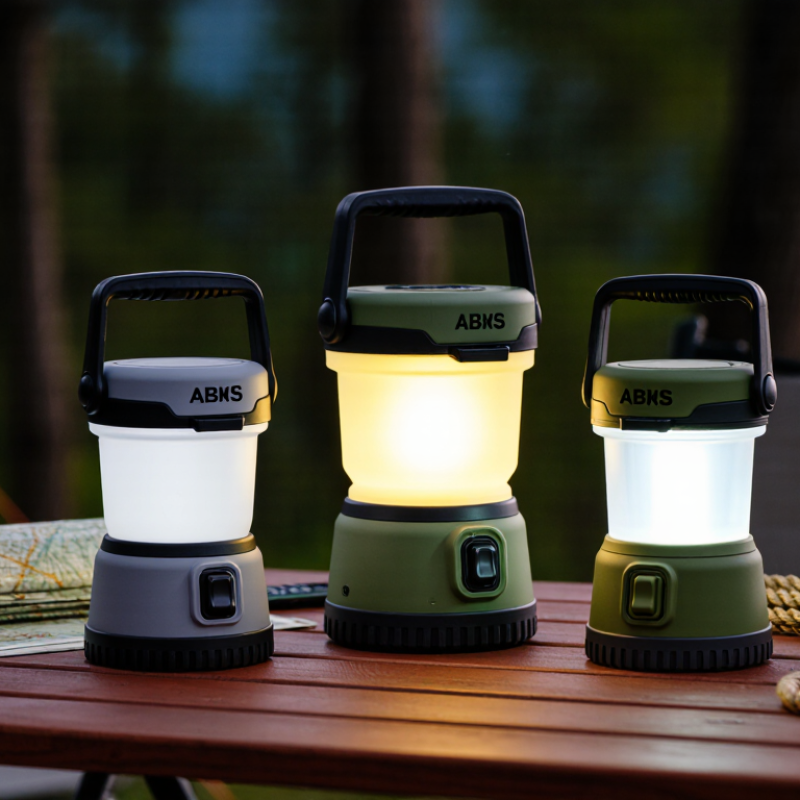
What ABS LED Camping Lights Are and How They Work
ABS LED camping lights use a tough plastic shell and light-emitting diodes to provide portable illumination. ABS, or acrylonitrile butadiene styrene, is commonly used because it is lightweight and resists everyday knocks. It can still crack under a hard impact, so “tough” does not mean unbreakable.
Inside the housing, a battery sends power through a small control circuit to the LEDs. The circuit regulates current, while a switch may select steady light or a flashing mode. LEDs produce light efficiently and generally waste less energy as heat than older bulbs. That matters outdoors. Battery type and capacity affect runtime, and cold nights can reduce battery performance. A dimming setting may stretch use, but advertised runtimes depend on test conditions.
The lens spreads the light across a tent floor, trail marker, or cooking area. Beam shape matters: a broad, even glow helps with nearby tasks, while a focused beam reaches farther. Check that the battery cover closes firmly and that any stated water-resistance rating suits your conditions. Seals can wear, and dirt around a cover may prevent a snug fit. Small details, but easy to overlook. For dependable use, inspect the light before a trip and carry spare batteries when practical.
Key Features That Shape Outdoor Lighting Performance
Outdoor lighting performance depends on more than brightness. A useful camping light spreads a steady beam across a tent entrance, cooking area, or map without creating harsh glare. Adjustable brightness helps conserve battery power during long evenings. A low setting is often enough for finding gear, while a brighter mode can illuminate a shared table. Too much light can feel uncomfortable in a small tent.
The LED’s color tone also matters. Neutral or warm light can make food and equipment easier to see without feeling overly sharp after dark. Check whether the controls are easy to find by touch; tiny buttons can be frustrating with cold hands. Simple controls help. ABS housing can resist everyday knocks, but it does not make a light indestructible. Look for clear water-resistance details, and keep the light away from deep water unless its rating allows it.
Battery capacity, charging options, and runtime claims deserve a close look. Actual runtime varies with brightness, temperature, and battery age, so treat advertised figures as a guide rather than a guarantee. A hanging hook or stable base can make a real difference when space is limited. I’ve found that a light that sits securely often proves more useful than one with extra modes nobody remembers how to operate.
Common ABS LED Camping Light Designs and Uses
ABS LED camping lights commonly come as lanterns, hand torches, or compact headlamps. Each design suits a different task. A lantern spreads light across a picnic table or inside a tent, making it easier to find cookware and clothing. Diffused light also feels less harsh than a narrow beam. A hand torch helps check a trail marker or locate a dropped tent peg. Headlamps keep both hands free for pitching a shelter or preparing a meal. Useful, but not identical.
The ABS housing is light and practical, though it does not make every lamp waterproof or impact-proof. Check the stated water-resistance rating before using a light in rain, and keep its charging port closed as directed. A hanging hook or stable base can prevent a lantern from tipping on uneven ground. Low-brightness settings often last longer, while a flashing mode may help with visibility in a group. Small controls can be awkward with gloves. That detail matters. For longer trips, compare battery capacity, charging method, and replacement options rather than relying on brightness claims alone. A warm, steady beam is often more comfortable around camp than maximum output.
How to Compare Brightness, Runtime, and Durability
Brightness figures are useful, but they do not tell the whole story. Check the stated lumen output and whether the light offers several settings. A wide, soft beam can illuminate a tent and nearby gear; a focused beam suits a trail or distant marker. Try comparing models at the same setting, not just their maximum output. Maximum brightness often drains the battery quickly. Too bright for reading.
Runtime claims need context. Look for hours listed at low, medium, and high settings, then match them to your plans. A long weekend may call for a modest setting that lasts overnight, rather than a powerful burst that fades early. Cold weather can reduce battery performance, so allow some margin. If the specifications omit the test setting, treat the runtime as an estimate, not a promise.
ABS housing can help keep a camping light light and impact-resistant, but the material alone does not prove durability. Check for a stated water-resistance rating, protected switches, and a sturdy handle or hanging hook. Consider where the light will sit: damp ground, a crowded pack, or a swinging tent loop. Drop-test details are useful when available. Small controls can still be awkward with gloves, and that detail is easy to overlook.
How to Choose and Use a Camping Light Safely
Top ABS LED Camping Lights for Outdoor Use
When choosing an ABS LED camping light, check its brightness, battery type, and water-resistance rating. ABS plastic can handle everyday bumps, but it is not fireproof or indestructible. Look for clear controls you can operate with cold hands, and choose a brightness suited to your tent or campsite. The brightest setting is not always the most useful. A softer beam can preserve night vision and reduce glare for nearby campers.
Use the light on a stable, dry surface, away from sleeping bags and loose tent fabric. Before each trip, inspect the casing, battery compartment, and charging cable for cracks or damage. Follow the maker’s charging instructions, and keep rechargeable lights away from puddles. If the light feels unusually hot or flickers, switch it off and check it before using it again. Small details matter. It is easy to overlook a loose battery cover when packing in a hurry.
Tips: Test the light at home before leaving. Pack spare batteries if needed, and carry a small backup torch. At camp, aim the beam toward the ground rather than into someone’s eyes. Wipe dirt from the lens with a soft, dry cloth.
Top ABS LED Camping Lights for Outdoor Use — How to Choose and Use a Camping Light Safely
How to read this chart: Runtime is calculated as usable battery energy (10 Wh) divided by lamp power. For example, a 5 W setting gives an ideal estimate of 2 hours. These are calculated examples, not measured results for specific lights. Actual runtime can be shorter because of conversion losses, temperature, battery age, and the light’s electronics.
Safe use: Check the light’s rated power, battery instructions, and water-resistance rating before use. Keep the light and battery away from flammable materials, and use or charge them only as directed by the manufacturer.