7 Best Spray Can Machinery Suppliers for Global Buyers
Choosing reliable Spray Can Machinery is becoming a strategic decision, not merely a purchasing task. Global aerosol packaging continues to expand, supported by demand for personal care, household, healthcare, and industrial products. Reports from Smithers, Grand View Research, and PMMI highlight stronger automation, lower material waste, and improved production traceability as major industry priorities.
The details matter. A modern line must handle empty cans, filling, crimping, leak testing, labeling, and final inspection with stable timing. Even a small alignment error can create damaged valves, rejected batches, or unnecessary downtime. That sounds obvious. It is often overlooked.
W. Edwards Deming, a widely respected manufacturing quality expert, said, “Quality comes not from inspection, but from the improvement of the production process.” His principle remains highly relevant when evaluating international machinery suppliers. A dependable manufacturer should provide measurable output data, documented testing procedures, accessible spare parts, and responsive technical support. Certification alone is not enough.
This guide reviews seven Spray Can Machinery suppliers for global buyers. It considers engineering capability, customization, automation levels, after-sales service, delivery experience, and practical operating costs. Some suppliers may offer impressive specifications but limited regional support. Others may provide excellent service while lacking advanced integration. Buyers should examine both strengths and weaknesses carefully. The perfect supplier rarely exists. A thoughtful comparison usually produces the safer investment.
What Spray Can Machinery Suppliers Provide
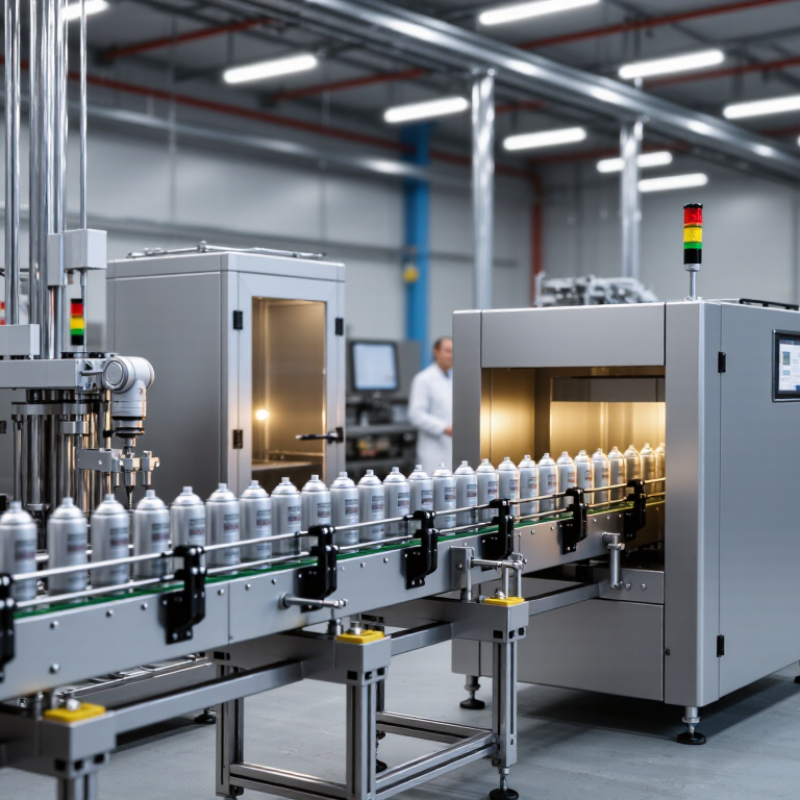
Spray can machinery suppliers provide more than individual production units. They usually offer complete equipment for can forming, surface treatment, filling, sealing, and quality inspection. A typical line may include body-making machines, internal coating systems, printers, filling valves, crimping units, and leak testers. Each machine must match the can size, material, and approved product formula.
Good suppliers also provide technical planning. They review production speed, floor space, power requirements, and operator skills before suggesting equipment. This prevents an expensive line from becoming difficult to operate. Small details matter. For example, automatic feeding can reduce handling damage, while accurate crimping helps prevent leakage. Suppliers may also provide installation, commissioning, operator training, and maintenance schedules. Clear manuals and spare-parts lists are essential for reliable operation.
Support after delivery often separates a useful supplier from a simple equipment seller. Buyers may receive remote troubleshooting, replacement components, software updates, and performance checks. Some suppliers can adapt controls for different container dimensions or future capacity increases. However, higher speed is not always better. A fast line may create more waste if inspection systems are weak or operators lack training. Buyers should request documented test results, safety features, warranty terms, and service response times. I would also examine cleaning access and changeover time, because these practical issues are easy to overlook. The machinery may look impressive, yet daily maintenance can reveal its real value.
7 Best Spray Can Machinery Suppliers for Global Buyers — What Spray Can Machinery Suppliers Provide
Typical production-capacity ranges for the main aerosol spray-can machinery modules supplied to global buyers.
The chart shows indicative output ranges in cans per minute for commonly supplied equipment, including forming, washing, decorating, necking, filling, sealing, and leak-testing systems. Actual capacity depends on can size, material, automation level, product viscosity, and line configuration.
Key Factors for Evaluating Global Machinery Suppliers
Choosing spray can machinery suppliers requires more than comparing catalog prices. PMMI’s 2024 Packaging Machinery Economic Report highlights continuing pressure from labor shortages, energy costs, and automation investment. Ask suppliers for verified output at your target can size, not impressive laboratory speed. A line rated at 180 cans per minute may slow sharply during valve placement or carton changes. Request video evidence, factory acceptance records, and three comparable customer references.
Safety and compliance deserve equal attention. ISO 12100 risk assessment should cover guarding, pressure systems, electrical controls, and emergency stops. For hazardous-area applications, confirm suitable certification for the installation country. Do not accept vague phrases such as “international standard.” Ask for certificates, test procedures, and renewal dates. Smithers’ aerosol industry analysis continues to identify packaging efficiency and production reliability as major market priorities through 2028. That makes stable filling accuracy more valuable than a low purchase price.
Service quality often separates dependable suppliers from attractive sellers. Measure spare-parts response time, remote diagnostic capability, technician availability, and training hours. Calculate total cost using energy consumption, changeover labor, rejected cans, and planned downtime. Small details matter. Can diameter guides should adjust smoothly, without improvised tools. I would also inspect the supplier’s documentation discipline. A polished demonstration can hide weak after-sales support. My own evaluation would include a deliberately difficult trial run, because real factories rarely behave perfectly. A spreadsheet can still lie.
Seven Leading Spray Can Machinery Suppliers Worldwide
Seven leading spray can machinery suppliers worldwide serve different production realities. Their strengths often reflect local engineering traditions and factory needs. European suppliers usually emphasize precision forming, energy control, and long service life. East Asian manufacturers often provide complete, scalable lines with competitive delivery schedules. North American suppliers commonly focus on automation, safety integration, and flexible changeovers.
Other strong suppliers operate from Central Europe, South Asia, and the Middle East. They may specialize in can body production, necking, flanging, sealing, or inspection systems. Experienced buyers should examine line speed under real material conditions. A brochure may show impressive output. Factory trials reveal more. Ask for test records, spare-part policies, training plans, and verified customer references. Shorter distances do not always mean better support.
A reliable supplier should explain tolerances clearly. It should also document electrical standards, guarding, noise levels, and maintenance access. Useful equipment may include automatic feeding, body forming, leak testing, vision inspection, and palletizing. Small details matter. A poorly placed sensor can slow an entire line. I have seen projects underestimate operator training and commissioning time. That mistake deserves attention. Buyers should compare total ownership costs, not only the purchase price. A lower quotation can hide tooling changes, software upgrades, or delayed spare parts. The best global supplier is therefore not simply the fastest seller. It is the partner that proves performance, communicates limitations, and adapts equipment to lawful, documented packaging applications.
7 Best Spray Can Machinery Suppliers for Global Buyers - Seven Leading Spray Can Machinery Suppliers Worldwide
Note: Supplier names and brand information are intentionally omitted. Capacity figures are representative ranges commonly specified for industrial aerosol-can production equipment and should be confirmed against the final technical quotation. | Supplier Profile | Primary Machinery Coverage | Can Diameter | Can Height | Typical Output | Automation Focus | Best Fit for Global Buyers |
| Supplier Profile 1 | Complete aerosol-can line, body forming, necking, flanging, testing and packing | Ø 35–76 mm | 70–300 mm | 80–200 cans/min | PLC control, servo drives, automatic fault alarms and line synchronization | Turnkey projects requiring coordinated upstream and downstream equipment |
| Supplier Profile 2 | Two-piece aluminum aerosol-can manufacturing and finishing equipment | Ø 35–66 mm | 80–260 mm | 100–250 cans/min | Automatic transfer systems, process monitoring and reject handling | High-volume personal-care, household and pharmaceutical packaging |
| Supplier Profile 3 | Three-piece tinplate can lines, welding, compound application and leak testing | Ø 45–99 mm | 90–350 mm | 60–180 cans/min | Automatic welding controls, seam inspection and in-line pressure testing | Tinplate aerosol packaging and flexible product-size requirements |
| Supplier Profile 4 | Can printing, coating, curing and surface-treatment machinery | Ø 45–76 mm | 80–300 mm | 100–300 cans/min | Automatic registration, ink control, curing-temperature monitoring and inspection | Decorative packaging projects where print quality and consistency are priorities |
| Supplier Profile 5 | Necking, flanging, curling, valve-cup assembly and dimensional inspection | Ø 35–76 mm | 70–280 mm | 80–220 cans/min | Recipe management, quick-change tooling and automatic dimensional checks | Existing factories upgrading selected stations rather than replacing a full line |
| Supplier Profile 6 | Leak detection, pressure testing, vision inspection and end-of-line packaging | Ø 45–76 mm | 80–320 mm | 80–200 cans/min | Non-contact inspection, automatic rejection, data logging and traceability | Safety-sensitive applications and plants emphasizing quality assurance |
| Supplier Profile 7 | Compact modular lines, pilot equipment, tooling and customized production cells | Ø 35–76 mm | 70–250 mm | 30–120 cans/min | Modular PLC control, manual/automatic operating modes and scalable add-on units | Small and medium manufacturers, product trials and phased capacity expansion |
How to Choose the Right Supplier for Your Production Needs
7 Best Spray Can Machinery Suppliers for Global Buyers
Choosing the right spray can machinery supplier starts with your production details, not a glossy catalog. Define can diameter, filling volume, line speed, materials, and available floor space. Ask for proven output data from machines handling similar containers. A supplier should explain changeover time, cleaning procedures, inspection points, and operator training clearly. Request a factory acceptance test using your containers and approved materials. Photos are useful. Recorded test results are better.
Tips: Compare total ownership cost, not only the purchase price. Check spare-part availability in your region, remote support hours, installation services, and warranty limits. Ask for references from factories with comparable volumes. Review electrical specifications before shipment. Small mismatches can delay commissioning. A detailed service agreement protects both sides.
Reliable suppliers also provide drawings, manuals, maintenance schedules, and safety documentation. Their engineers should discuss pressure control, filling accuracy, leak detection, and emergency stopping systems without vague promises. Visit a working installation if possible. Watch operators during changeover. Notice noise, access, housekeeping, and rejected cans. I have learned that a fast demonstration can hide difficult maintenance. Suppliers may also underestimate local training needs. Leave room for that risk. Choose a partner that records problems, answers directly, and improves the design after testing.