
425 Sovereign Ct. St. Louis, MO 63011
SEARCH OUR WEBSITE

2026 Top Foil Stamping Machine Types for Global Buyers

Choosing the right Foil Stamping Machine in 2026 requires more than comparing prices or production speeds. Global buyers must examine application, substrate, foil compatibility, tooling accuracy, service support, and total operating cost. A machine producing sharp gold lettering on coated cartons may perform differently on textured paper, labels, plastics, or leather.

Printing educator Frank J. Romano offers a useful principle: “Printing technology must serve the customer, not replace judgment.” This idea remains relevant for foil stamping buyers. Automation can improve registration, reduce setup time, and control pressure more consistently. However, experienced operators still matter. Temperature, dwell time, foil tension, and die condition can change the final result within minutes.

This guide introduces the main Foil Stamping Machine types expected to attract global attention in 2026. It covers flatbed, rotary, automatic, semi-automatic, hot foil, and digital foil systems. Each category has a different balance of speed, flexibility, investment, and maintenance needs. Some machines suit short custom runs. Others are built for continuous packaging production.

Details matter.

A buyer should inspect sample impressions under real production conditions. Ask for measurable data, not attractive showroom claims. Check waste levels, changeover time, energy use, and spare-parts availability. Regional electrical standards and approved safety requirements also need attention.

This overview is not perfect. Machine performance can vary between suppliers, materials, and operators. That uncertainty deserves honest evaluation. The best choice is rarely the most powerful machine. It is the system that delivers repeatable quality, manageable costs, and dependable support for the buyer’s actual market.
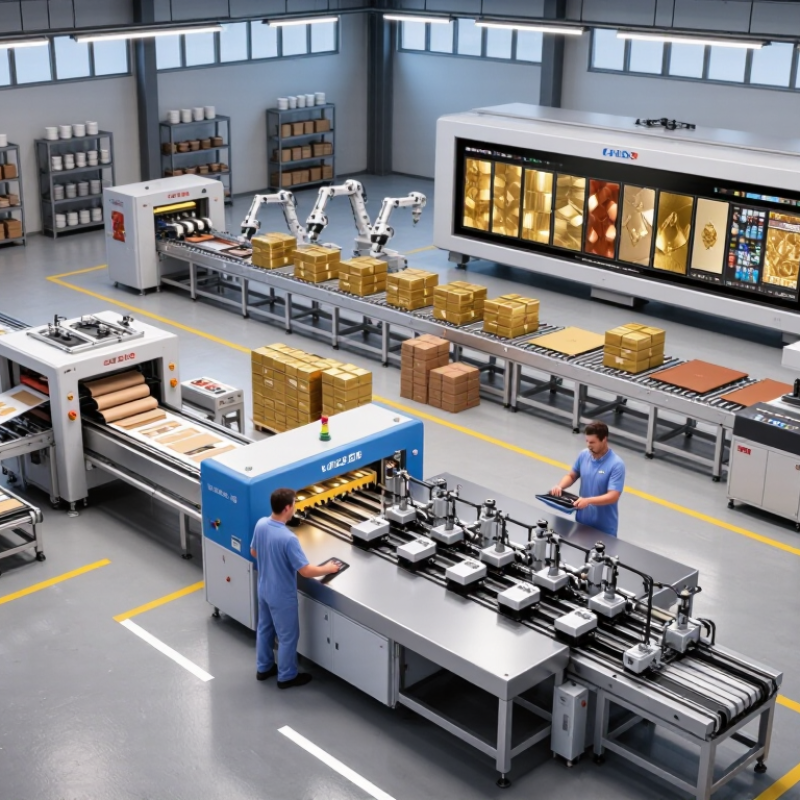
2026 Top Foil Stamping Machine Types for Global Buyers

Define Foil Stamping Machines by Heat, Pressure, and Transfer Method

2026 Top Foil Stamping Machine Types for Global Buyers

Foil stamping machines are best defined by heat, pressure, and transfer method. Hot foil stamping uses a heated die, pressure, and metallic foil. The die presses foil onto paper, board, plastic, or synthetic labels. Temperatures often range from 90°C to 150°C, depending on substrate and foil structure. Pressure, however, must match the material. Excessive force can crush fine lettering.

Cold foil systems use adhesive instead of a heated die. They transfer foil through a printing unit and curing process. This method supports continuous production and detailed graphics. It may suit flexible packaging and high-volume label work. Smithers reported that global digital packaging print value could rise from about $22.0 billion in 2023 to $36.9 billion by 2028. That growth increases demand for precise, short-run embellishment equipment.

Transfer methods also separate machines into sheet-fed, roll-fed, and hybrid platforms. Sheet-fed machines offer accurate positioning for cartons and premium covers. Roll-fed systems support faster label and flexible-film production. Hybrid machines combine printing, adhesive coating, and foiling in one line. They save handling time, but setup can become complicated. A neat classification still breaks down. Buyers should test foil release, die depth, registration, and waste rates on their actual materials before ordering.


Compare Flatbed Presses at 1,000–6,000 Sheets per Hour

2026 Top Foil Stamping Machine Types for Global Buyers

Flatbed foil stamping presses commonly cover 1,000 to 6,000 sheets per hour. Their real output depends on sheet size, foil coverage, and setup time. A 1,000-sheet-per-hour press suits short runs and frequent artwork changes. Operators gain better control over pressure, temperature, and registration. It may reduce waste when jobs vary widely.

Mid-range presses around 3,000 sheets per hour balance speed and flexibility. They fit commercial packaging, invitations, labels, and premium paper products. At this level, automatic feeding becomes increasingly valuable. Check whether the rated speed includes feeding, stamping, and delivery. Some specifications measure only the machine’s peak cycle.

Machines rated near 6,000 sheets per hour require stable materials and experienced operators. Thin stock can curl, while heavily coated sheets may need careful temperature adjustment. Ask suppliers for test results using your actual paper and foil. Measure usable output, setup minutes, foil waste, and registration accuracy.

Test before buying. A practical comparison should also include platen size, maximum sheet dimensions, safety systems, maintenance access, and operator training.

I would not treat the highest number as the best choice. That assumption fails when changeovers consume the working day.

Assess Rotary Systems Reaching 4,000–12,000 Impressions per Hour

2026 Top Foil Stamping Machine Types for Global Buyers

Rotary foil stamping systems are drawing attention from global packaging and print buyers. Many models target 4,000–12,000 impressions per hour. That range sounds impressive, but production reality depends on format, foil coverage, substrate, and setup time. A narrow label may run faster than a large carton. Operators should inspect sample output, not only brochure figures.

During factory evaluations, check registration stability at both low and high speeds. Watch the foil unwind, web tension, heating response, and waste during acceleration. A reliable machine should maintain sharp metallic edges without scorching paper or weakening thin films. Quick-change tooling can reduce downtime between jobs. Still, faster changeovers may require skilled operators and careful calibration.

Energy use also deserves attention. Rotary systems with precise temperature control can reduce unnecessary heating during long runs. Ask for verified data based on comparable materials and finished sizes. Some suppliers quote maximum speed under ideal conditions, which may not match daily production. That distinction is easy to miss. Buyers should request a live test using their own artwork, foil, and substrate. Even then, one test cannot predict every seasonal or maintenance challenge. Conservative capacity planning may protect delivery schedules better than selecting the highest advertised speed.

Match Foil Types with 90–160°C Operating Temperature Ranges

Choosing the right foil stamping machine in 2026 starts with temperature control. Most applications fall between 90°C and 160°C. The correct setting depends on foil structure, substrate, pressure, and dwell time.

Pigment foils often perform well from 90°C to 115°C on coated paper and labels.

Metallic foils usually need 105°C to 135°C for clean transfer and stronger shine.

Holographic and security-effect foils may require 130°C to 160°C, especially on textured surfaces.

Excessive heat can blur fine patterns or weaken adhesive performance. Too little heat leaves gaps, dull areas, or incomplete coverage. I have found that a stable temperature matters more than a high temperature. That point is easy to overlook.

Tips: Test a small strip before production. Adjust temperature in 5°C steps. Check pressure and stamping speed together. Keep the foil roll dry and free from dust. A simple inspection under angled light can reveal uneven transfer. Record the result. Then repeat it.

Different materials may challenge these ranges. Recycled paper, synthetic films, and thick cartons absorb heat differently. A setting that works today may fail after a substrate change. This is where practical judgment matters. Machine displays are useful, but they are not absolute proof. Careful operators still verify adhesion, edge sharpness, and surface appearance after cooling. The first trial may be imperfect. That is normal, and it deserves review.

Evaluate Global-Buyer Standards: CE, UL, Voltage, and Total Cost of Ownership

2026 Top Foil Stamping Machine Types for Global Buyers

Global buyers should evaluate compliance before comparing foil stamping machine types. Flatbed machines suit cartons and short runs, while roll-to-roll systems support continuous labels and flexible materials. CE marking requires the correct technical documentation and applicable conformity assessment. It is not simply a decorative certificate. UL requirements may involve electrical construction, wiring, controls, and documented safety testing.

Voltage needs equal attention. A machine designed for 220–240 V may fail on a 110–120 V line without a suitable configuration. Check frequency, phase, plug design, power tolerance, and local disconnect requirements. Ask for wiring diagrams and measured power data. I have seen purchasing teams confirm voltage but overlook frequency. That mistake can delay installation.

Total cost of ownership extends beyond the invoice. Include dies, foil waste, heating elements, compressors, software updates, operator training, service travel, and expected downtime. A machine with fast setup may reduce labor during frequent job changes. However, its specialized parts could cost more later. Request a five-year estimate using local electricity prices and realistic production hours. Leave room for uncertainty. Forecasts are useful, but they are never perfect. A written spare-parts lead time, service response target, and acceptance test make supplier claims easier to verify.

2026 Top Foil Stamping Machine Types for Global Buyers – Evaluate Global-Buyer Standards: CE, UL, Voltage, and Total Cost of Ownership

Comparative reference for commercial and industrial buyers. Values are typical planning ranges for new equipment and should be confirmed against the supplier’s technical specification, target material, tooling, and installation conditions.

Machine Type Typical Applications Suitable Material / Format Typical Working Speed Typical Foil Width or Feed Area Typical Installed Electrical Load Common Supply Voltage Options CE and UL Evaluation Indicative Purchase Price
(USD)
Estimated 5-Year TCO
(USD)
Global-Buyer Assessment
Flatbed Hot Foil Stamping Machine Premium packaging, greeting cards, labels, book covers, invitations, and general commercial print finishing. Paper, coated board, folding cartons, leather, synthetic leather, and selected plastic sheets. Sheet-fed operation. Approximately 1,000–3,500 impressions/hour, depending on format, foil coverage, substrate, and operator skill. Typical sheet formats from approximately 320 × 450 mm to 750 × 1,060 mm; foil width commonly 250–700 mm. Approximately 5–15 kW, including heating, drive, pneumatic systems, and auxiliary equipment. Commonly 220–240 V, 50/60 Hz, single-phase for smaller units; 380–415 V, 50/60 Hz, three-phase for larger units. CE: normally required for sale or use in the EEA.
UL: generally requested by North American buyers or local authorities; confirm the exact certification scope.
$18,000–$75,000 $35,000–$125,000 Versatile entry and mid-range option. Good balance between tooling flexibility, footprint, and operating cost.
Automatic Platen Foil Stamping Machine High-volume cartons, paperboard packaging, book covers, hang tags, and repeated production jobs. Pre-cut sheets and board; optimized for stable substrates and repeatable registration. Approximately 2,000–6,000 impressions/hour, subject to sheet size, foil design, and automation level. Typical maximum sheet sizes from approximately 450 × 600 mm to 760 × 1,060 mm; multiple foil rolls may be installed. Approximately 8–25 kW, with additional compressed-air demand on many configurations. 380–415 V, 50/60 Hz, three-phase is common; 220–240 V versions may be available for smaller configurations. CE: requires conformity assessment for applicable machinery and electrical safety requirements.
UL: may require listed or recognized electrical components, approved control panels, or field evaluation in North America.
$45,000–$150,000 $85,000–$260,000 Strong choice for repeatable packaging production where labor reduction and automatic feeding justify the higher capital cost.
Roll-to-Roll Foil Stamping Machine Labels, flexible packaging, narrow-web decoration, continuous films, tapes, and high-volume web materials. Paper web, coated films, laminates, synthetic labels, and other compatible roll materials. Approximately 20–100 m/min; practical output depends on foil transfer temperature, registration, web tension, and design coverage. Typical web width of 200–650 mm; foil roll diameter and unwind capacity vary by configuration. Approximately 12–40 kW, including heating zones, web handling, drives, and air systems. 380–415 V, 50/60 Hz, three-phase is typical; control circuits are commonly supplied through lower-voltage internal systems. CE: machinery, electrical, EMC, and safety-guarding requirements should be documented.
UL: buyers should verify the control-panel and component requirements of the installation location.
$60,000–$220,000 $125,000–$380,000 Best for continuous production and low unit cost at volume; requires stronger process control and operator capability.
Rotary Hot Foil Stamping Machine High-speed labels, narrow-web packaging, decorative graphics, and inline or near-inline converting processes. Continuous web substrates, including paper, film, label stock, and selected laminated materials. Approximately 30–150 m/min, depending on machine architecture, print registration, foil type, and substrate. Typical web width of 250–650 mm; rotary tooling circumference and repeat length must match the job specification. Approximately 20–60 kW, with higher demand possible for integrated converting or multiple heating zones. 380–415 V, 50/60 Hz, three-phase is standard for industrial installations. CE: conformity documentation should cover the complete machine line and integrated safety functions.
UL: confirm whether the buyer needs component recognition, panel listing, or complete equipment evaluation.
$120,000–$450,000 $250,000–$750,000 High productivity and consistent registration, but higher tooling, maintenance, commissioning, and training requirements.
Digital Foil Transfer / Toner-Foil System Short-run personalization, variable data, proofing, premium invitations, labels, and on-demand packaging decoration. Digitally printed sheets or compatible roll media with a suitable toner or receptive coating. Approximately 5–30 m/min or 300–1,500 sheets/hour, depending on sheet size, coverage, and system design. Typical sheet formats up to approximately 330 × 700 mm or web widths of approximately 300–500 mm. Approximately 3–15 kW, generally lower than conventional high-pressure stamping equipment. 220–240 V, 50/60 Hz, single-phase is common; some production systems use 380–415 V, three-phase. CE: verify the complete electrical and mechanical conformity package.
UL: verify regional electrical approval, especially for integrated digital-printing modules and power supplies.
$25,000–$140,000 $55,000–$240,000 Low tooling cost and excellent variable-data capability; consumable cost per decorated area can be higher.
Holographic and Security Foil Stamping System Anti-counterfeit packaging, authentication labels, secure documents, tax marks, brand protection, and high-security graphics. Paper, board, films, labels, and coated substrates requiring controlled registration or specialized security effects. Approximately 1,000–5,000 impressions/hour for sheet-fed systems; web systems may operate at higher linear speeds. Typical sheet formats from approximately 320 × 450 mm to 750 × 1,060 mm, or web widths of approximately 200–650 mm. Approximately 10–45 kW, depending on optical registration, embossing, heating, inspection, and security modules. 220–240 V, 50/60 Hz for smaller systems; 380–415 V, 50/60 Hz, three-phase for production configurations. CE: assess the full machine, guarding, controls, EMC, and safety functions.
UL: confirm local approval requirements and any special requirements for inspection, data, or integrated control equipment.
$80,000–$350,000 $170,000–$600,000 Suitable where authentication and traceability are more important than the lowest initial investment.
Buyer notes and TCO assumptions
  • CE: CE marking is a manufacturer’s declaration that the product conforms to applicable European Union requirements. It is not a universal quality label and does not replace a machine-specific risk assessment, technical file, declaration of conformity, and operating instructions.
  • UL: UL requirements vary by country, authority having jurisdiction, and installation site. Buyers should specify the required approval for the complete machine, electrical panel, components, and field installation before purchase.
  • Voltage: The listed options are common industrial configurations, not universal defaults. Confirm nominal voltage, frequency, phase, current, plug or terminal arrangement, grounding, transformer needs, and power-quality requirements before shipment.
  • Five-year TCO: Estimated TCO includes purchase price, freight and commissioning allowance, routine maintenance, utilities, tooling or consumables, operator training, and typical replacement parts. It excludes financing, taxes, building renovation, production downtime, and major accident or damage events.
  • Quote comparison: Request the same sample material, foil type, coverage percentage, speed target, registration tolerance, warranty terms, spare-parts list, installation scope, and acceptance-test criteria from every supplier.
Scroll to Top