2026 Top 304 Stainless Plate Manufacturers and Prices
In 2026, buyers still need more than a low quotation when sourcing 304 Stainless Plate. A competitive price can hide thinner tolerances, uncertain chemistry, or expensive inland freight. This guide examines leading manufacturers, production capabilities, and practical price ranges across major supply markets.
Reliable evaluation begins with evidence. Check ASTM A240 or equivalent compliance, heat numbers, mill test certificates, and traceability records. Ask whether plates are hot rolled, cold rolled, or polished. Confirm thickness tolerance, width, length, edge condition, and surface finish before comparing offers. A plate marked 2B may suit fabrication, while No. 4 finishing may better fit visible equipment panels. Small details matter.
Manufacturers are assessed through production experience, export history, quality systems, and after-sales responses. A factory’s photographs are not enough. Request recent inspection reports, sample measurements, and packaging details. Prices may be quoted per metric ton, kilogram, or plate. Convert every offer to the same basis. Include cutting, certification, taxes, insurance, and delivery. Prices change with nickel markets, energy costs, order volume, and destination. Therefore, figures in this article are reference points, not promises. Some comparisons remain imperfect because regional quotations use different conditions. That limitation deserves attention. The strongest supplier is not always the cheapest one. It is the company that delivers consistent chemistry, usable flatness, clear documents, and predictable timing. This overview helps engineers, distributors, and project buyers create a more defensible shortlist for 2026.
What Is 304 Stainless Plate and Why Is It Widely Used?
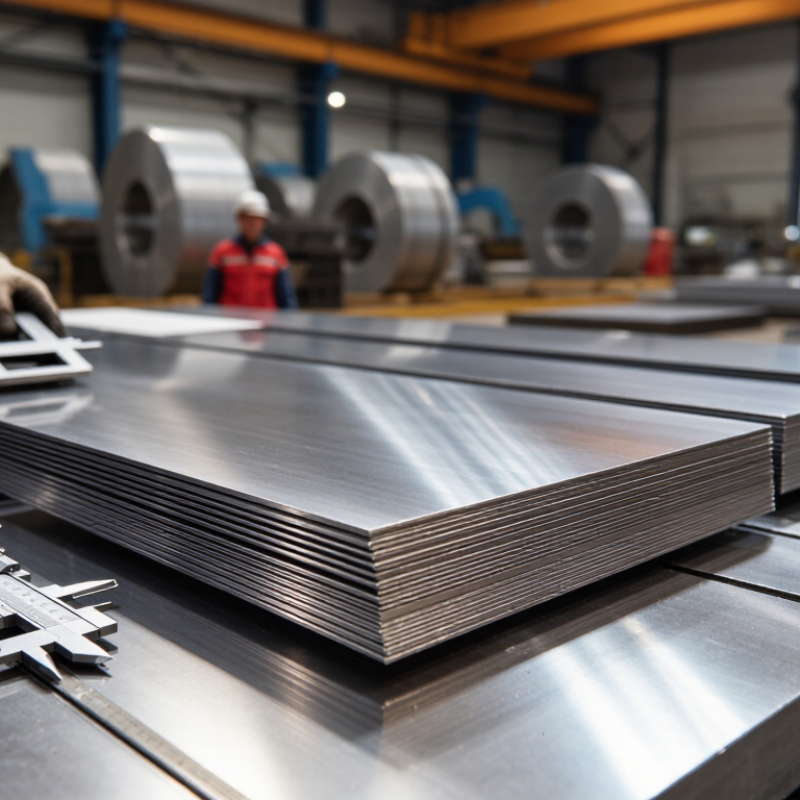
304 stainless plate is an austenitic stainless steel known for balanced corrosion resistance, strength, and formability. Under ASTM A240, it typically contains about 18–20% chromium and 8–10.5% nickel. Chromium forms a thin passive film, while nickel supports toughness and shaping during fabrication.
Its wide use is also linked to practical economics. The World Stainless Association reported global crude stainless steel production of approximately 58.4 million metric tonnes in 2023. Industry consumption studies frequently identify 300-series grades as the dominant stainless category, with 304 serving many general-purpose applications. It appears in food-processing tables, chemical tanks, architectural panels, and kitchen equipment. The surface feels smooth and cool, yet scratches can still collect contaminants. That detail is easy to overlook.
Tips: Check the mill certificate, plate thickness, surface finish, and heat number before purchasing. Do not assume every “304” plate performs equally. Welding, chloride exposure, and poor cleaning may reduce service life. For coastal or salt-heavy environments, 316 may deserve comparison. Prices also change with nickel markets, energy costs, thickness, and cutting requirements. A lower quote can hide more finishing work. Industry reports provide useful direction, but site conditions should decide the final grade.
2026 Top 304 Stainless Plate Manufacturers and Prices
Theoretical Weight of 304 Stainless Plate by Thickness
304 stainless plate is an austenitic stainless steel widely used because it offers strong corrosion resistance, good formability, weldability, and durability. The chart shows the theoretical mass per square meter for common plate thicknesses, calculated using the standard density of approximately 7.93 g/cm³. Actual delivered weight can vary slightly because of manufacturing tolerances, surface finish, and dimensional standards.
Market prices depend on thickness, plate dimensions, finish, certification, order quantity, freight, and regional supply conditions. This chart contains material-based data only and does not represent any specific manufacturer or brand.
Key Specifications and Quality Standards for 304 Stainless Plate
2026 Top 304 Stainless Plate Manufacturers and Prices
Key Specifications and Quality Standards for 304 Stainless Plate
304 stainless plate is commonly selected for food equipment, tanks, architectural panels, and general fabrication. Its chromium content usually ranges from 18% to 20%, while nickel ranges from 8% to 10.5%. Carbon should remain at or below 0.07% under ASTM A240/A240M requirements. The material is normally supplied in an annealed condition. Typical minimum values include 205 MPa yield strength, 515 MPa tensile strength, and 40% elongation.
Thickness and surface finish directly affect price. Common finishes include No. 1, 2B, and bright annealed surfaces, although availability varies by mill and thickness. Buyers should request dimensional tolerances, flatness data, edge condition, and heat-treatment details. A proper mill test certificate should identify the heat number, chemical analysis, mechanical results, and applicable standard. Traceability matters.
Ask for PMI testing when chemical verification is critical. Ultrasonic testing may be useful for heavy plate or pressure-related fabrication, but it should be specified before production. Visual inspection can reveal scratches, scale, dents, or uneven finishing. It cannot prove internal quality. A checklist helps, but it can still miss problems. I have seen apparently clean plates fail expectations because documentation was incomplete. Corrosion resistance is strong, not unlimited, especially near chlorides, weld discoloration, or stagnant water. Prices should be compared with testing, tolerances, finish, packaging, and delivery included.
Leading 304 Stainless Plate Manufacturers in 2026
Leading 304 Stainless Plate Manufacturers in 2026
Leading 304 stainless plate manufacturers in 2026 compete through stable chemistry, accurate thickness, and dependable delivery. Experienced producers control carbon levels, rolling temperature, and heat treatment closely. These details affect corrosion resistance, welding performance, and plate flatness. Strong manufacturers provide mill test certificates, heat numbers, and traceable inspection records. Buyers should request ultrasonic testing when plates will support pressure, structural, or heavily machined components. Small details matter.
Prices in 2026 depend on thickness, width, finish, order volume, and nickel market movement. Standard hot-rolled plates may receive lower quotations than polished or cut-to-size material. A realistic comparison includes packaging, inland transport, testing, and delivery time. Some suppliers quote attractively, then add processing charges later. That practice weakens trust. Ask for a complete written quotation.
Reliable manufacturers also explain production limits instead of promising everything. They should confirm available gauges, tolerances, surface conditions, and minimum order quantities before accepting payment. In practical purchasing, a 12-millimeter plate with a rough industrial finish differs greatly from a precision-cut plate with a polished surface. Inspect the edges, surface marks, dimensions, and documentation when goods arrive. No ranking stays perfect. Market data can change quickly, and even careful suppliers may miss a delivery window. A second quotation and an independent inspection often prevent expensive mistakes.
2026 Price Factors and Typical Cost Ranges
In 2026, 304 stainless plate prices will depend on nickel, chromium, energy, freight, and mill utilization. Nickel remains especially important because 304 stainless steel typically contains about 8% nickel. The World Bank Commodity Markets Outlook identifies nickel as a major cost-sensitive industrial metal. Price movements can reach buyers quickly. A practical purchasing range is about US$2,800–5,500 per metric ton for standard mill-finish plate, before taxes, inland freight, and processing. Thicker plate, polished surfaces, and small orders may cost considerably more.
Industry data also supports a cautious view. The International Stainless Steel Forum reports global stainless crude-steel production in the tens of millions of tonnes annually, but regional output and demand remain uneven. Energy-intensive melting and rolling add pressure when electricity or gas prices rise. Freight rates, currency changes, and import duties can shift a quotation within weeks. These ranges are indicative, not guaranteed. Real quotations vary by thickness, width, tolerance, certification, and delivery location. A small error in estimating fabrication waste can quietly increase the final cost.
Tips: Request a mill test certificate and confirm whether the quote includes cutting, surface treatment, packing, and delivery. Compare at least three offers using the same specifications. A lower price may hide longer lead times or higher scrap. I have found that buyers often focus on price per ton, while total usable cost matters more. Recheck the estimate before approval.
2026 Top 304 Stainless Plate Manufacturers and Prices - 2026 Price Factors and Typical Cost Ranges
Indicative 2026 market ranges for commercially available 304 stainless steel plate. Prices are shown in USD per metric ton and are intended for budgeting, not as firm quotations.
Key 2026 Price Factors for 304 Stainless Plate
Technical and pricing note: 304 stainless steel plate is commonly specified under ASTM A240 or ASME SA-240, with EN 10088-2 and JIS G4304 also widely used. Typical minimum mechanical requirements for annealed 304 under ASTM A240 include a tensile strength of at least 515 MPa and a yield strength of at least 205 MPa, subject to the applicable specification and product form. The price ranges above are indicative planning values for 2026 and exclude taxes, import duties, local delivery, special testing and unusually tight tolerances.
How to Select a Reliable 304 Stainless Plate Supplier
Selecting a reliable 304 stainless plate supplier requires more than comparing the lowest quotation. The International Stainless Steel Forum reported global stainless crude steel production of about 58.4 million tonnes in 2023, showing a large and competitive supply base. However, production volume does not prove consistent plate quality. Ask for heat numbers, mill test certificates, chemical composition, tensile results, and thickness tolerances for every shipment.
Check whether the supplier follows recognized standards, such as ASTM A240, and whether its quality system is independently certified to ISO 9001. Confirm surface finish, flatness, edge condition, and cutting accuracy before ordering. A professional supplier should explain whether the plate is 2B, BA, No. 1, or another finish. Request a small trial order when the application involves pressure, food equipment, or corrosive environments.
Price needs context. The World Bank Commodity Markets Outlook and Pink Sheet data show that nickel prices can change sharply, affecting 304 stainless costs. A quotation should state the validity period, freight basis, packaging, taxes, and surcharge method. No checklist is perfect. Paperwork can look polished while inspection remains weak. Personally, I would verify random dimensions with calibrated tools and compare the certificate heat number against the plate marking. Delayed answers are warning signs. Clear records matter more than confident promises.