2026 Best Polypropylene Pipe Types for Global Buyers?
In 2026, global buyers will face a crowded Polypropylene Pipe market. Product names may look similar. Their performance can differ sharply. Temperature, pressure, fluid chemistry, and installation quality still decide long-term value. A pipe that suits a chilled-water loop may fail in a hot industrial process. This distinction matters.
Dr. George Wypych, a recognized polymer materials specialist, states, “Material selection must follow service conditions, not marketing labels.” His principle gives buyers a practical starting point. This guide examines PP-R, PP-RCT, and homopolymer polypropylene systems. It also compares pressure classes, reinforcement options, jointing methods, and certification needs. Those details affect procurement risk. They also influence maintenance costs.
Look closely at the fittings.
An experienced buyer checks more than wall thickness. They review resin grades, dimensional tolerances, thermal expansion, UV exposure, and documented test results. Factory audits can reveal inconsistent markings or weak quality control. Installation records matter too. A technically excellent pipe can underperform after poor fusion work. This is an uncomfortable point, but it deserves attention.
The best choice is rarely the cheapest carton. It is the system that matches the actual duty cycle. Global projects also require careful review of regional standards and supplier support. Some comparisons remain imperfect because manufacturers publish different test conditions. Buyers should question attractive claims and request independent evidence. The following outline offers a practical framework for selecting the right Polypropylene Pipe type in 2026.
What Is Polypropylene Pipe and Why Does It Matter in 2026?
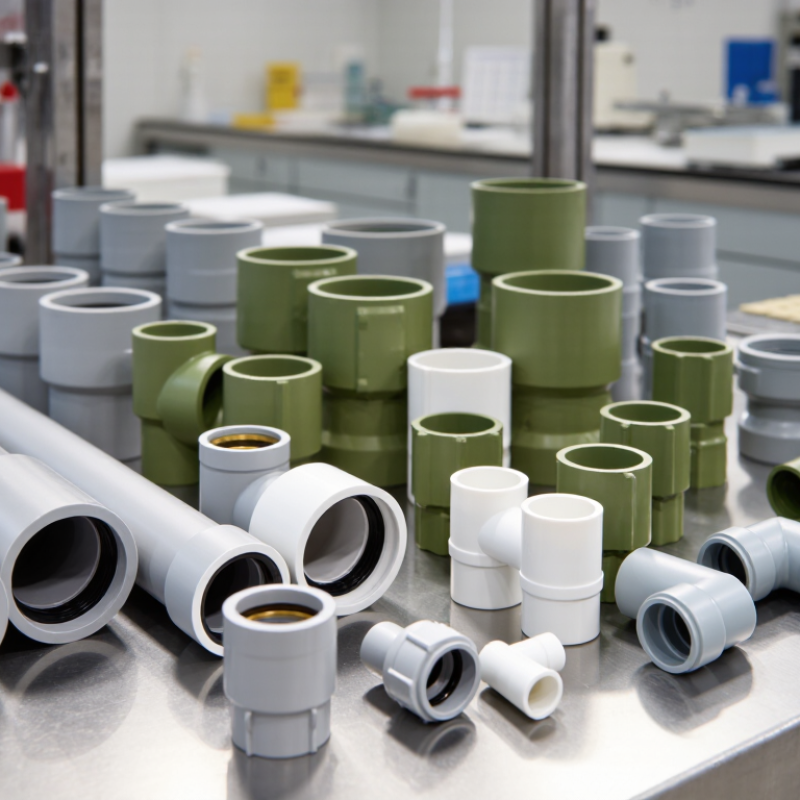
Polypropylene pipe is a thermoplastic pipe made from polypropylene resin. It carries water, chemicals, compressed air, and industrial fluids through lightweight, corrosion-resistant systems. Common forms include PP-R for hot and cold water, PP-H for chemical service, and PP-B for selected drainage applications. Each type has different temperature, pressure, and impact limits.
In 2026, polypropylene pipe matters because infrastructure buyers face aging metal networks, higher labor costs, and stricter efficiency targets. A 6-meter pipe can be moved by fewer workers than a comparable metal section. Heat fusion also creates a continuous joint without threaded fittings, reducing potential leak points. Installation still demands trained technicians, clean pipe ends, correct heating time, and careful alignment. Small mistakes matter.
Technical documents should state pressure ratings at operating temperatures, not only at room temperature. Buyers should also verify drinking-water approvals, chemical compatibility, ultraviolet resistance, and local installation codes. Recycled content may support sustainability goals, but it must not weaken performance or certification. That trade-off deserves scrutiny. In coastal storage yards, uncovered pipe can experience sunlight damage before installation. In freezing regions, water expansion can still split an otherwise durable system. A reliable purchase decision combines laboratory data, field experience, traceable quality control, and realistic site conditions. The cheapest quotation often excludes supports, fittings, testing, or skilled labor. That is where estimates become misleading.

Which Polypropylene Pipe Types Are Available for Global Buyers?
Global buyers can choose several polypropylene pipe types, but the correct choice depends on temperature, pressure, fluid, and installation conditions. PP-R is widely used for hot and cold water systems because heat-fused joints reduce leakage risks. PP-RCT offers improved pressure performance at elevated temperatures. PP-H suits industrial chemicals and process lines, while PP-B is common in drainage and underground applications. Multilayer polypropylene pipes may add stability where thermal expansion becomes difficult to control.
The 2024 Plastics—The Facts report from PlasticsEurope recorded global plastics production at about 414 million tonnes in 2023. This scale supports polypropylene’s broad availability, but availability does not guarantee consistent quality.
ISO 15874 covers polypropylene piping systems for hot and cold water installations. ISO 15494 addresses industrial thermoplastic piping, including polypropylene materials. Buyers should check the exact standard, pressure class, SDR value, welding method, and temperature rating.
Small details matter.
In field purchasing, I have seen teams compare only outside diameter and price. That is an incomplete method. A pipe rated for 20°C may lose pressure capacity at 70°C. UV exposure can also weaken poorly protected outdoor systems. Some product datasheets provide excellent laboratory figures but limited installation guidance. Buyers should request test reports, batch traceability, dimensional tolerances, and chemical-resistance data. The selection process still requires judgment, especially when local standards, climate, and installer skills differ.
How Do PP-R, PP-H, and PP-B Pipes Compare?
PP-R, PP-H, and PP-B Pipes: A Practical Comparison for Global Buyers
Choosing a polypropylene pipe begins with operating conditions, not product popularity. PP-R uses random copolymer technology, giving it strong performance in hot and cold water systems. It is commonly selected for apartment plumbing, clean water, and low-temperature heating. Its balanced flexibility also helps installers manage thermal expansion. However, poor fusion temperatures can weaken a joint.
PP-H is stiffer and often provides strong chemical resistance. It suits industrial process lines, tanks, and applications requiring dimensional stability. Its lower impact tolerance in cold environments needs careful review. PP-B contains block copolymer segments, improving toughness and impact resistance. It can perform well in drainage, underground service, and demanding temperature changes. Still, PP-B formulations differ significantly between suppliers and regions.
A reliable specification should check pressure ratings at the actual operating temperature. Review wall thickness, fluid compatibility, UV exposure, and local certification requirements. On site, clean cuts and properly heated fusion tools matter as much as resin selection. A pipe may pass laboratory testing yet fail after careless installation. Global buyers should also confirm that fittings, valves, and welding equipment use compatible standards. There is no universal winner. A technically attractive grade can become the wrong choice when climate, installer training, or maintenance access is overlooked.
2026 Best Polypropylene Pipe Types for Global Buyers? - How Do PP-R, PP-H, and PP-B Pipes Compare?
| Comparison Dimension | PP-R Random Copolymer Polypropylene | PP-H Homopolymer Polypropylene | PP-B Block Copolymer Polypropylene |
|---|---|---|---|
| Polymer Structure | Propylene chains containing randomly distributed ethylene units. | Primarily propylene units with a relatively regular molecular structure. | Typically consists of polypropylene homopolymer segments combined with ethylene–propylene copolymer segments. |
| Typical Pipe-System Role | Hot & cold waterPlumbingHeating | Industrial processChemical serviceDrainage | DrainageUnderground serviceImpact-prone areas |
| Temperature Capability | Well suited to continuous hot-water service when the pipe system is correctly rated. Common system design temperatures are around 70°C, with higher short-term exposure permitted by some standards and designs. | Good resistance to elevated temperatures, but long-term pressure performance depends strongly on grade, wall thickness, stabilization, and the applicable design standard. | Suitable for moderate-temperature service and applications requiring greater toughness. The allowable temperature and pressure must be taken from the specific product standard and grade. |
| Pressure-Rating Potential | Available in standardized pressure classes for potable water, heating, and plumbing systems. Common designations include PN 10, PN 16, and PN 20, but the rating depends on dimensions and temperature. | Can provide strong pressure performance in industrial piping, especially with appropriate wall thickness and design. It is not automatically interchangeable with PP-R pressure classes. | Often selected for lower-pressure or non-pressure systems, although pressure-rated grades are available for specific applications and standards. |
| Impact Resistance | Good for general plumbing use; performance decreases at low temperatures compared with tougher block-copolymer grades. | Generally lower impact toughness than PP-B, particularly at low temperatures, although formulation and processing can significantly change performance. | Generally the strongest low-temperature impact performance of the three categories because of its rubber-like ethylene–propylene phase. |
| Rigidity and Dimensional Stability | Balanced stiffness and toughness, making it suitable for building water systems and thermal piping. | Usually the highest stiffness and hardness of the three, with good dimensional stability in many industrial applications. | More flexible and less rigid than PP-H; this can improve impact tolerance but may require additional supports or different installation practices. |
| Thermal Expansion | Relatively high compared with metal pipe. Hot-water installations generally require expansion allowances, guides, anchors, or suitable routing. | Also has a higher coefficient of thermal expansion than metals; industrial layouts must account for thermal movement. | Similar thermoplastic expansion behavior; flexible installation and expansion control are important in temperature-changing service. |
| Chemical Resistance | Good resistance to many aqueous acids, alkalis, salts, and detergents; compatibility must be checked for concentration, temperature, and exposure time. | Very good resistance to many industrial chemicals and aggressive aqueous media, subject to grade-specific limitations. | Good resistance to many chemicals, but the copolymer structure and operating conditions should be reviewed for solvents, oxidizers, and high-temperature service. |
| Joining Method | Most commonly joined by socket fusion or butt fusion; electrofusion is also used in compatible systems. | Commonly joined by butt fusion, socket fusion, electrofusion, or mechanical methods, depending on pipe size and industrial system design. | Often joined by butt fusion, electrofusion, socket fusion, or mechanical couplings when the selected grade and system permit. |
| Hygiene and Potable-Water Suitability | Widely used for potable-water systems when the complete pipe, fitting, and installation system has the required local approval. | Can be used for potable water only when the specific formulation and complete system meet the relevant drinking-water requirements. | Potable-water use is possible for approved grades, but many PP-B products are more commonly used in drainage or utility applications. |
| Typical Installation Considerations | Allow for thermal movement, protect from prolonged ultraviolet exposure, and follow the manufacturer’s fusion temperature and cooling procedures. | Use chemical-service compatibility data, control welding conditions, and provide adequate supports because industrial systems may carry heavier loads. | Account for flexibility, low-temperature installation conditions, support spacing, and possible deformation under sustained loads. |
| Main Advantages | Balanced hot-water performance, reliable fusion joining, smooth internal surface, low corrosion risk, and broad use in building services. | High stiffness, good hardness, strong chemical resistance, and suitability for demanding industrial piping designs. | Excellent toughness, better low-temperature impact resistance, and good tolerance of handling or ground-movement conditions. |
| Main Limitations | Thermal expansion, sensitivity to ultraviolet exposure, and reduced impact resistance at low temperatures compared with PP-B. | Lower impact toughness than PP-B, possible brittleness in cold conditions, and less universal suitability for hot-water plumbing than PP-R. | Lower rigidity, potentially greater creep or deformation under load, and more limited use in high-temperature pressure applications. |
| Best Fit for Global Buyers | Building water supply, domestic hot water, radiant heating, compressed-air systems, and general plumbing where local standards recognize PP-R. | Chemical processing, industrial fluid handling, laboratory services, and applications prioritizing stiffness and chemical resistance. | Non-pressure drainage, sewer and underground piping, utility applications, and installations where impact resistance is a primary concern. |
| Relevant Standards to Check | ISO 15874 and the applicable national potable-water, heating, pressure-class, and fire-performance requirements. | ISO 15494 and the relevant industrial thermoplastic piping requirements for dimensions, chemical service, joining, and pressure design. | ISO 15874 or ISO 15494 may apply depending on the intended service; drainage products may instead fall under dedicated national or regional drainage standards. |
| Overall Selection Guidance | Best general choice for hot and cold building water when the system is correctly rated and approved. | Best for rigid, chemically demanding industrial service when the grade and design temperature are suitable. | Best for impact-prone or lower-temperature applications where toughness is more important than maximum rigidity. |
What Standards and Selection Criteria Should Buyers Check?
For global buyers, polypropylene pipe selection begins with the service conditions, not the catalogue title. Identify the fluid, operating temperature, pressure, flow rate, and installation environment. PP-R suits many hot and cold water systems, while PP-RCT can offer improved pressure performance at elevated temperatures. PP-H may fit industrial applications, but compatibility must be verified. A familiar mistake is choosing by outside diameter alone.
Check the applicable standards before comparing prices. ISO 15874 covers polypropylene piping for hot and cold water installations. EN 15874 may apply to European projects, while ASTM F2389 addresses polypropylene pressure piping in other markets. Confirm the current edition and the buyer’s local requirements. For drinking water, request valid health-related conformity documents. Certificates should identify the exact material grade, pressure class, dimensions, and production site.
Selection should include SDR or PN rating, wall thickness, temperature derating, and expected service life. Ask for hydrostatic pressure test results, dimensional inspection records, thermal cycling data, and batch traceability. UV exposure also matters for outdoor storage and installation. Fusion joining requires compatible equipment and trained installers. Poor alignment can create a weak joint, even with compliant pipe. I once saw a project focus heavily on pipe price and overlook fittings, tools, and training. The final installation cost rose sharply. That lesson remains useful, although every project still needs its own engineering review. When documents conflict, pause the purchase and request clarification from an independent technical assessor.
How Can Global Buyers Choose the Right Polypropylene Pipe Type?
Global buyers should match polypropylene pipe type to the working conditions, not only the quoted price. PP-R suits hot and cold water systems because it handles repeated temperature changes well. PP-RCT can offer higher pressure performance at elevated temperatures. PP-H is often selected for industrial fluids, where chemical resistance matters more than domestic comfort. PP-B may fit drainage and lower-pressure applications, but it is not automatically suitable for pressurized hot water.
Check the operating temperature, pressure, fluid chemistry, pipe diameter, and expected service life. A pipe designed for chilled water may behave differently in a boiler room. Measure the actual temperature cycles, including short pressure surges. Ask for test reports, dimensional data, raw-material classification, and traceability records. Standards such as ISO 15874 or ASTM F2389 can support comparison, but local requirements still control the final choice. Do not trust a certificate without checking its scope.
Installation conditions can change the decision. In a sunny outdoor route, UV protection or proper shielding may be necessary. In cold regions, thermal movement and freezing risks require careful support and insulation. Heat-fusion quality also depends on clean tools, correct heating time, and trained installers. We have seen good pipe systems fail because alignment was rushed. That detail is easy to underestimate. A practical review should include sample testing, supplier experience, delivery consistency, and after-sales technical support. Sometimes the “best” type is not the most advanced one, but the one the local team can install correctly and inspect confidently.
2026 Best Polypropylene Pipe Types for Global Buyers
How can global buyers choose the right polypropylene pipe type? The chart compares commonly referenced upper service-temperature points for major polypropylene pipe material families. Actual ratings depend on pressure, SDR, application class, installation conditions, and the applicable standard.
PP-R is widely selected for hot and cold potable-water systems, PP-RCT is preferred where improved long-term pressure performance is required, PP-H is commonly used in chemical and industrial piping, and PP-B is often used for drainage and lower-temperature applications. Buyers should verify temperature-pressure derating, chemical compatibility, dimensions, and certification before specifying a product.